Ivy League Campus Walking Tours
The colonial colleges, told through their quads, stone, and founding stories.
Before the United States existed, six of these eight colleges did — chartered under British rule to train ministers and gentlemen, then reinvented across three centuries into research universities that shaped American thought. This collection walks all eight of the Ivy League's colonial campuses, from Princeton's front lawn (briefly the nation's capitol) to a hill above Cayuga Lake, and it treats each one honestly: the founding ideals, the architecture built to fake or flaunt a past, and the slave-trade fortunes and campus reckonings that come with the pedigree.
Several campuses get more than one walk here, because a single route can't hold everything a place did. You can trace how Princeton, Yale, and Columbia each answered the same question — how should a young university look? — in wildly different stone. You can follow a founding story on one visit and a scientific or literary shadow-history on the next. Where a school has three tours, they're grouped together so you can pick by mood: architecture, ideas, or the neighborhood beyond the gates.
Every tour is free, self-guided, and plays in your phone's browser — no app, no signup, no booking. Read a campus on its own terms, or set two side by side and see how differently these colleges tell their own stories.
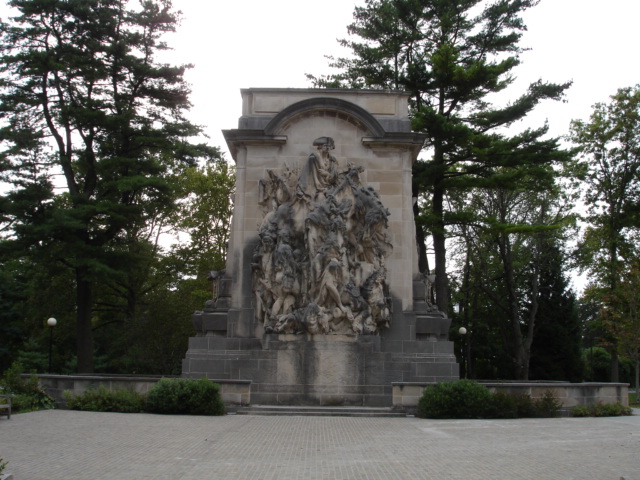
Princeton: Cradle of the Nation
Princeton, USA · 7 stops · Free · No app
The shortest way into Princeton's revolutionary past, anchored on Nassau Hall — the largest building in the colonies when it rose in 1756, and the Capitol of the United States for four months in 1783. From the Battle Monument and a Declaration signer's home through the historic front campus, it closes on an honest note about the founding's unfinished promise. Best for history-first visitors who want the founding story in a compact loop.
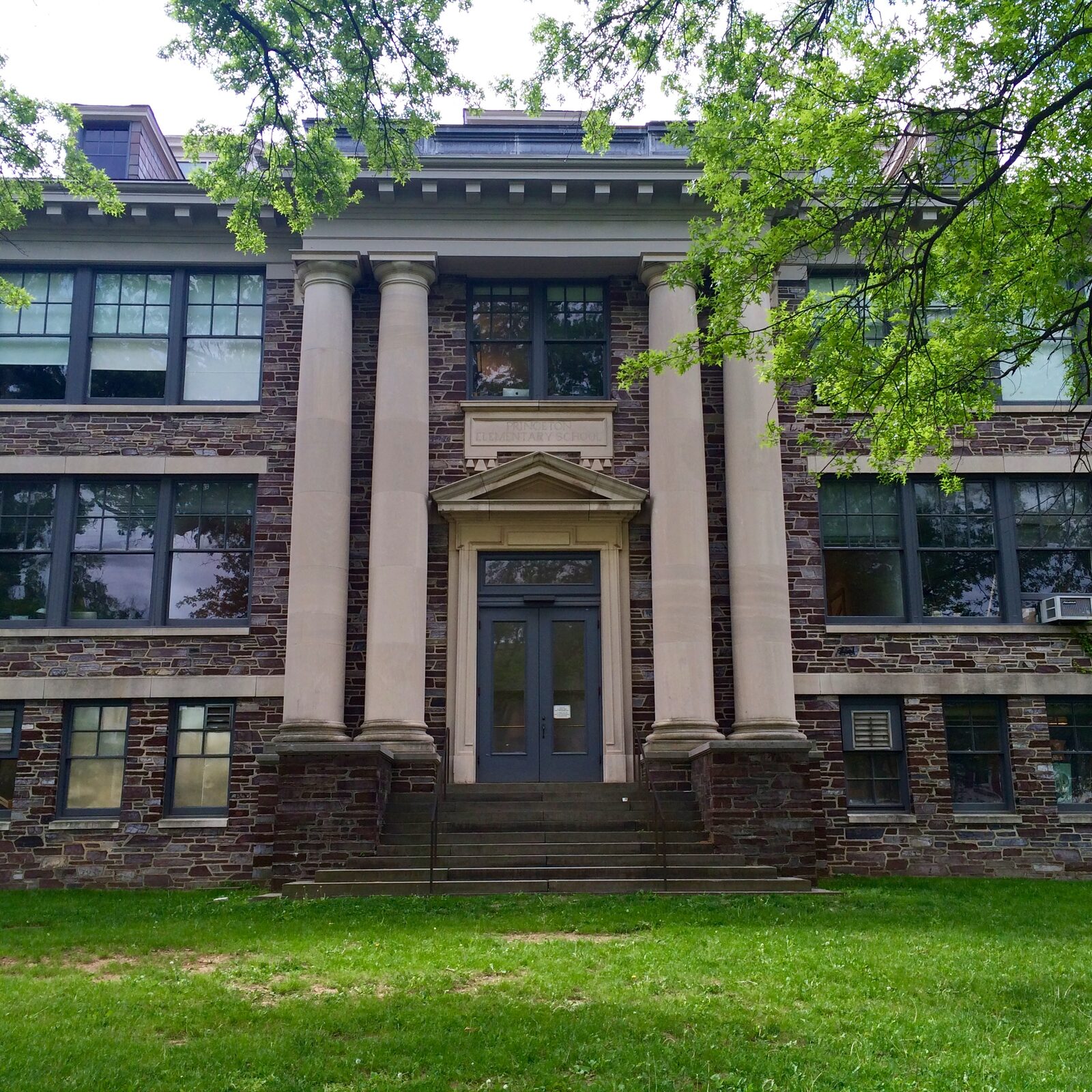
Princeton: Minds
Princeton, USA · 7 stops · Free · No app
The one Princeton walk that's about people rather than buildings — the writers and mathematicians who passed through a small New Jersey town, from Fitzgerald and Toni Morrison to Nash, Turing, Church, and Feynman. It doesn't flinch from the human cost of that brilliance, ending in the old math-and-logic heart of campus at Jones Hall. Choose this if you care more about who thought here than what was built here.
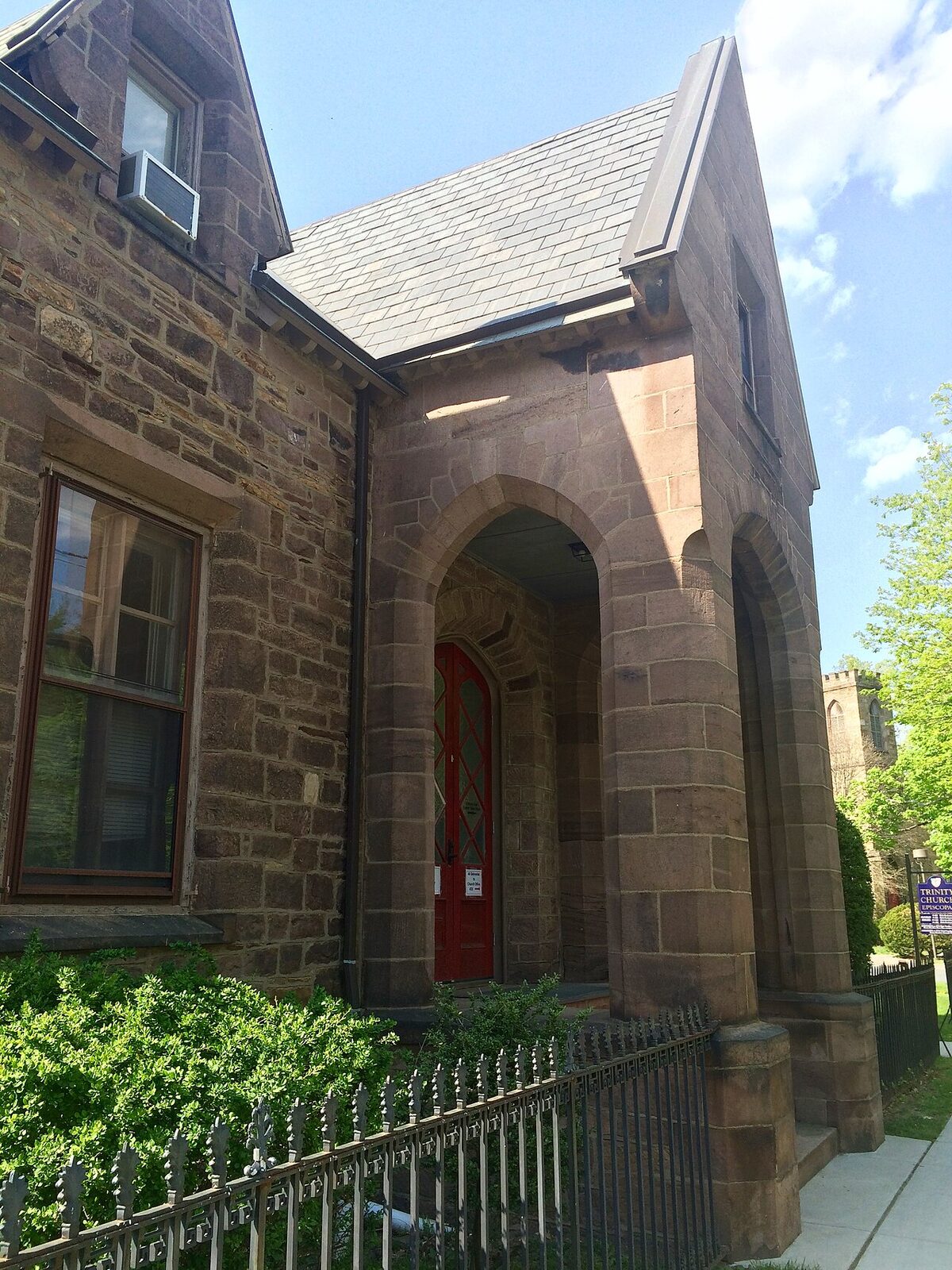
Princeton: Stone & Spire
Princeton, USA · 7 stops · Free · No app
An architecture walk about a young college that dressed itself in 600-year-old English Gothic to manufacture instant tradition. It runs from the arches of 1879 Hall through Cram's soaring Chapel to the Graduate College's Cleveland Tower, set apart by a famous feud. Read this alongside Yale's 'Stone & Shadow' — they're deliberate siblings, and comparing them is half the fun.
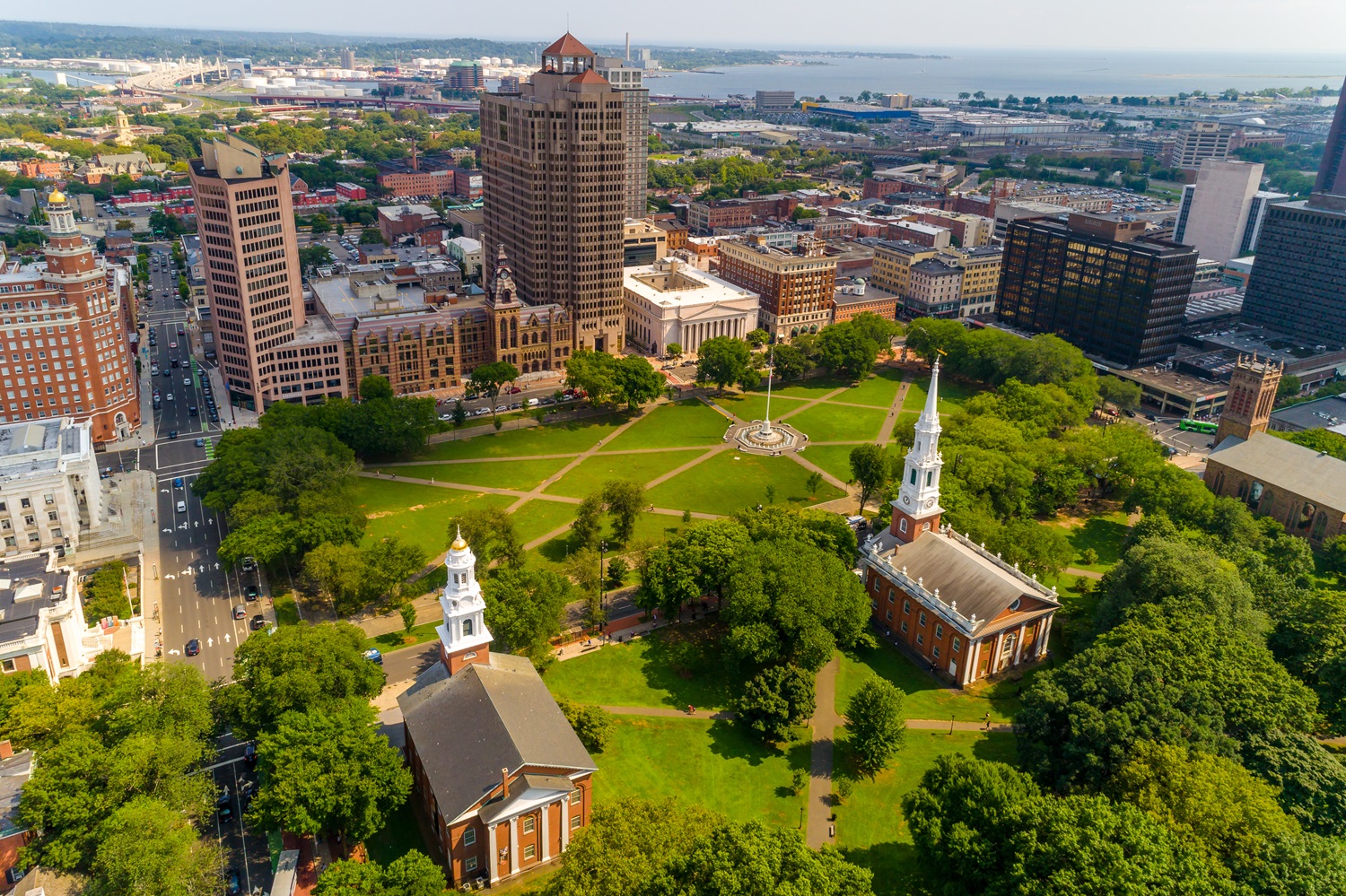
Yale: The Nine Squares
New Haven, USA · 6 stops · Free · No app
Two foundings overlap on one square: the Puritan holy city laid out in a nine-square grid in 1638, and the college that grew on its edge. Centered on the New Haven Green — which still holds thousands of colonial dead — it takes in the three churches, the Amistad Memorial, Connecticut Hall, and the plainly told story of Elihu Yale's slave-trade wealth, ending at Grove Street Cemetery. The founding walk for anyone who wants town and gown told as one story.
Yale: Stone & Shadow
New Haven, USA · 7 stops · Free · No app
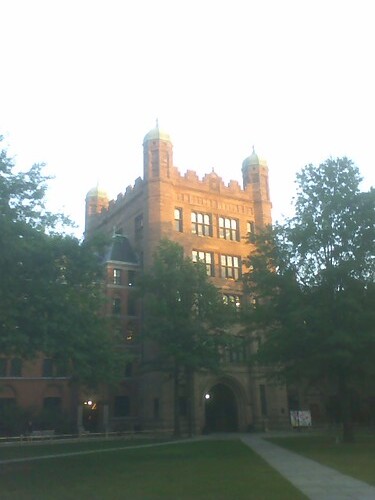
Yale's answer to Princeton's Collegiate Gothic — the university that acid-aged its stone and raised Harkness Tower a foot for every year of its history, then dropped the act one block away at the modernist Beinecke. From Old Campus through Sterling Library and the Law School's carved owls to that marble box that broke the spell. Pair it directly with Princeton's 'Stone & Spire' to see two campuses stage the same illusion.
Penn: Franklin's University
Philadelphia, USA · 6 stops · Free · No app
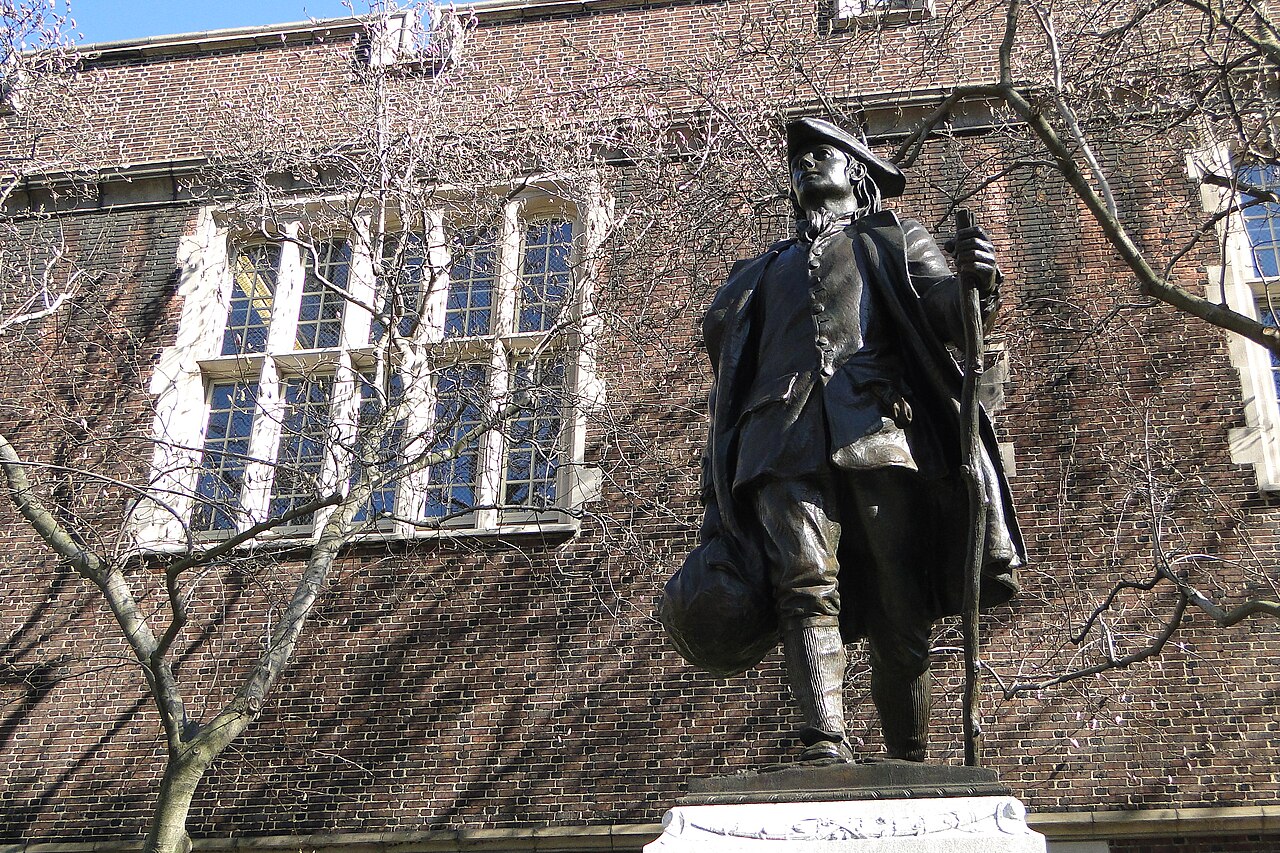
Penn is the outlier — the only Ivy founded by a Founding Father, and a secular one at that, built by Benjamin Franklin for practical knowledge rather than ministry. Since the actual 1740s founding happened downtown, this West Philadelphia walk tells the story through Franklin's monuments and oldest halls, from the young-runaway statue to Houston Hall (America's first student union) and a closing seat beside 'Ben on the Bench.' Start here to understand why Penn feels different from the rest.
Penn: Birthplace of the Modern ENIAC
Philadelphia, USA · 7 stops · Free · No app
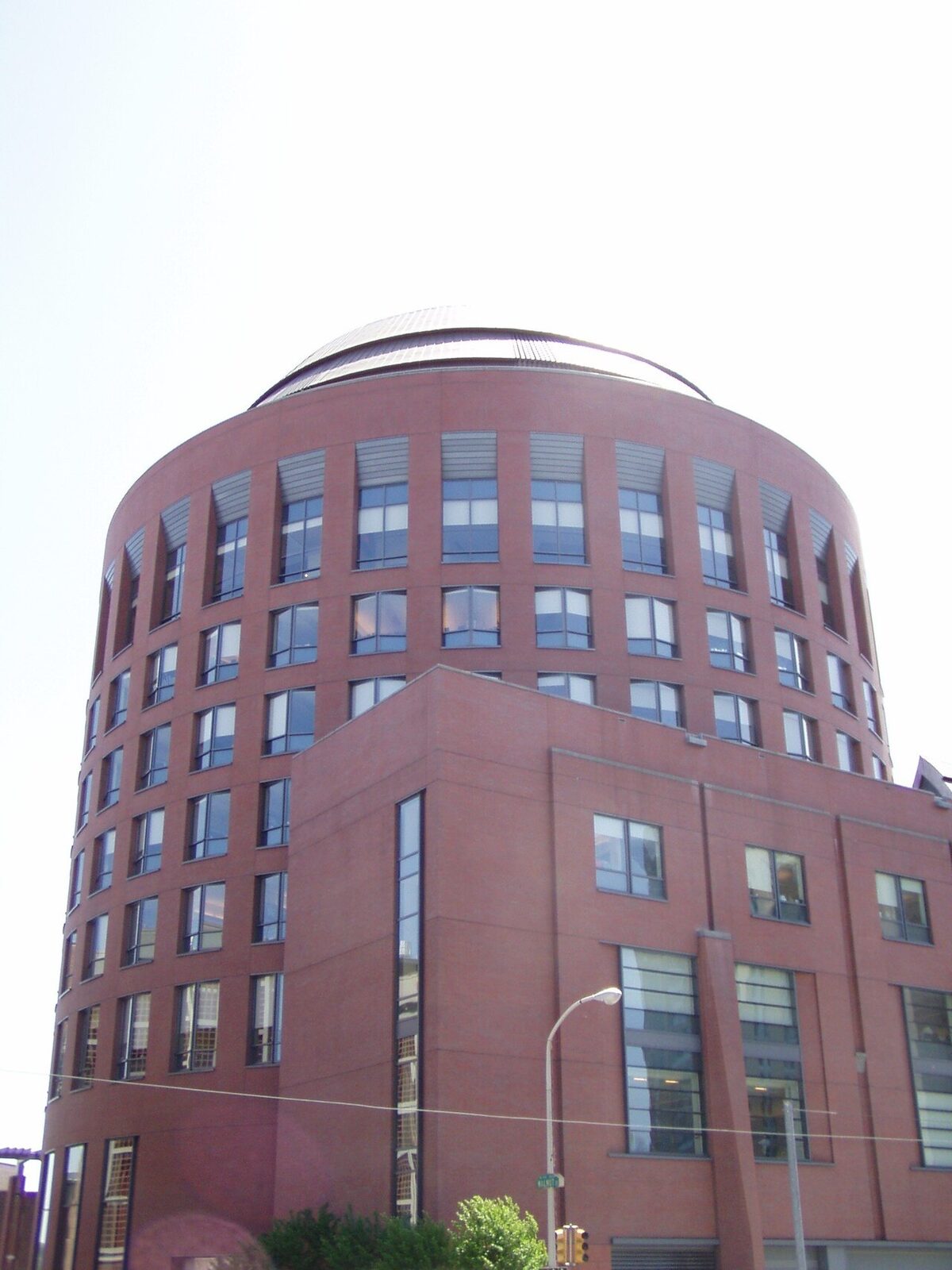
Franklin's 'useful knowledge' creed followed for 250 years, as a chain of world firsts: the first business school, the first electronic computer at the Moore School, North America's first medical school, and the Penn Medicine labs behind the Nobel-winning mRNA vaccine platform. Muybridge's motion studies even sit on the route. Pick this if you'd rather walk through breakthroughs than through architecture.
Penn: Stone, Iron & Concrete
Philadelphia, USA · 6 stops · Free · No app
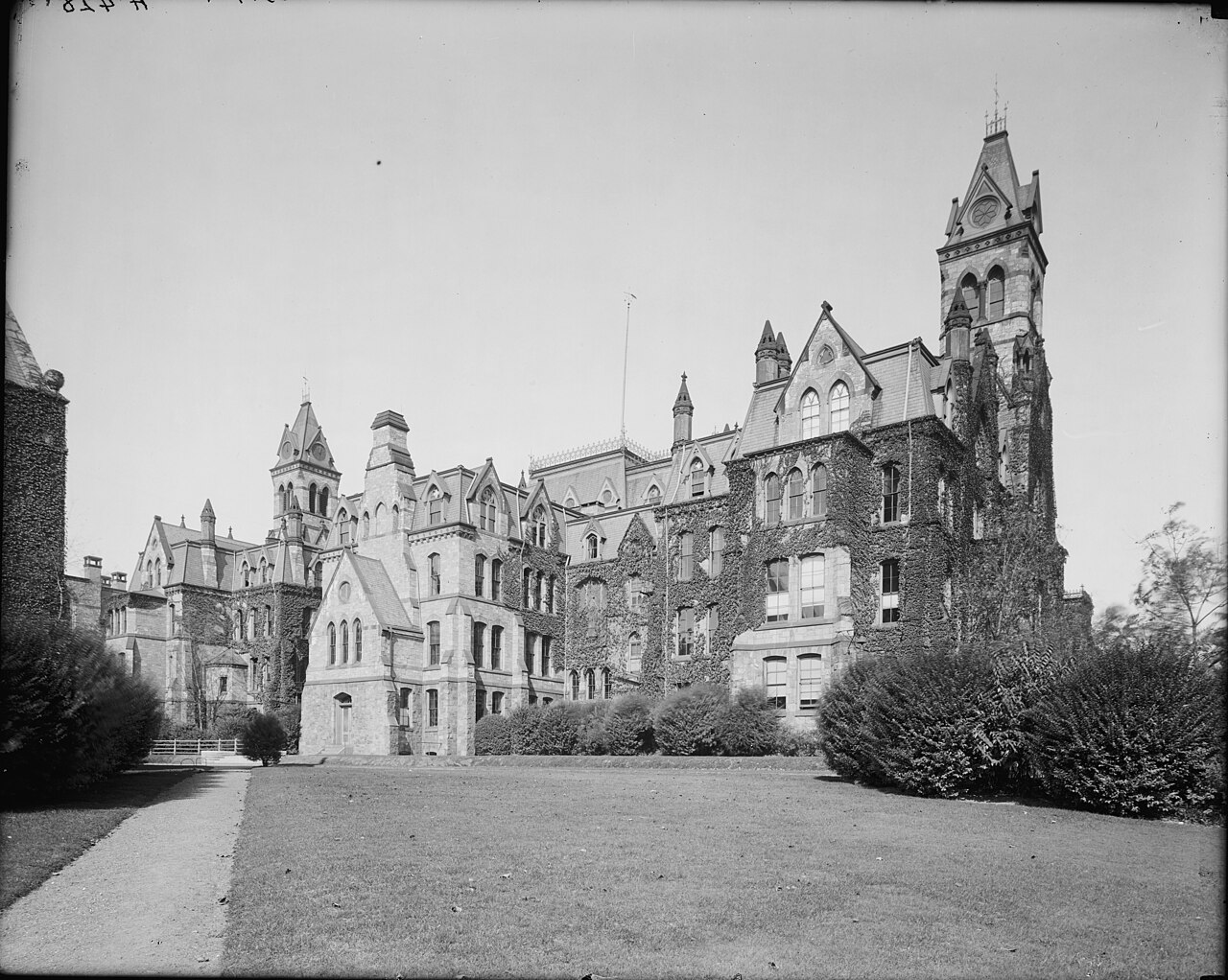
Where Princeton and Yale faked a single past, Penn argued with itself in stone — and this walk collects the whole argument in a few blocks. Victorian serpentine at College Hall, Furness's muscular red-brick library, fantasy Gothic at Irvine, the Cope & Stewardson Quadrangle, and Louis Kahn's 1961 Richards Labs. The architecture tour for people who love contrast more than consistency.
University City: Beyond the Gates
Philadelphia, USA · 8 stops · Free · No app
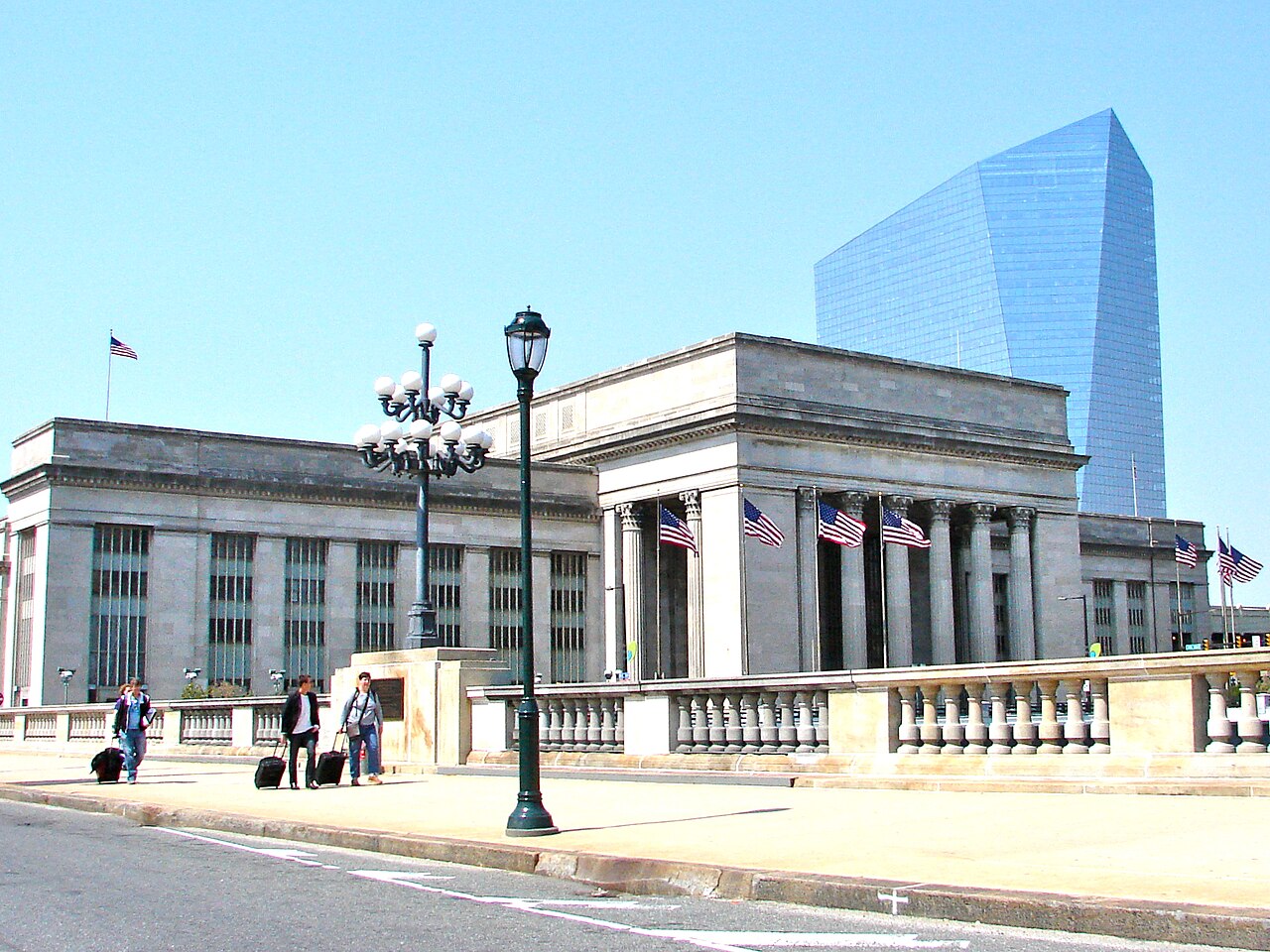
This one steps beyond the university gates into the surrounding West Philadelphia neighborhood the schools helped make. From the Beaux-Arts grandeur of 30th Street Station and Drexel's hilltop park through an 18th-century estate, a Victorian streetcar suburb, and Baltimore Avenue, it ends at the Paul Robeson House. Longest of the Penn set at eight stops — choose it when you want the city, not just the campus.
Columbia: The Acropolis on Morningside
New York, USA · 11 stops · Free · No app
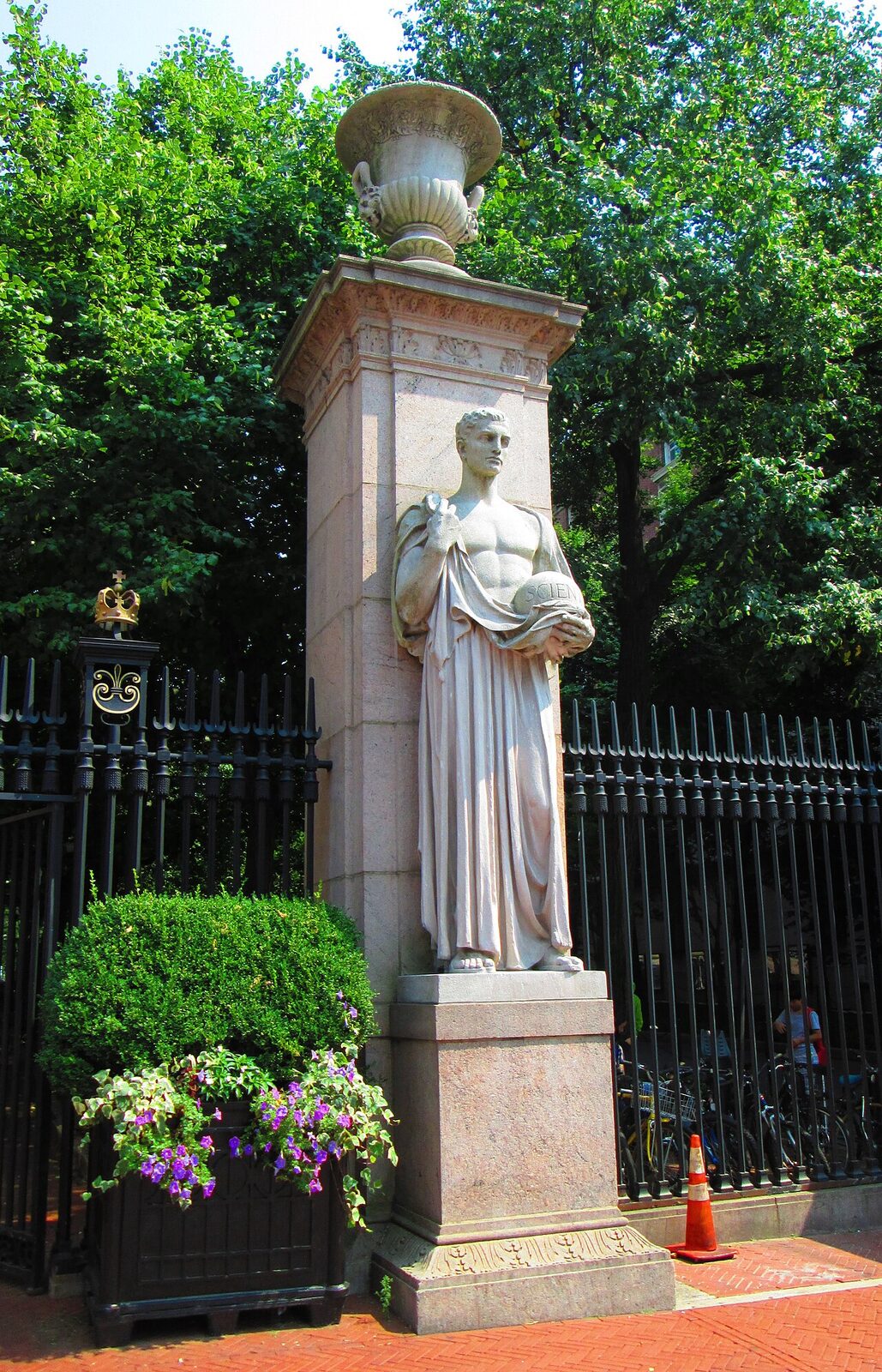
Columbia's rebuttal to Gothic: a Gilded-Age Roman acropolis that McKim, Mead & White raised in the 1890s over a demolished asylum, all symmetry and civic ambition on one monumental axis. Eleven stops move from the Broadway gates and Butler Library up through the science and college halls to the Steps of Low Library beneath Alma Mater. The essential architecture walk here, and a sharp counterpoint to the Gothic campuses.
Columbia: 1968 & the Atom
New York, USA · 7 stops · Free · No app
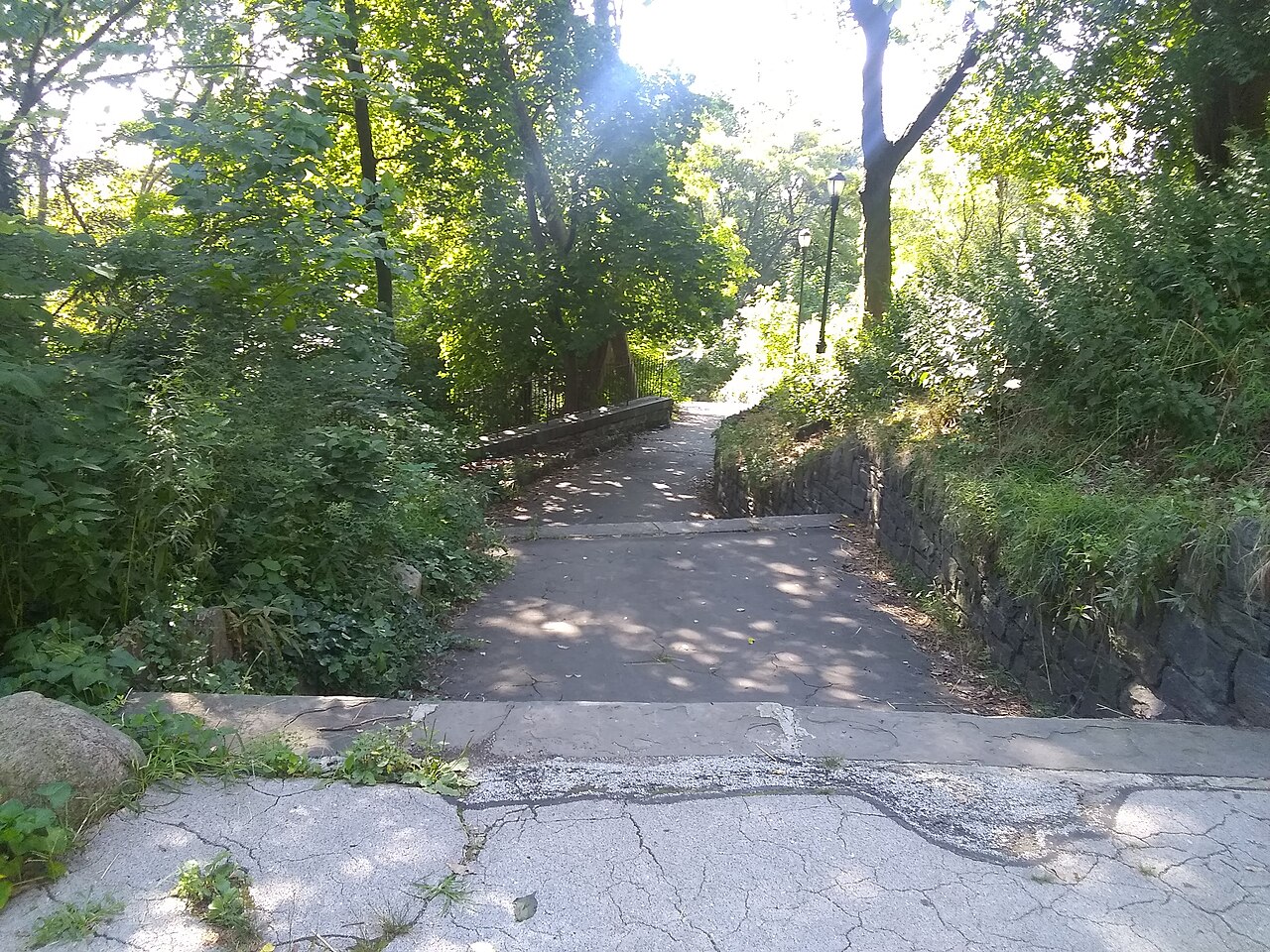
A 20th-century history walk through Columbia's most turbulent chapter and its most consequential one. It traces the 1968 student uprising — the 'Gym Crow' site, the Sundial rally, the building occupations, the police bust — then turns north to Pupin Physics, where the atom was split in 1939 and the Manhattan Project took root. For readers drawn to how a university tangles with power rather than how it looks.
Cornell: Any Person, Any Study
Ithaca, USA · 7 stops · Free · No app
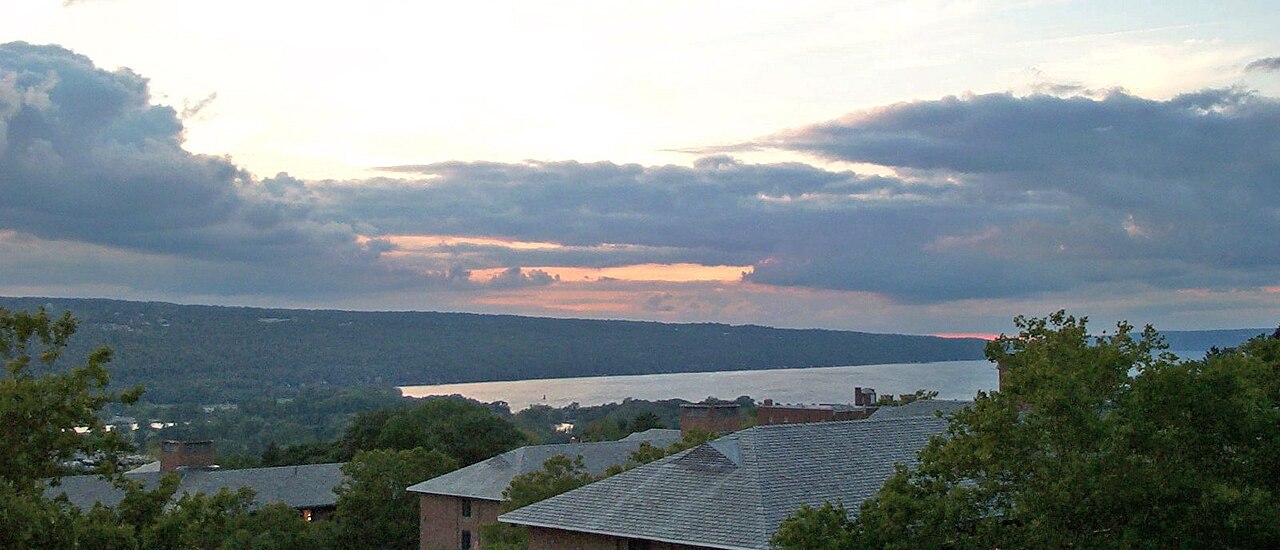
The Ivy League's most idealistic founding: Ezra Cornell's self-made fortune and Andrew Dickson White's scholarship joined in 1865 to open a university to 'any person, any study.' The Arts Quad walk runs from the Cayuga Lake view Ezra chose, past the founders' facing statues and McGraw Tower's chimes, to Sage Chapel where both are entombed. The founding tour for anyone moved by big democratic promises.
Cornell: Ithaca is Gorges
Ithaca, USA · 7 stops · Free · No app
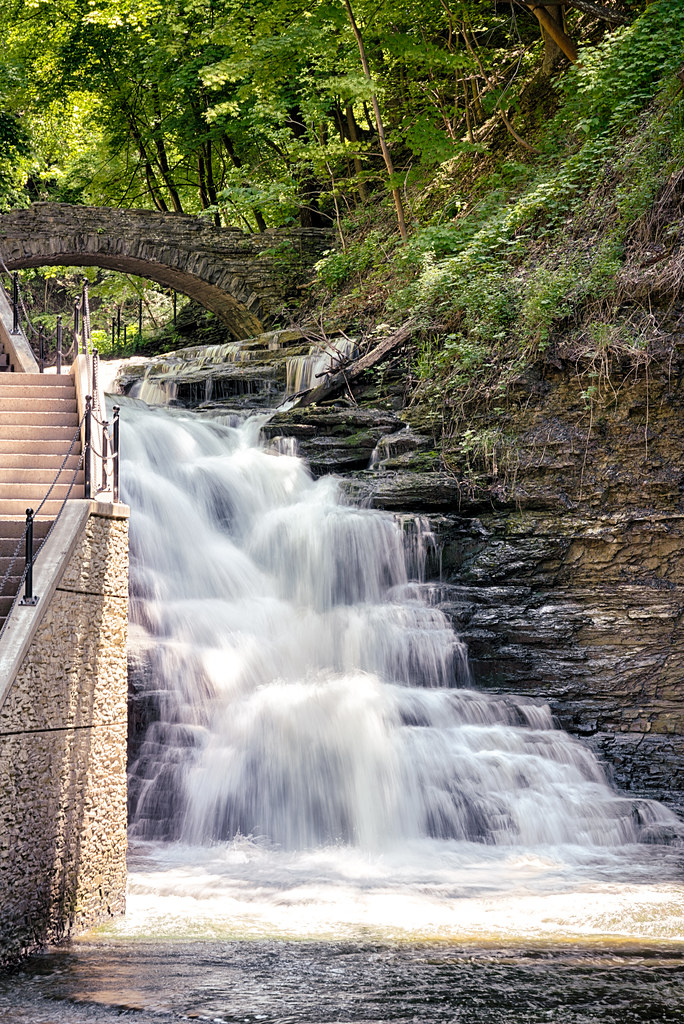
The rare campus tour that's really a hike — through 400-million-year-old Devonian bedrock and two waterfall gorges that make Cornell one of the most dramatic settings anywhere. Cascadilla's stone stairways, the Fall Creek suspension bridge, Beebe Lake, and a long descent to 150-foot Ithaca Falls fill roughly 3.5–4 miles with real elevation. Best in fair weather; stick to the marked rim trails and bridges.
Brown: College Hill & Benefit Street
Providence, USA · 8 stops · Free · No app
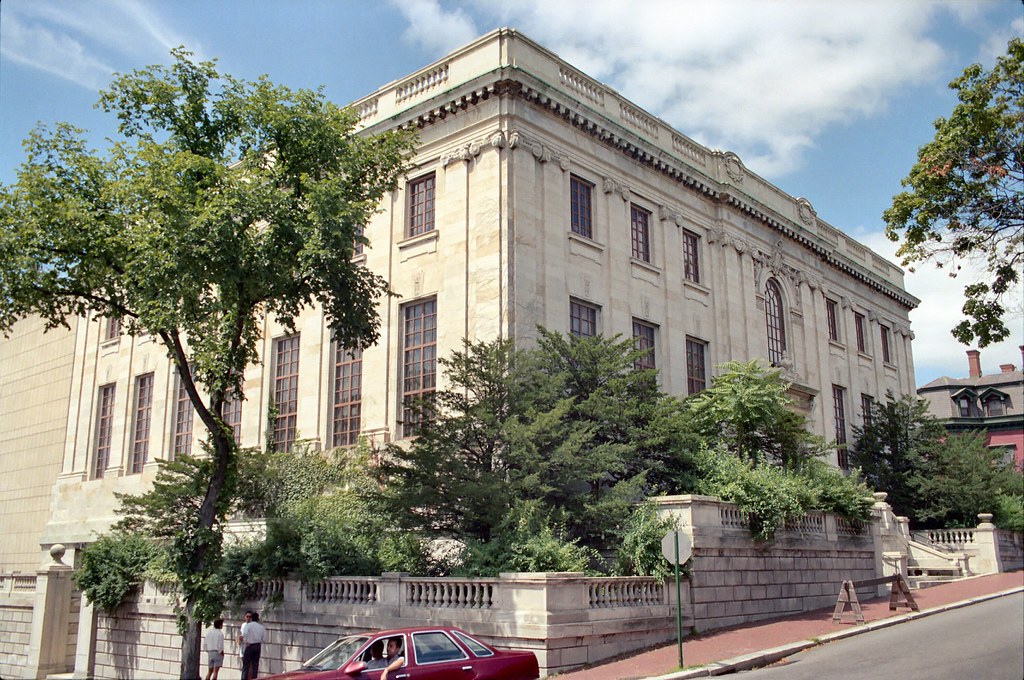
A campus-plus-city walk down College Hill into colonial Providence, the city Roger Williams founded for freedom of conscience. It threads the First Baptist Church in America, the RISD Museum, Benefit Street's Mile of History, and the John Brown House — grandeur and slave-trade ties both named — ending at the river where WaterFire burns. Choose this to see how Brown spills into the historic streets below it.
Brown: Founding & the College Green
Providence, USA · 6 stops · Free · No app
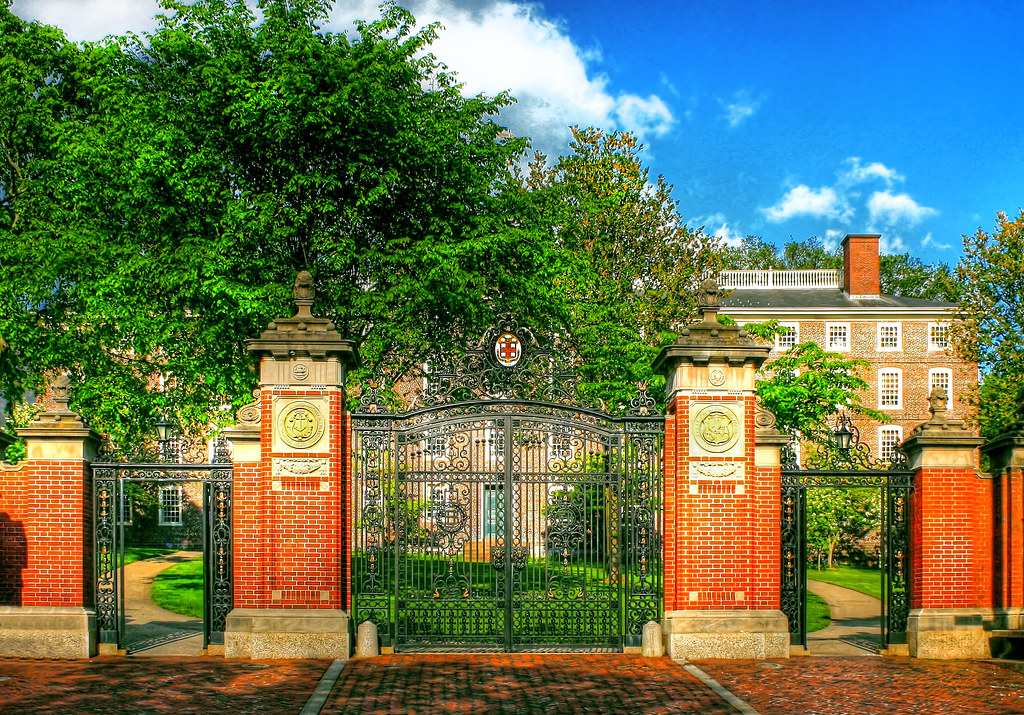
Brown's founding walk, built on the most religiously liberal charter of any colonial college — the first in America to admit students regardless of faith. Around the compact College Green it moves from the Van Wickle Gates and University Hall (modeled on Princeton's Nassau Hall) to Martin Puryear's Slavery Memorial, the honest counterpoint from Brown's landmark Slavery and Justice reckoning. The tightest, most focused of the Brown three.
Brown: The Curious & the Macabre
Providence, USA · 7 stops · Free · No app
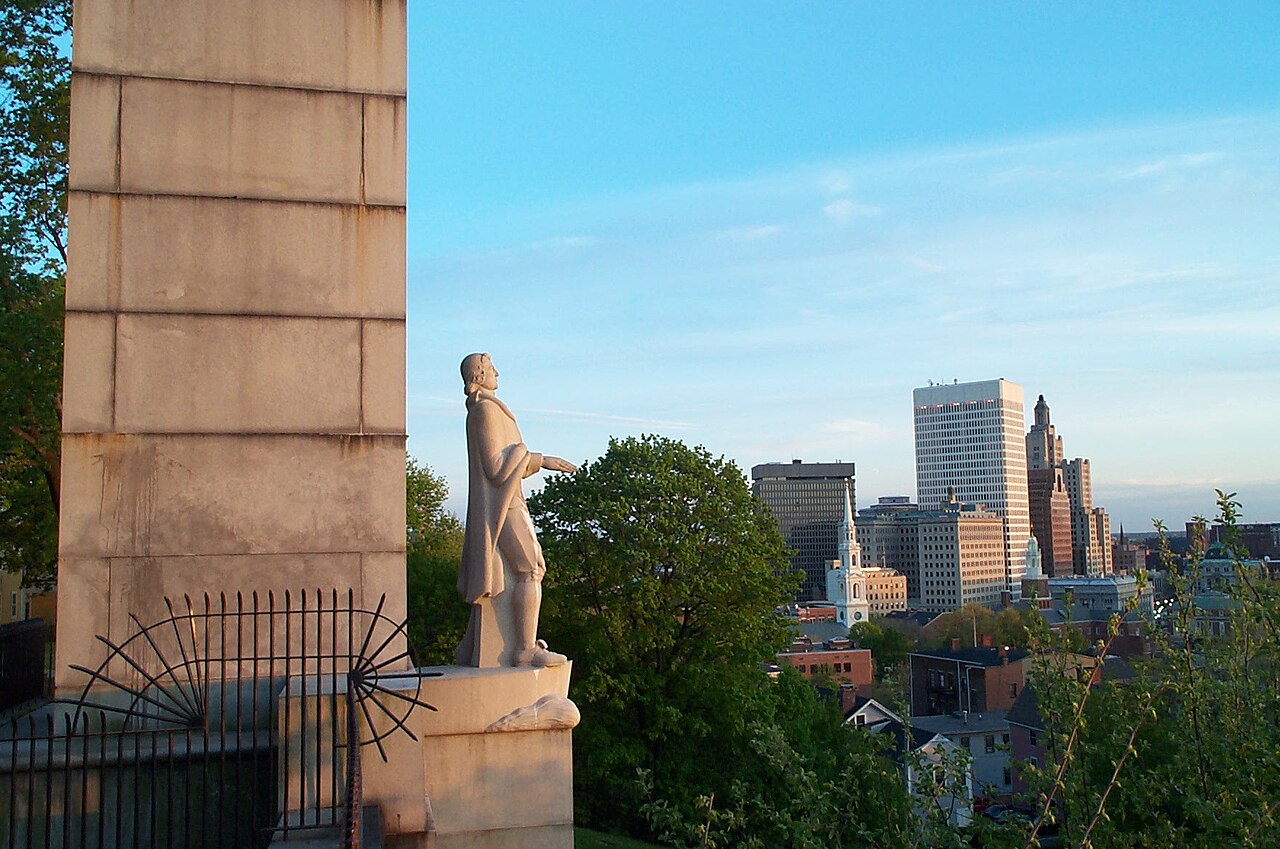
Providence's literary shadow-side — the city that made H.P. Lovecraft and drew a doomed Poe romance. Expect human-skin-bound books at the John Hay Library, the overlook that gave Lovecraft his epitaph 'I am Providence,' the real 'Shunned House' on Benefit Street, and a pilgrimage coda at Swan Point Cemetery. Lovecraft's influence is celebrated and his documented racism named plainly; pick this for the macabre rather than the founding.
Good to know
Late spring and fall are the sweet spot across all eight campuses — comfortable temperatures, and either commencement bustle or foliage. Difficulty varies widely: the founding and architecture loops (Brown's College Green, Princeton's front campus, Columbia's Morningside axis) are short and mostly flat, while College Hill in Providence and Libe Slope at Cornell involve real climbs, and Cornell's gorges walk is a 3.5–4 mile hike with steep, sometimes slippery trail sections best done in dry weather with sturdy shoes. City campuses (Penn, Columbia, Yale) sit on transit lines; Princeton and Ithaca are easiest by car. Bring a charged phone and headphones, since every tour streams in your browser — no app or signup — and check that quads, libraries, and chapels are open, as some interiors close to visitors during exams and events.