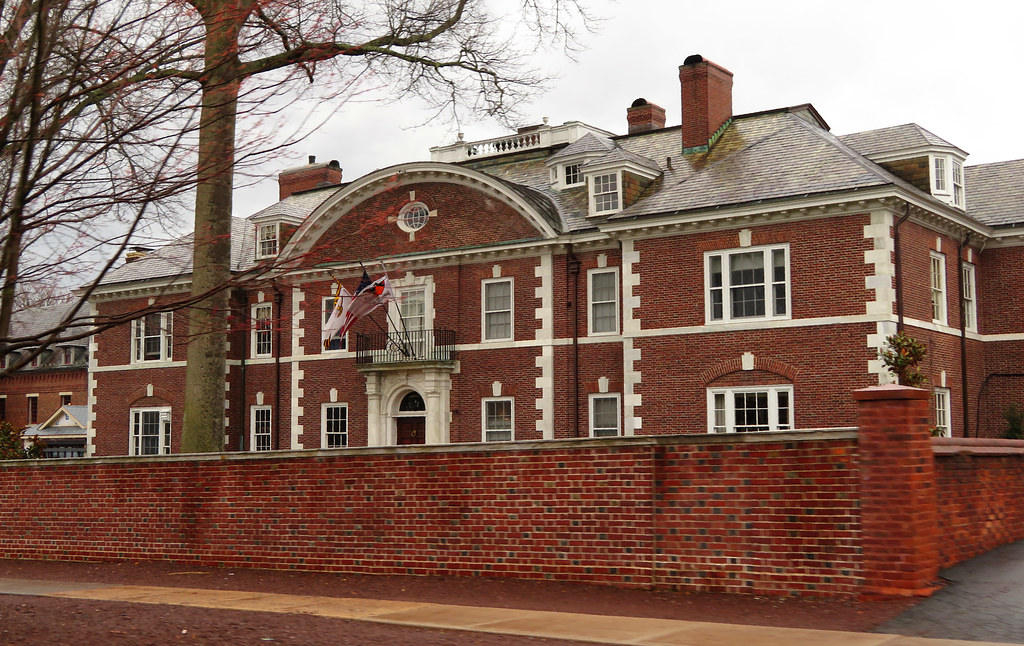
Princeton, USA · 6 min read
Princeton, New Jersey is the kind of town you could drive through without realizing what happened here. It is small, leafy, and outwardly ordinary — and yet for a hundred years it quietly held an outsized share of the twentieth-century mind. Writers invented themselves in its lecture halls. Mathematicians remade the very idea of logic in its towers.
What makes a stroll through the campus so haunting is not just the concentration of brilliance but its human weight. This is the town where F. Scott Fitzgerald built the Jazz Age persona he'd spend a career mourning, where John Nash wandered as the 'Phantom of Fine Hall' before his astonishing recovery, and where Turing and Church sketched the foundations of the machine age on blackboards now filed under a different building name.
If you're wondering whether Princeton is worth a day of your trip, the answer is yes — but not for the reasons the brochures suggest. It rewards walkers who like their history layered, human, and a little melancholy.
Where the Sentences Are Made
The walk begins not with an equation but with a sentence. The unassuming building at 185 Nassau Street is home to Princeton's creative-writing program, and for more than forty years it was the working base of Joyce Carol Oates — a writer of astonishing output, novels arriving almost yearly.
Think of it as the town's other kind of mind. Everywhere on this route you meet people who tried to describe the world precisely — some in symbols, some in stories. Here the instrument is language, and generations of young writers learned in these rooms that a paragraph, like a proof, can be revised until it's true.
It's a fitting opening for a place that has held such an outsized share of the twentieth-century imagination: the mind on the page, waiting to be read.
The Written Mind, Preserved
Firestone Library holds millions of volumes below ground, but the mind worth pausing over here belonged to Toni Morrison. She taught at Princeton for seventeen years, and when she was done she left her papers to the university's archive — drafts, letters, the crossed-out lines of Beloved and beyond.
It's a quietly radical act. A writer who spent her life recovering voices that history tried to erase chose to make her own process permanent, legible, studied. What survives here isn't just the finished book but the labor behind it — the record of a mind thinking its way toward the right sentence.
Morrison once said she wrote the books she wanted to read and couldn't find. A stop here is a reminder that a library isn't only a monument to answers; it's the evidence of people working, in ink, over years — proof that Princeton's brilliance was never only mathematical.
Fitzgerald's Golden, Restless Years
Step into the lecture halls of McCosh and picture a slight, golden-haired undergraduate who arrived in 1913, dazzled and a little desperate to belong. F. Scott Fitzgerald was, by his own cheerful admission, a poor student — he cared far more for the Triangle Club shows and the social scramble than his coursework, and he left without a degree.
But Princeton got into his blood. He turned these buildings, these anxieties and ambitions, into his first novel, This Side of Paradise, published in 1920. It made him famous almost overnight and invented a certain image of the American college: glamorous, restless, aware of its own performance.
Fitzgerald was studying something here that never appeared on a transcript — the way a young person constructs a self, and what that self costs later. The Jazz Age was about to begin, and one of its great chroniclers was sitting in these rooms.
The Coronation and the Bookend
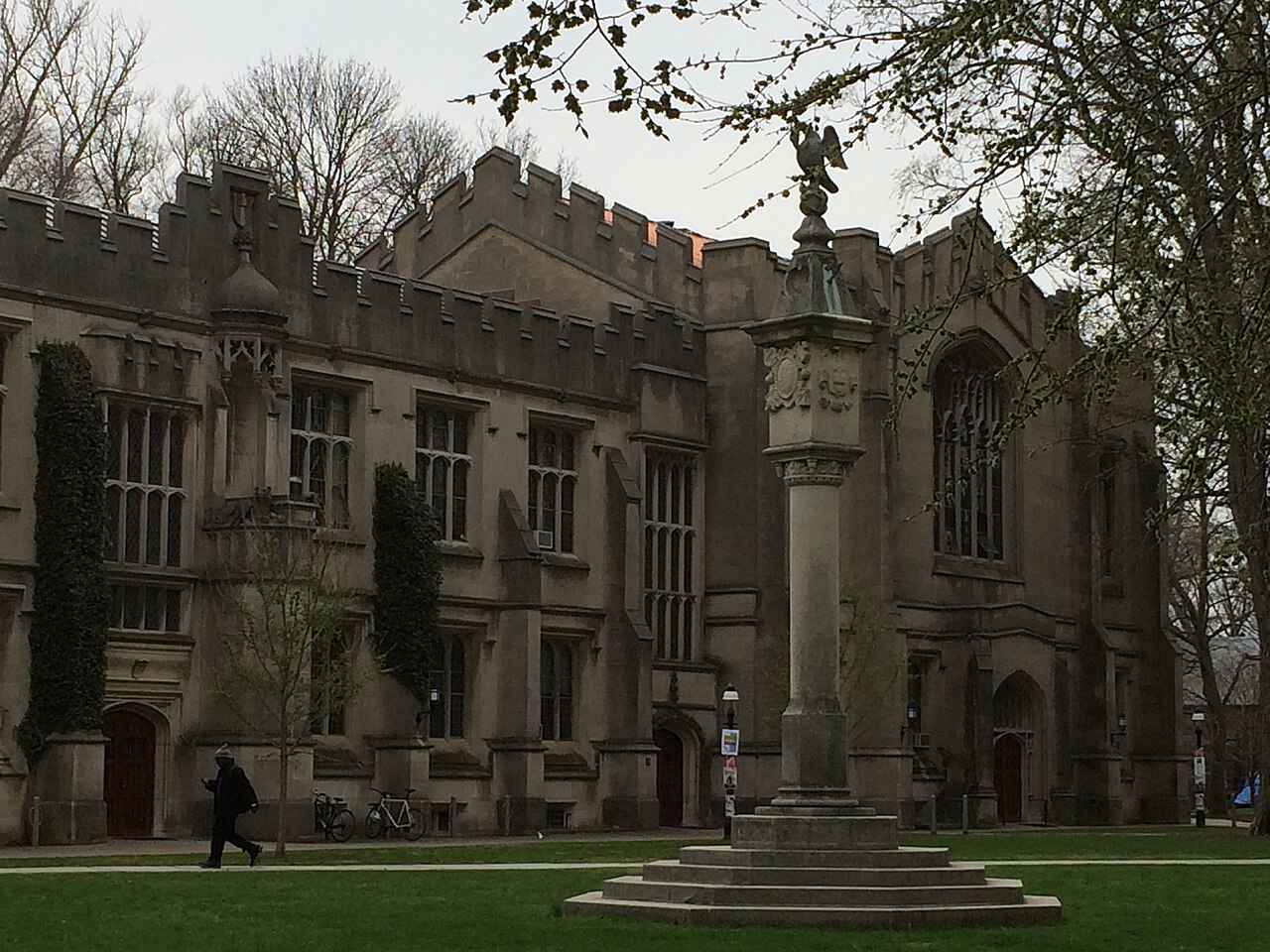
University Cottage Club is one of Princeton's grand eating clubs, and it's the one Fitzgerald chose. For him, election here was a kind of coronation. Inside its Georgian rooms he assembled the persona that would follow him for life: the charming, watchful outsider who longed to be an insider.
Years later, famous and fraying, he returned to Cottage on a visit — and the story goes that he had to be helped out, drunk, from these very halls. It's a small, sad bookend. The Jazz Age he'd celebrated had curdled, and the golden boy of This Side of Paradise spent his later career, in The Great Gatsby and Tender Is the Night, anatomizing the glamour he'd once craved.
Here the tour's real theme announces itself early: brilliance and its human cost, standing side by side. Fitzgerald built a self in these rooms that he'd spend the rest of his life writing about — and paying for.
The Phantom of Fine Hall
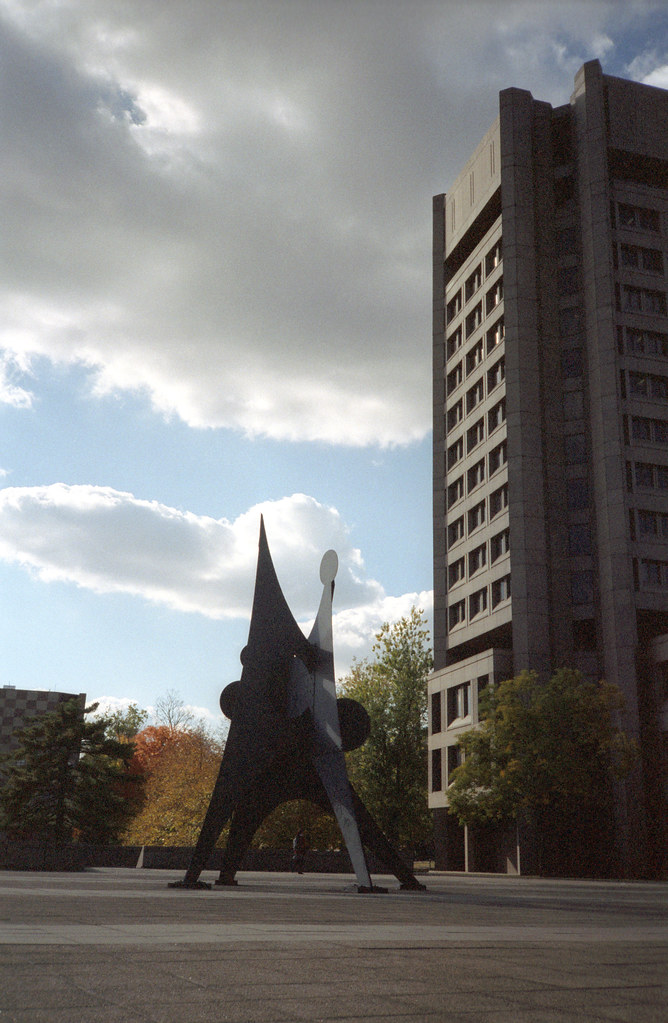
Look up at the math tower. This is Fine Hall, opened in 1968, though the story reaches back further. For decades, students spoke of the 'Phantom of Fine Hall' — a silent figure who left cryptic messages on blackboards at night. That was John Nash.
Taken from the record rather than the movie, the arc is astonishing. As a young mathematician, over in old Fine Hall (today's Jones Hall), Nash developed the equilibrium concept that would reshape economics. Then, in his early thirties, he was diagnosed with schizophrenia. For years he wandered this campus, unwell, tolerated and quietly protected by a community that never quite let go of him.
And then, remarkably, he recovered — gradually, in these familiar halls. The Nobel came in 1994; the Abel Prize, mathematics' highest honor, in 2015. The cost was enormous, the return almost unimaginable. Of all the minds gathered in this town, his most fully embodies both.
Two Names, One Building: Feynman's Lab
The building now known as Frist Campus Center has lived two lives. Today it's the hub of student life. Before that it was Palmer Physical Laboratory, and inside these walls a very different kind of genius came of age.
Here Richard Feynman earned his PhD under the physicist John Wheeler. Feynman was brilliant, irreverent, allergic to pomposity — he'd puzzle out safecracking and bongo rhythms with the same delight he brought to quantum mechanics. His Princeton years, in the late 1930s and early forties, shaped the physicist who'd later help build the atomic bomb and then spend decades wrestling with what that meant.
The playfulness we saw in Fitzgerald lives here too, but pointed at the deepest questions about how the universe actually works. Walk past Frist; remember Palmer.
Good to know
The full route runs from 185 Nassau Street through the heart of campus to Jones Hall, a walk of roughly a mile that most people complete in one to two hours depending on how long they linger. It's flat, easy going, and best done on foot with comfortable shoes. The optional coda toward the Institute for Advanced Study adds about a mile southwest. Bring water, and check whether campus buildings are open if you hope to peek inside.
The full walk also passes Jones Hall (old Fine Hall).
If any of this makes you want to walk the ground yourself, the free self-guided audio tour 'Princeton: Minds' is the ideal companion — it links all seven stops into a single narrated route, from Oates and Morrison to Fitzgerald, Nash, Feynman, and Turing, telling each story in the places where it happened. Load it up, put in your headphones, and let the town's brilliant, complicated century unfold one stop at a time.
Take the free tour: Princeton: Minds →