Philadelphia, USA · 5 min read
Most visitors to Philadelphia glimpse University City only through a train window or from behind the campus gates of Penn and Drexel. That's a mistake. Cross the Schuylkill and this stretch of West Philadelphia unfolds into something far richer than a college town — a place layered with 18th-century estates, Victorian mansions, one of America's first research parks, and the home of a genuine 20th-century giant.
Strung along a handful of avenues, University City tells the story of how a neighborhood gets made: first the railroad, then the streetcar, then the universities spilling out past their walls into the city itself. It's walkable, endlessly varied, and studded with surprises — a rare statue of a man who hated statues, a globally diverse food strip, a garden cemetery full of trees planted before the country was fifty years old.
Here's what to see if you want to understand this neighborhood beyond the gates — and why it rewards a slow, curious afternoon on foot.
The Grand Front Door
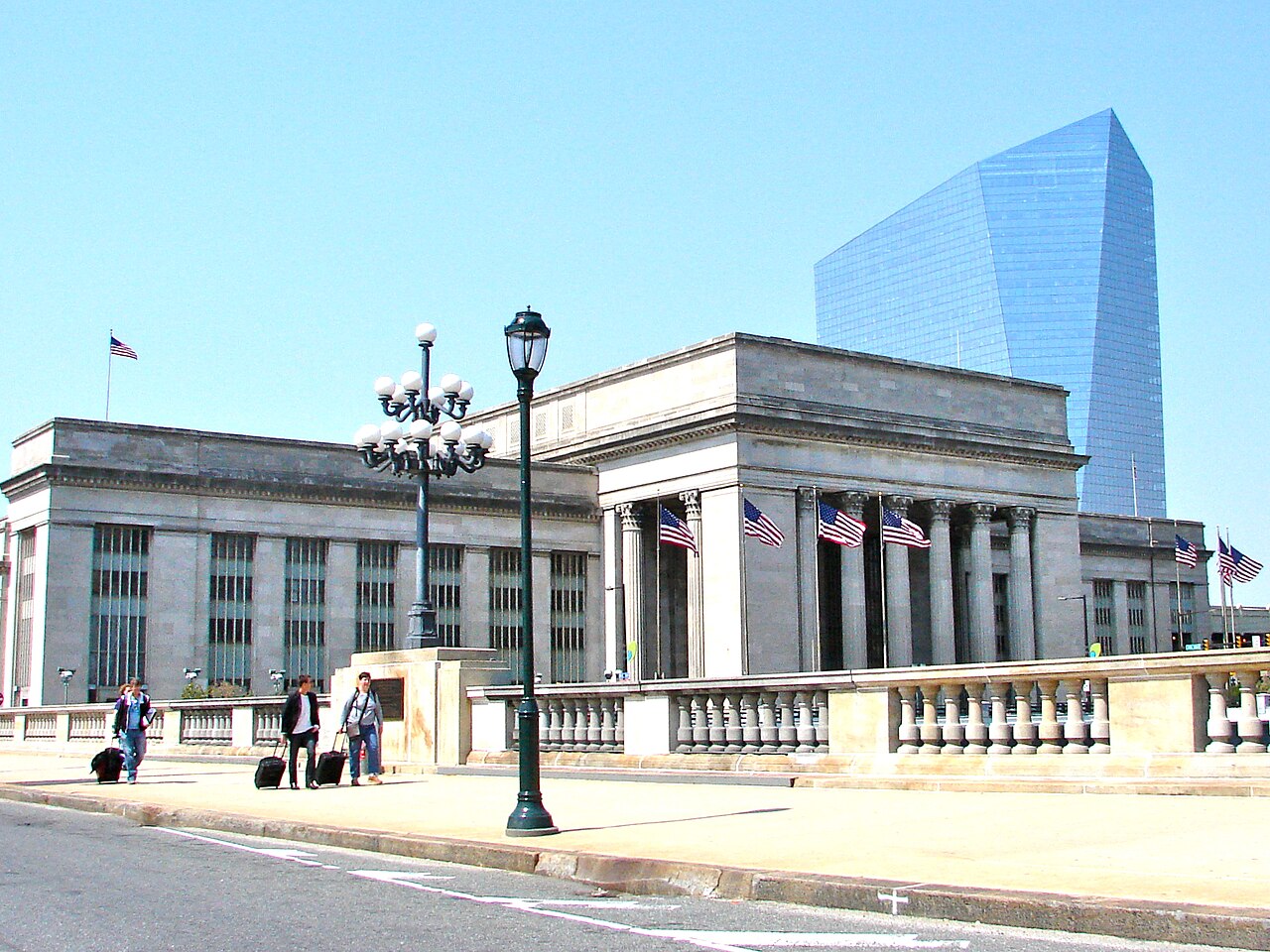
There are few better places to begin than The Porch outside 30th Street Station, where a great limestone temple rises against the sky. Officially the William H. Gray III Station and finished in 1933, it's one of the last of the grand American railroad cathedrals — the kind of building meant to make arrival feel like an event.
Step inside and look up: the coffered ceiling floats nearly a hundred feet overhead, gilded and glowing. At the eastern end stands the Angel of the Resurrection, lifting a fallen soldier skyward — a memorial to Pennsylvania Railroad workers lost in the Second World War. Outside, the mirrored spire of the Cira Centre catches the light beside the old stone, new and old in conversation.
This has always been the neighborhood's front door. Students, commuters, immigrants, and dreamers have all arrived here first, and it remains the grand eastern gateway to everything University City has become.
Where the Labs Spilled Into the City
A short walk from the campuses, the glass and steel of uCity Square looks brand new — and in a way, it always has, because this place has always been about what comes next. This is the University City Science Center, founded in 1963 as the very first urban research park in the United States.
The idea behind it was genuinely radical: instead of universities keeping their discoveries locked behind campus walls, let the science spill out into the city — into labs, incubators, and startups anyone could reach. Sixty years on, it's the neighborhood's innovation engine, where life-science companies, biotech founders, and first-time entrepreneurs have hatched thousands of jobs.
It's the same logic that defines the whole neighborhood: town and gown refusing to stay separate. The station brings the world in, and here the universities become the city itself, ideas turning into the next thing right out in the open.
A Country Estate Hidden in Plain Sight
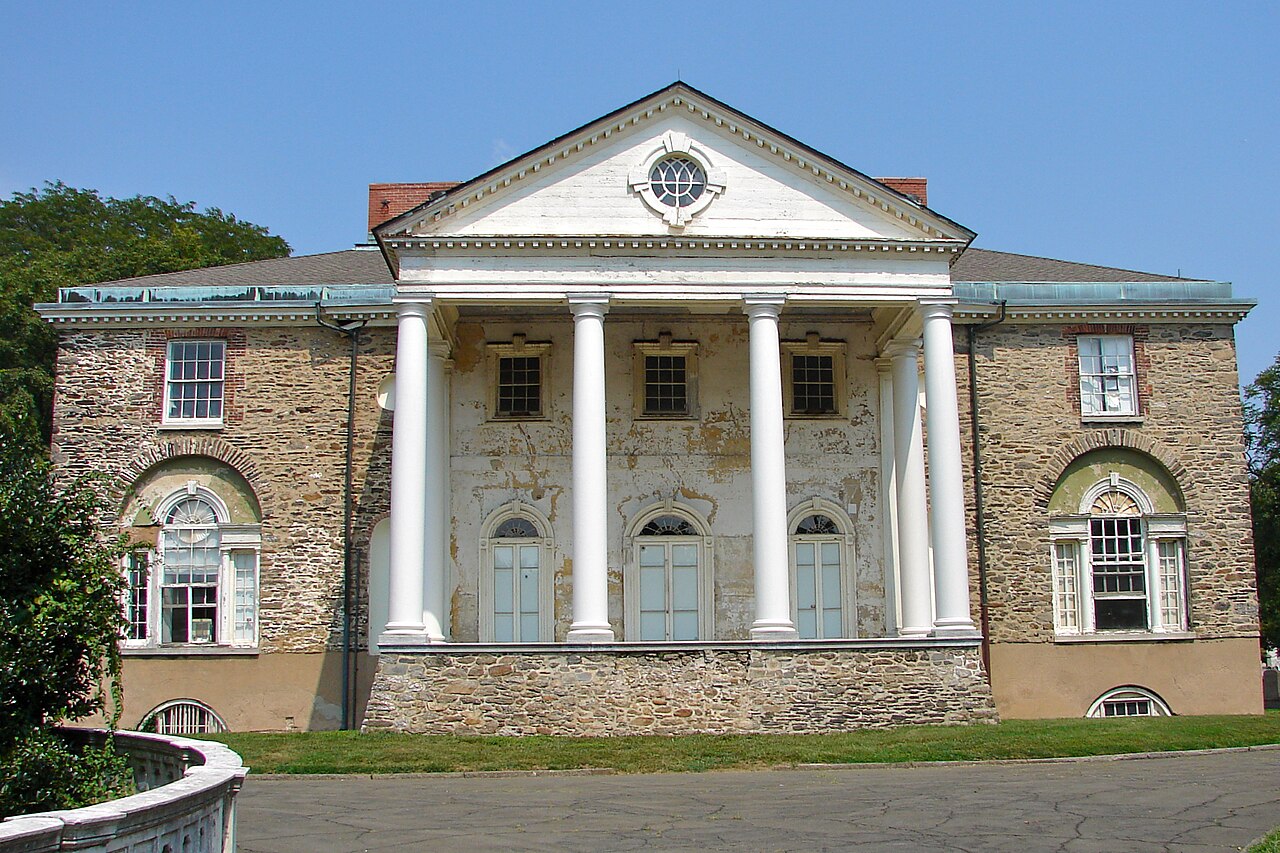
Then the traffic falls away and, almost without warning, you're standing in the 18th century. This is The Woodlands — once the country estate of William Hamilton, who by the 1780s had transformed these fifty-odd acres into one of America's finest English-style pleasure gardens. His neoclassical mansion still crowns the hill.
Hamilton was a plant obsessive, credited with introducing the Norway maple, the ginkgo, and the Lombardy poplar to this country. In the 19th century the grounds became a rural cemetery — a garden for the living to wander among the dead — and today it's a 54-acre National Historic Landmark, still green and gently wild.
After the station, the labs, and the skyline, this is the neighborhood's deep, slow heart. Everything else you'll see here was once farmland and forest like this. Standing among the old trees Hamilton planted, it's easy to feel the centuries settle.
Stop 4
The Whole World on One Menu
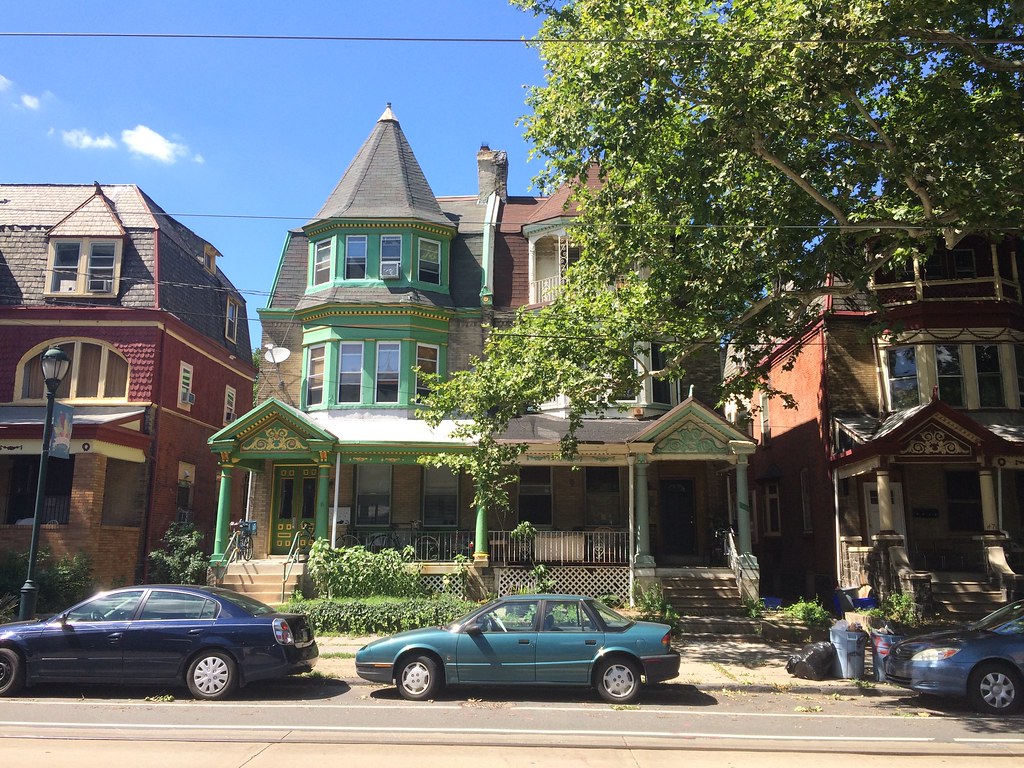
Baltimore Avenue is where the neighborhood comes to eat, talk, and simply be — the main artery and, honestly, the living room of West Philly. Listen for the trolley bell: the Route 34 still glides right down the middle of the street, the same line that raised the surrounding Victorian blocks over a century ago.
Along these blocks you'll find the whole world on one menu — West African and Ethiopian, Vietnamese and Mexican, Caribbean and vegan, a decades-old diner, a co-op grocery, and coffee shops where students and old-timers sit side by side. It's town and gown at street level, with no campus gates and no ivory tower.
The universities gave this neighborhood its shape, but Baltimore Avenue is where it actually lives and breathes. This is the flavor of University City, literally.
Shakespeare, Sledding, and a Forbidden Statue
Nine acres of green, Clark Park has been the neighborhood's shared backyard since 1895. Down in the natural hollow known as 'the Bowl' — once a millpond — you'll find free Shakespeare on summer evenings and sledders on every snow day. On Saturdays, one of the city's best farmers markets spills across the corner.
Tucked among the trees is something genuinely rare: a life-size bronze of Charles Dickens, seated beside his character Little Nell. The twist is that Dickens loathed the idea of statues of himself and forbade them in his will. This is one of only a couple in the entire world, and Philadelphia has quietly kept it for over a century.
Market stalls, Shakespeare, a forbidden statue, kids on sleds — Clark Park is the streetcar suburb all grown up and still gathering. It's the neighborhood the universities made, out enjoying itself.
Good to know
Plan on a half-day for the full route — roughly three to four miles of mostly flat, walkable streets, ending with a longer 0.7-mile leg northwest from Clark Park to the Paul Robeson House (the Route 34 trolley or a short ride covers it if you're tiring). Wear comfortable shoes, bring water and a hat in summer, and time it for a Saturday if you want to catch the Clark Park farmers market. Baltimore Avenue is the ideal spot to break for a meal, and 30th Street Station makes an easy start or finish for anyone arriving by train.
The full walk also passes Drexel University & Drexel Park, Paul Robeson House & Museum.
If you want the full story woven together as you walk, the free self-guided audio tour 'University City: Beyond the Gates' is the perfect companion — it narrates each of these stops in order, from 30th Street Station to the Paul Robeson House, so you can keep your eyes on the porches, trees, and trolleys instead of your phone. Load it up, put in your headphones, and let the neighborhood tell its own story.
Take the free tour: University City: Beyond the Gates →