Providence, USA · 7 min read
Most visitors to Providence come for Brown University or the art-school buzz of RISD, snap a photo of a Federal doorway, and move on. But the slope known as College Hill is one of the richest historical walks in New England — a single hillside where America's boldest experiment in religious freedom, a preserved mile of colonial houses, and the merchant fortunes that funded it all sit stacked from the bluff down to the river.
It's also a place that refuses to flatter itself. The same wealth that raised the grandest mansions and stocked the finest libraries was, in part, wealth built on the transatlantic slave trade. Providence doesn't hide that anymore, and neither should any honest walk through it.
If you're trying to decide whether College Hill and Benefit Street are worth your afternoon, the short answer is yes — and here's what you'll actually see, from the best free view in the state down to the flaming braziers of WaterFire.
The Best Free View in Rhode Island — and the Man Watching Over It
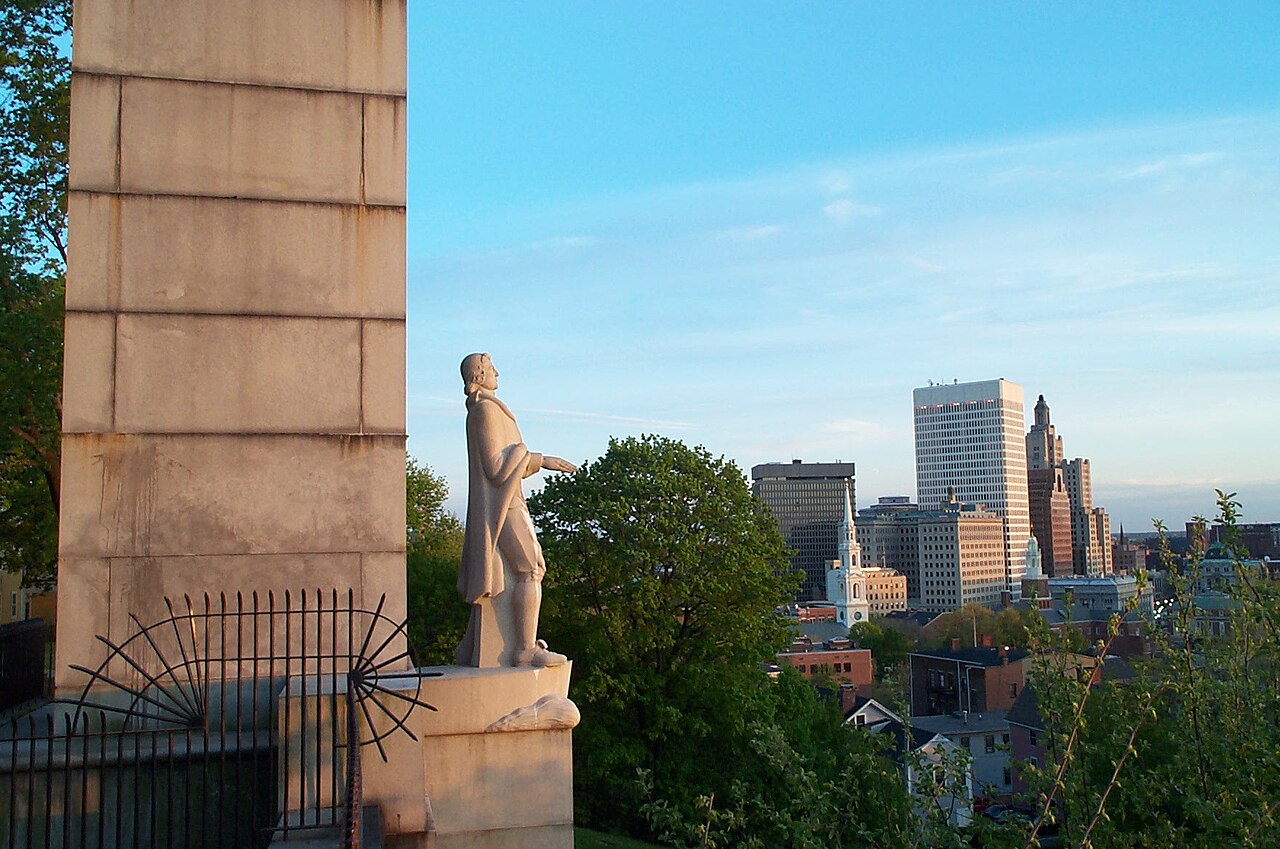
Prospect Terrace Park is where the whole city arranges itself below you: downtown, the marble dome of the statehouse, the river threading through. It's a small bluff-top park, and it's arguably the finest free overlook in Rhode Island.
You're not looking alone. Cast in bronze at the railing is Roger Williams, gazing out over the town he founded — and his remains rest in the tomb beneath the monument. Banished from Massachusetts in 1636 for insisting that conscience could not be commanded by the state, Williams built a settlement here on a radical idea: that government had no business dictating a person's faith. Religious liberty, nearly unheard of at the time.
It's a fitting place to begin, because two centuries later a college would be chartered down this hill on exactly that principle — no religious test for its students. Williams, it turns out, is watching over far more than a pretty skyline.
A Steeple for an Idea
At the foot of the hill rises the First Baptist Church in America, its spire tapering nearly two hundred feet into the sky. For generations it was the tallest thing in Providence, and it still commands the base of College Hill. The congregation dates to 1638 — founded by Roger Williams himself — making it the oldest Baptist congregation in the country.
The meetinghouse itself was raised in 1775, on the eve of revolution, its design borrowed from an English pattern book. Inside, if the doors are open, it's luminous and plain: a crystal chandelier, clear glass, no clutter. The builders wanted room, in their own words, for "preaching and to hold Commencement in."
That detail isn't incidental. Brown University has held its graduation processions here for more than two centuries — town and gown under one roof. It's Williams's notion of liberty, given a steeple.
Benefit Street: The Mile That Almost Wasn't
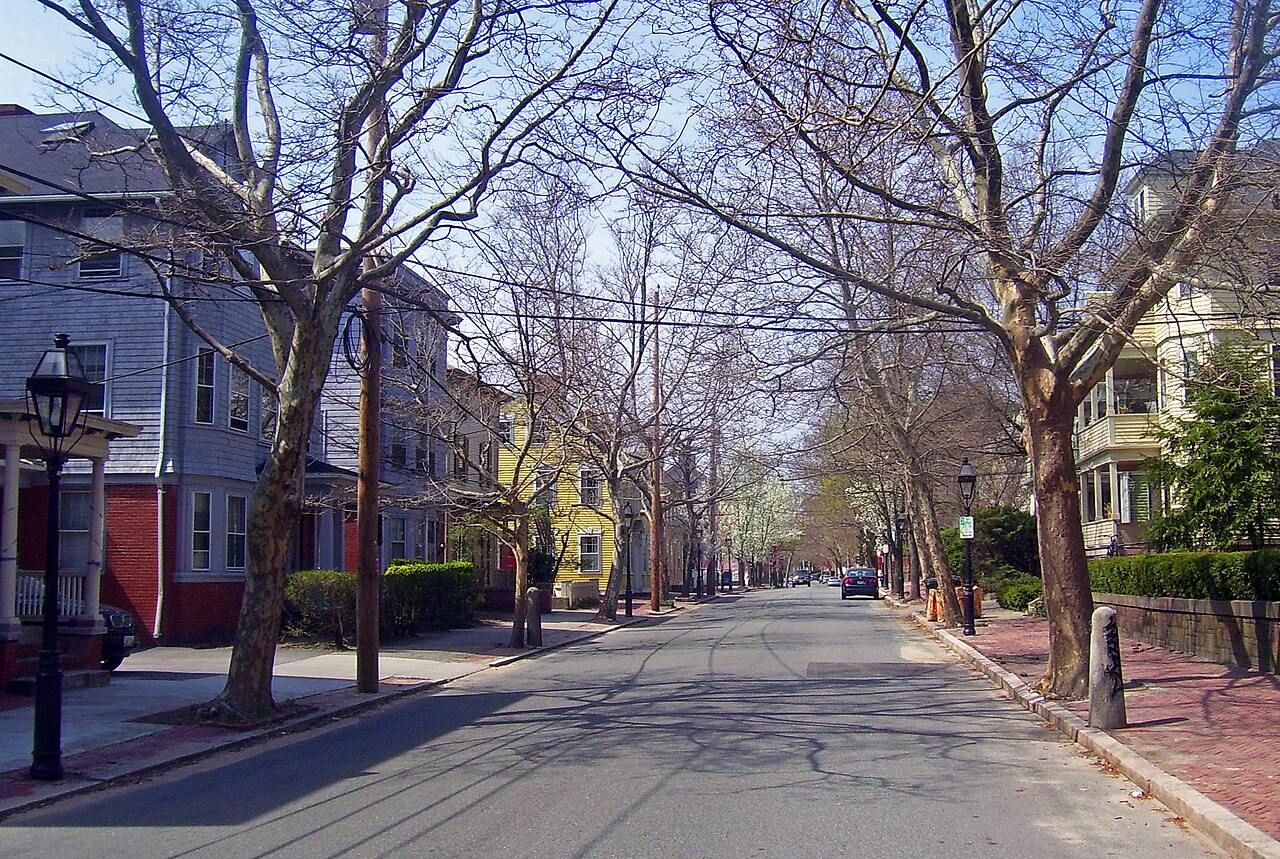
Stop at the top of Benefit Street and simply look down it — clapboard and brick, fanlight doorways, wrought-iron fences, gas-style lamps, house after house, most of them older than the nation itself. This is the Mile of History, one of the densest surviving stretches of colonial and Federal architecture anywhere in America.
And it very nearly ended up as rubble. By the 1950s these houses had become sagging tenements and the wrecking ball was circling. What saved them was a fight, led largely by local women of the Providence Preservation Society, who went door to door buying and restoring homes rather than letting them fall — a kind of pioneer homesteading of an entire street.
So everything here is doubly historic: built in one era, rescued in another. Read the little plaques as you go — sea captains, silversmiths, ministers — an entire eighteenth-century community still standing because someone in the twentieth refused to let it disappear.
Where Poe Came Courting
This granite, columned little Greek Revival temple is the Providence Athenaeum, opened in 1838. It's a membership library, among the oldest in the country, and remarkably it still lends books today, just as it did nearly two centuries ago. Inside, iron balconies, marble busts and the hush of old paper make it feel almost untouched by time.
Its most famous story, though, is a romance. In 1848 Edgar Allan Poe courted the Providence poet Sarah Helen Whitman right here among the shelves. They read together, quarreled here, and — as the legend goes — she broke off their engagement in these very rooms.
In a city built on merchant fortunes, a subscription library was a mark of a different kind of wealth: the desire to be well-read, cultured, civic. On Benefit Street, learning was something you could quite literally subscribe to.
The Most Magnificent House in America — and the Fortune Behind It
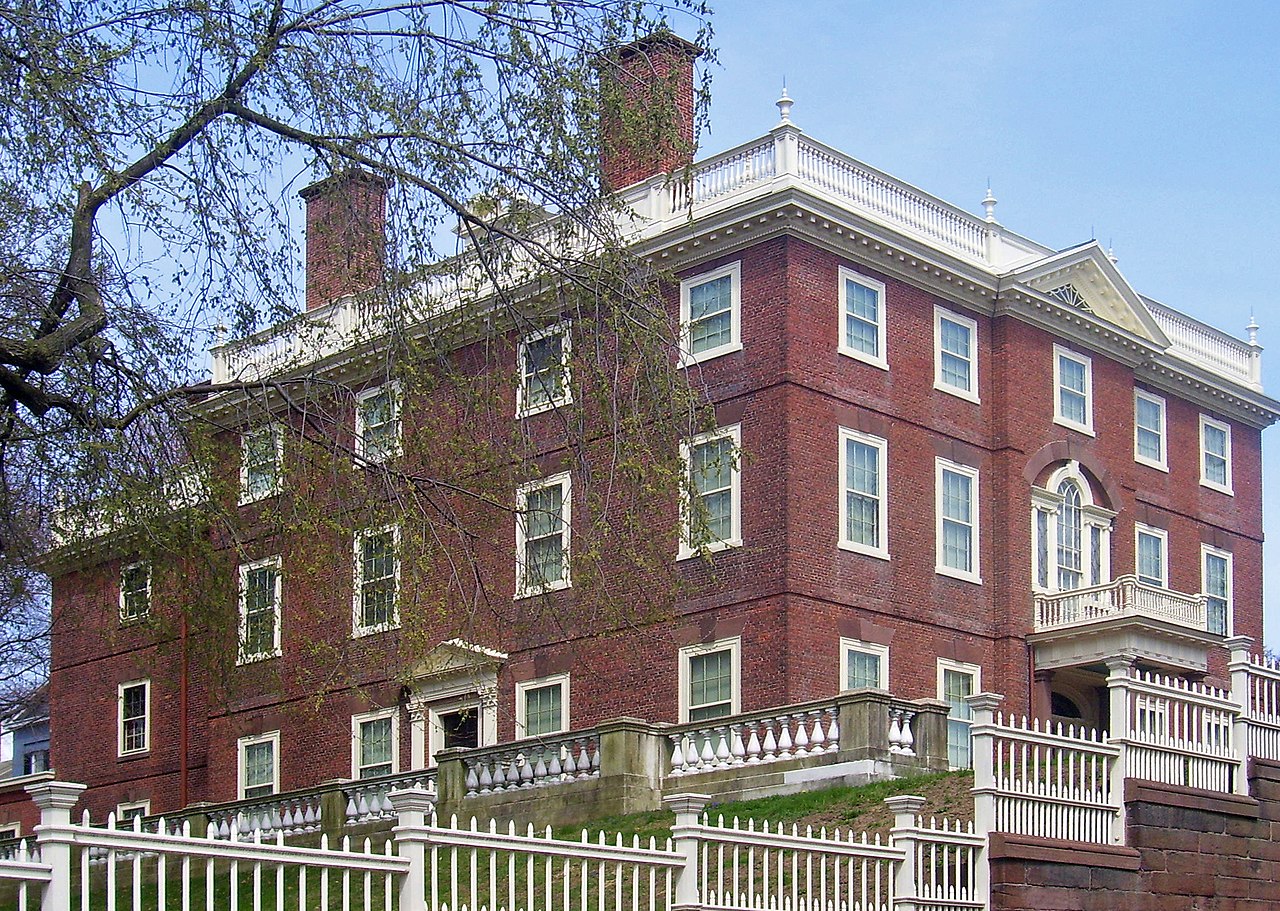
Stand back and take in the scale of the John Brown House: brick, three tall stories, generous windows, a carved doorway. When John Quincy Adams saw it, he called it the most magnificent private mansion he'd laid eyes on anywhere in America. It was finished in 1788 for the merchant John Brown, of the first family of Providence — the family that financed the college's move here in 1770 and gave its name to Brown University in 1804.
But the source of that fortune must be stated plainly. John Brown was a slave trader, one who defended the transatlantic trade even as it was being outlawed, and who was prosecuted under the new federal law for continuing it. His own brother Moses became a devoted abolitionist, so the split ran right through the family.
The grandeur of this house, the wealth behind the university's name, and the trade in human beings are not separate stories — they are the same story. It's the honest note the walk ends on: the ideal up on the hill, and the cost down here.
Down to the Water, Where the Rivers Were Set on Fire
The walk finishes at the water, where old Providence meets its living present. Waterplace Park is a tidal basin ringed by walkways and Venetian-style bridges. For most of the twentieth century these rivers were buried under pavement and rail; in the 1990s the city uncovered them, rerouted them, and stitched the waterfront back together.
On certain nights it becomes something else entirely. WaterFire sets dozens of braziers ablaze right on the surface of the river, lit at dusk and tended by black-clad boats, wood-smoke and music drifting over the crowds. Part art installation, part civic ritual, it draws the whole city down to the water's edge.
From here, look back up the hill: Roger Williams on his terrace, the white spire, the mile of saved houses, the mansions and their tangled fortunes — nearly four centuries layered from the bluff down to this basin.
Good to know
The full route runs roughly a mile and a half from Prospect Terrace down to Waterplace Park, ending with about a 0.8-mile descent off the hill to the river; plan on two to three hours depending on how long you linger in the RISD Museum, the Athenaeum, or the church. It's a downhill walk overall but with uneven colonial sidewalks and some steep stretches, so wear sturdy shoes. Bring water, check opening hours for the museum and library if you want to go inside, and if you can time it for a WaterFire night, do — the schedule is seasonal and posted online.
The full walk also passes RISD Museum, Stephen Hopkins House.
If this is the kind of layered, honest history you want on your visit, the free self-guided audio tour "Brown: College Hill & Benefit Street" is the natural way to walk it. It carries you from Prospect Terrace down through every stop above at your own pace, with narration that doesn't shy away from the harder truths — a genuinely rewarding, no-cost way to experience the whole hill.
Take the free tour: Brown: College Hill & Benefit Street →