New Haven, USA · 5 min read
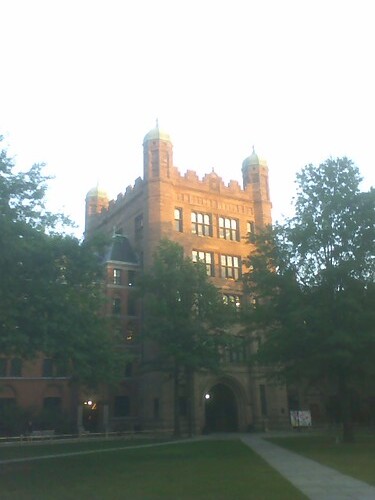
New Haven can feel like two cities at once. There's the working Connecticut port town, and then there's the fantasy stitched into it — a campus that looks like it was airlifted, weathered and ancient, from a medieval European capital. The strange truth is that most of it was built in the 1920s and '30s by a young American university determined to look older than it was.
Walking across Yale is really an exercise in reading a performance. The honeyed limestone, the soaring tower, the gargoyles and hidden carvings — all of it was staged, and staged brilliantly. And then, one block from the theatrics, there's a single modernist building that finally drops the costume and tells the truth.
If you're deciding whether Yale's campus is worth an afternoon of your trip, here's the case for it — and the thread that turns a pretty stroll into a genuinely good story.
The Honest Little Building Everyone Walks Past
Step through Phelps Gate from the New Haven Green and the noise of the city drops away. This is Old Campus, the pre-Gothic Yale, and the thing worth finding here is the least showy structure in sight: Connecticut Hall, a plain Georgian brick box raised between 1750 and 1752. It's the oldest building at Yale and the oldest in all of New Haven.
No gargoyles, no towers, no theatrics — just brick doing what brick does. It matters precisely because it's so modest. Everything else you'll see on this walk is a performance staged around this quiet, truthful little hall. Hold the image of it in your mind; it's the 'before' against which the whole spectacle measures itself.
216 Feet of Manufactured Antiquity
Harkness Tower rises 216 feet over the Memorial Quadrangle — one foot, the story goes, for each year since Yale's founding in 1701. It opened in 1921, and yet every weathered edge and honeyed streak was engineered to look ancient on day one. This is manufactured Gothic at its most audacious.
That's where the campus's favorite legend comes from: that workers poured acid down the tower to age it overnight. It's almost certainly not true — the aging was subtler, worked into the carving and the choice of stone — but the myth endures because it simply feels right for a place this theatrical. Look to the buttresses for the carved 'Eight Worthies' of Yale, among them Nathan Hale, Noah Webster and Eli Whitney. If the carillon rings out while you're standing there, all the better. Critics once dismissed the whole ensemble as a 'cathedral orgy.' It's hard not to admire the nerve of it.
A Cathedral Built for Books
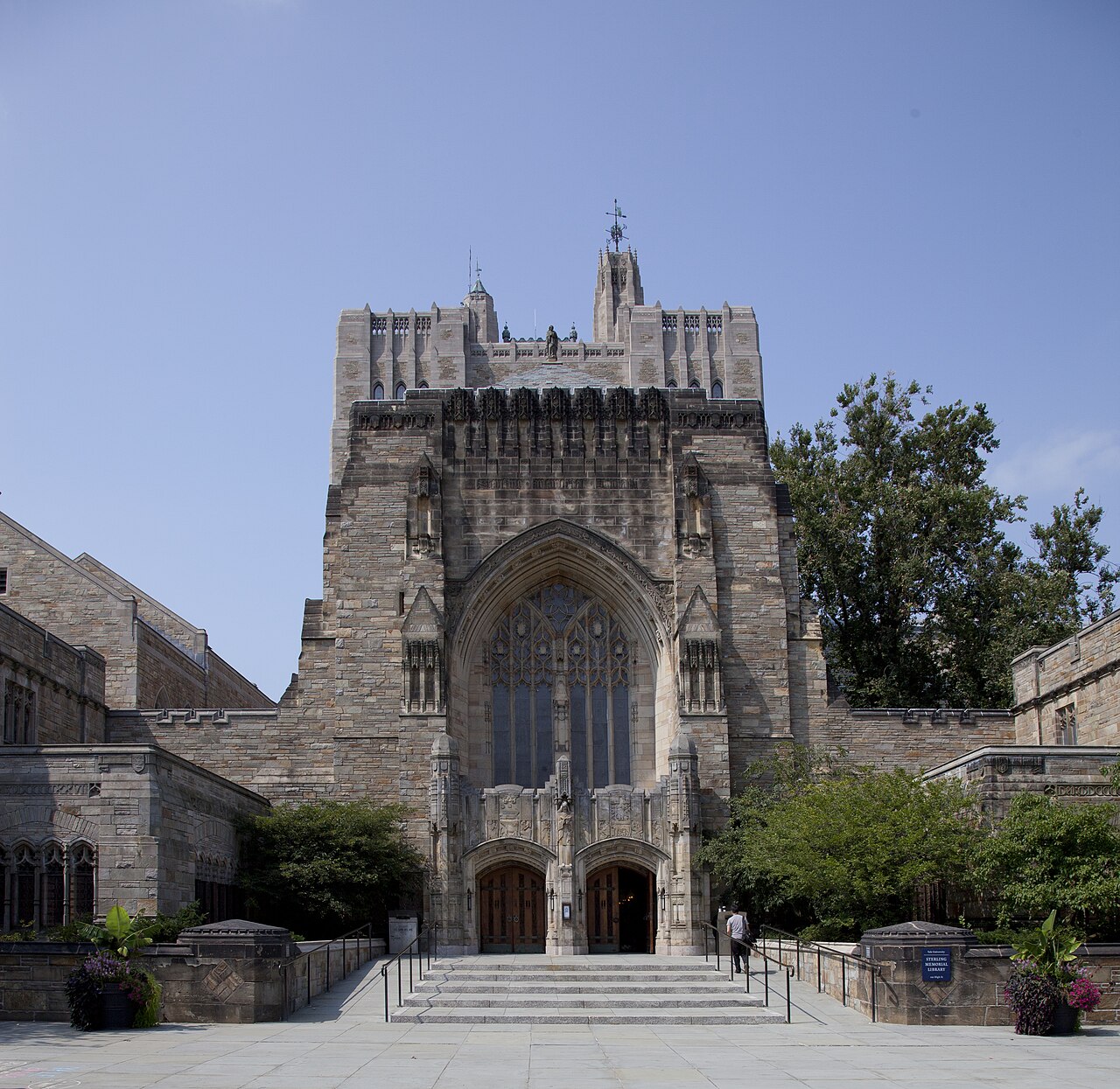
Sterling Memorial Library, finished in 1930, was conceived by architect James Gamble Rogers as a literal cathedral of books — built, in his words, as close to modern Gothic as they dared. From outside you can read the whole vocabulary: stepped buttresses, pointed windows, and a great central tower that is really just a stack of book shelving dressed up as a nave.
But the exterior is only a promise. Step inside and the entrance hall opens like a genuine nave — and where a cathedral would place its altar, Sterling installs a mural of 'Alma Mater,' Mother Yale herself, in a moment of pure, cheerful heresy. This was the original home of the Gutenberg Bible, donated through the Harkness family whose money built so much of the campus. From plain little Connecticut Hall to this — that's how far the performance traveled.
The Owls Are Watching (and Winking)
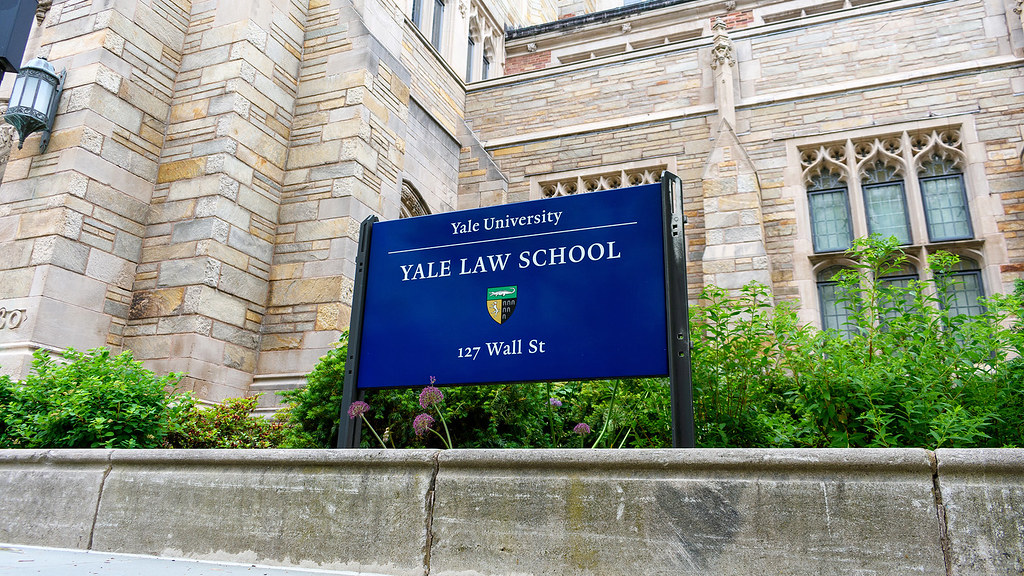
Same architect, same limestone, same devotion to the Middle Ages — but this time for the lawyers. The Sterling Law Building wraps around its own courtyard, and its stone rewards anyone willing to slow down and hunt. The recurring motif is the owl, symbol of wisdom and justice, keeping watch over future attorneys.
Look longer and the solemnity cracks. Rogers loved to hide jokes in his carving: cops and robbers, a scholar dozing over his books, the whole human comedy of the law rendered in gray stone. This is the part of manufactured Gothic that's easiest to love — beneath all the medieval gravity, the carvers were plainly winking. A building pretending to be six centuries old, decorated with sly little jokes about the very people who'd study inside it.
The Moment Yale Dropped the Costume
One block from all that limestone swagger, the act finally ends. The Beinecke Rare Book and Manuscript Library, completed in 1963, has no gargoyles, no fake weathering, no pretense of age. It's a cube lifted on four points, its walls made of thin panels of Vermont marble — so thin that daylight glows through the stone, amber and gold, shielding the books from harsh light while bathing them in warmth.
Inside stands a six-story glass tower of books, and sealed within it, the Gutenberg Bible — moved here from Sterling. Consider that journey: from the cathedral-nave of the 1930s to this luminous glass shrine of the 1960s. It's the same honesty we began with at Connecticut Hall — modern materials doing exactly what they truly do, no costume required. Yale spent half a century staging a medieval past in shadow and stone, then, one block away, told the truth in glowing marble.
Good to know
The full route runs from Phelps Gate on the New Haven Green through Old Campus, the Memorial Quadrangle, Cross Campus, Sterling Library, the Law School, Beinecke Plaza and finally the Beinecke Library — roughly a mile of easy, flat walking that most people cover in 60 to 90 minutes with stops. Wear comfortable shoes, and try to time it so you can step inside Sterling and the Beinecke (check public hours before you go, as building access varies). Woolsey Hall and Beinecke Plaza sit close together near the end, so the two final stops are only about a minute apart on foot.
The full walk also passes Cross Campus, Woolsey Hall & Beinecke Plaza.
If this is the kind of story you want in your ear as you walk it, take the free self-guided audio tour 'Yale: Stone & Shadow.' It threads all seven stops together — from the honest brick of Connecticut Hall to the glowing marble of the Beinecke — and turns a pretty campus stroll into a genuine detective story about a university that built itself a past. Press play at Phelps Gate and let it guide you the rest of the way.
Take the free tour: Yale: Stone & Shadow →