New Haven, USA · 7 min read
Most visitors to New Haven come for Yale — the Gothic towers, the ivy, the museums. But before there was a college, there was a plan: nine perfect squares of streets laid out by Puritans in 1638, sized (so the legend goes) for the 144,000 souls Revelation promised to spare at the Second Coming. New Haven wasn't just a town. It was meant to be a holy city.
Walk its center today and you'll find sixteen acres of grass ringed by traffic — pleasant, ordinary, easy to cross without a thought. But beneath that calm lies a story of two foundings that overlap on the same ground: a Puritan utopia and a university named for a man whose fortune was tangled in the slave trade, with thousands of colonial dead still lying quietly underfoot.
If you're deciding whether the New Haven Green is worth an afternoon, here's the case for slowing down — and for reading the ground as carefully as the buildings.
A City Sized for the Second Coming
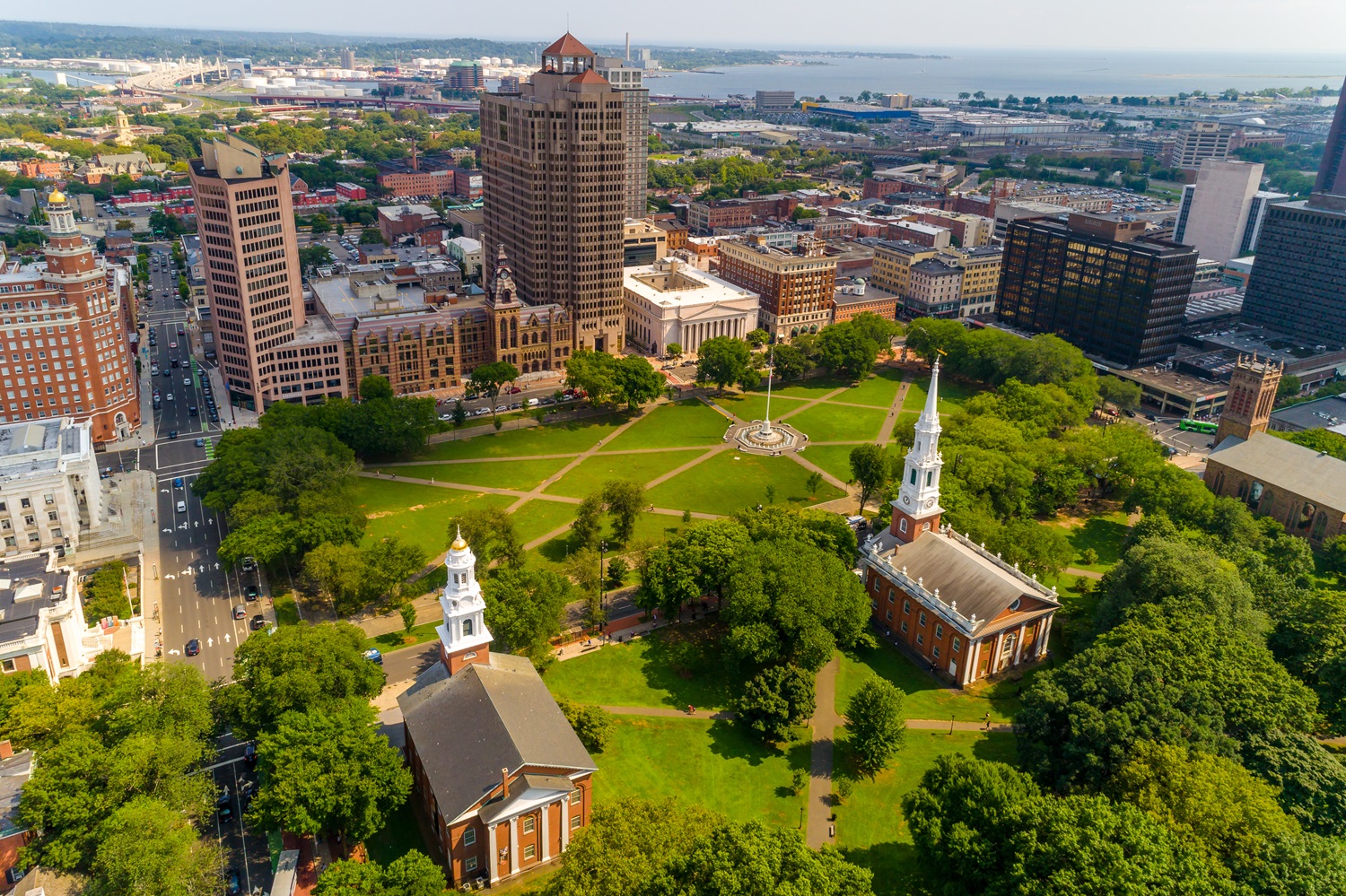
The New Haven Green isn't an accident of urban sprawl. In 1638, Puritans under John Davenport and Theophilus Eaton laid out the town as nine squares — one of the first genuinely planned cities in America — and deliberately kept this middle square open as common ground. According to legend, they sized it to hold the 144,000 souls the Book of Revelation promised would be spared at the Second Coming. In their minds, they were building a holy city meant to outlast the world itself.
It was also a town with a secret. New Haven once sheltered the regicides — the judges who had signed the death warrant of an English king and then fled the Crown's revenge across the Atlantic. That streak of defiance is woven into the place, hidden in plain sight. Standing at the center of the square, it's worth remembering that everything visible today was arranged around a single, audacious idea about the end of time.
The City Built Upon Its Dead
Three churches rise in a row on the Green, built together between 1812 and 1816 when the town wanted its faith made visible in stone. On the right stands Trinity, often called the first Gothic-style church built in the United States — its pointed arches a full generation ahead of American fashion. Beside it, Center Church keeps to the plainer, older meetinghouse manner.
The real story, though, is underground. When Center Church was built, the builders raised it directly over the original burying ground — and rather than move the dead, they simply enclosed them. A crypt beneath the church still holds gravestones from the 1600s, in place, where the bodies lie. Thousands of colonial dead remain under the Green, beneath the grass and the footsteps, never removed. The holy city planned for the risen is, quite literally, a city built upon its dead. (The crypt is interior and open only in the warmer months, so time your visit if you want to see it.)
Abolition and Bondage on the Same Grass
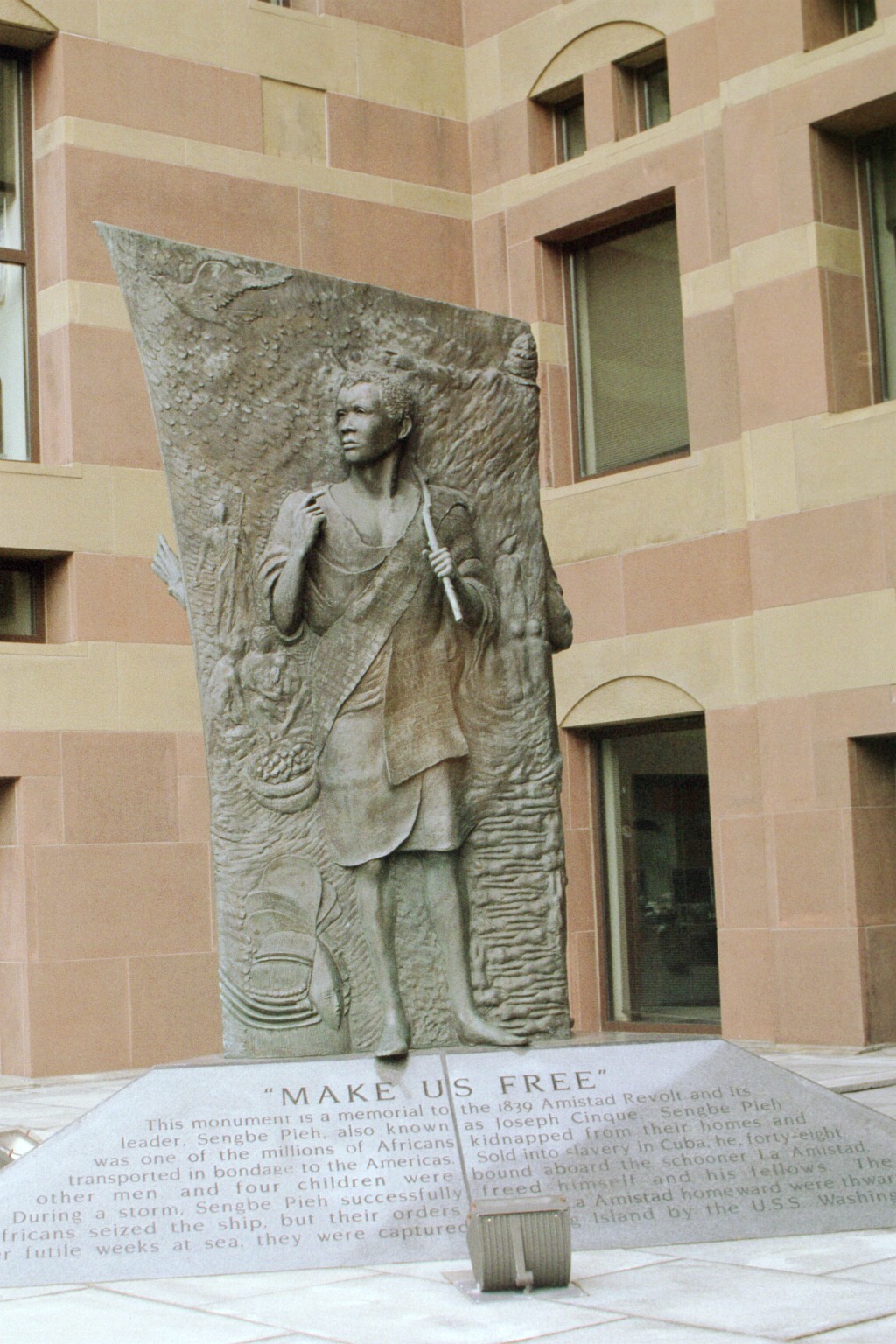
Outside City Hall stands the Amistad Memorial. In 1839, fifty-three Africans who had seized the schooner Amistad rather than be sold into slavery were brought to New Haven and jailed here. Their case climbed all the way to the Supreme Court, and in 1841 the court ruled them free men, unlawfully taken — with former President John Quincy Adams arguing their cause. They won their liberty on the very land the Puritans had called holy.
But the Green doesn't let you keep only the part you admire. This same common was also the site of New Haven's last public sale of an enslaved human being. The conscience that freed the Amistad captives and the commerce that sold people stood on identical ground. Abolition and bondage, salvation and sale — all held within the same nine squares. It's this honesty that makes the Green worth reading slowly rather than simply crossing.
The Line Between Town and Gown
Between the Green and Old Campus stands Phelps Gate, the threshold where the town's oldest common meets the college's oldest heart. Step through it and the noise of the streets falls away as the passage frames a quieter world beyond. For three centuries, town and gown have faced each other across this single line — the university literally grew up looking out over the town's holy square, its dead, its churches, and its trials.
Gates like this one are quiet arguments: they tell you where one authority ends and another begins. Passing beneath the stone marks the shift from the first founding to the second — from the Puritan grid to the college, and to the complicated man whose name it took.
A Martyr, a Benefactor, and the Name on the Gate
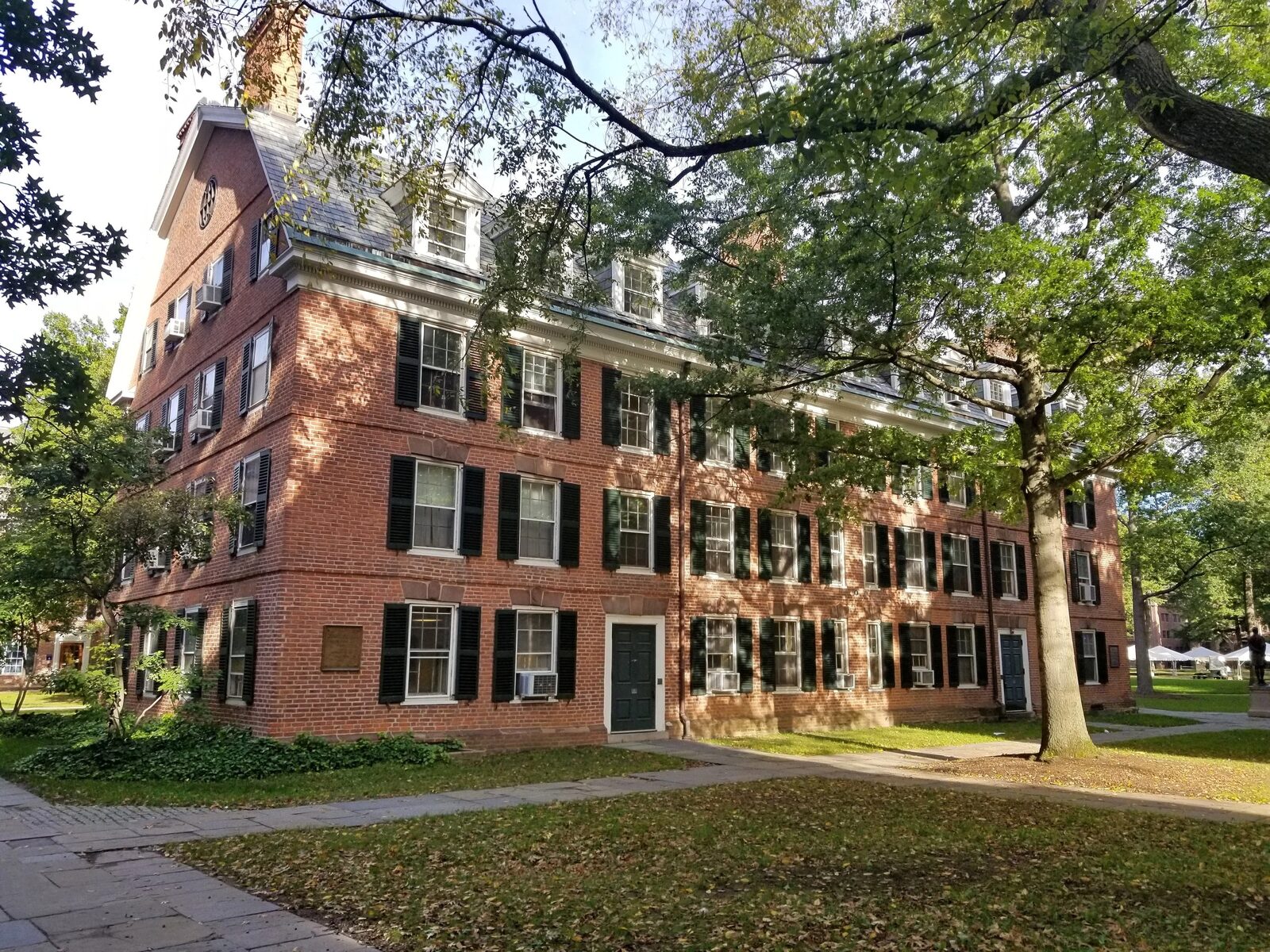
Just beyond Phelps Gate — the threshold between town and gown — stands Connecticut Hall, Yale's oldest building, raised between 1750 and 1752. Nathan Hale, class of 1773, roomed within these brick walls before the Revolution took him. Captured by the British as a spy and hanged at twenty-one, he left behind the line every schoolchild learns: that he regretted having but one life to give for his country. His statue stands nearby, forever young.
Then there's the name itself. The college was founded in 1701, moved to New Haven in 1716, and in 1718 took the name of Elihu Yale in gratitude for a gift of goods and books. The harder truth, told plainly: Yale made his fortune as an official of the East India Company, and that wealth was entangled with the slave trade — he profited from the buying and selling of human beings. The university bears his name to this day. A martyr for liberty and a benefactor built on bondage, both foundational, both standing here on the same campus edge.
Where the Town Finally Gave Its Dead a Home
The walk ends about four-tenths of a mile north, at the Egyptian-Revival gate of Grove Street Cemetery, where a single carved line answers everything that came before it: 'The Dead Shall Be Raised.' By 1797 the Green's burying ground could hold no more — its stones jostled, its dead layered upon dead — so New Haven did something new. It chartered this cemetery, the first in America laid out with permanent family plots, orderly avenues, and a design meant for the living to visit and remember, not merely to bury.
Inside rest Eli Whitney, Noah Webster, Roger Sherman who signed the Declaration, Charles Goodyear, and Samuel Morse — the people who shaped a nation, gathered under the trees. The route begins on a square the Puritans planned for the risen and built over its own dead, and ends where the town finally gave its dead a proper home and carved above them the oldest hope of all. In New Haven, the past is never quite buried.
Good to know
The full route is a compact loop centered on the New Haven Green, ending with a roughly 0.4-mile leg north to Grove Street Cemetery — plan on about an hour to ninety minutes at a reflective pace, more if you linger. It's flat and entirely walkable in ordinary shoes. Note that the Center Church crypt is interior and seasonal (warmer months only), and cemetery gate hours vary, so check ahead if those are must-sees. Comfortable footwear and a little time to stand still are all you really need.
If this is the kind of history you'd rather feel underfoot than read on a plaque, the free self-guided audio tour 'Yale: The Nine Squares' is the natural way to walk it. It threads all six stops together in order — from the Green's founding legend to the crypt, the Amistad Memorial, Phelps Gate, Connecticut Hall, and Grove Street Cemetery — narrating the two overlapping foundings as you stand on the ground where they happened. Load it up, start at the center of the square, and let the town tell you its own honest story.
Take the free tour: Yale: The Nine Squares →