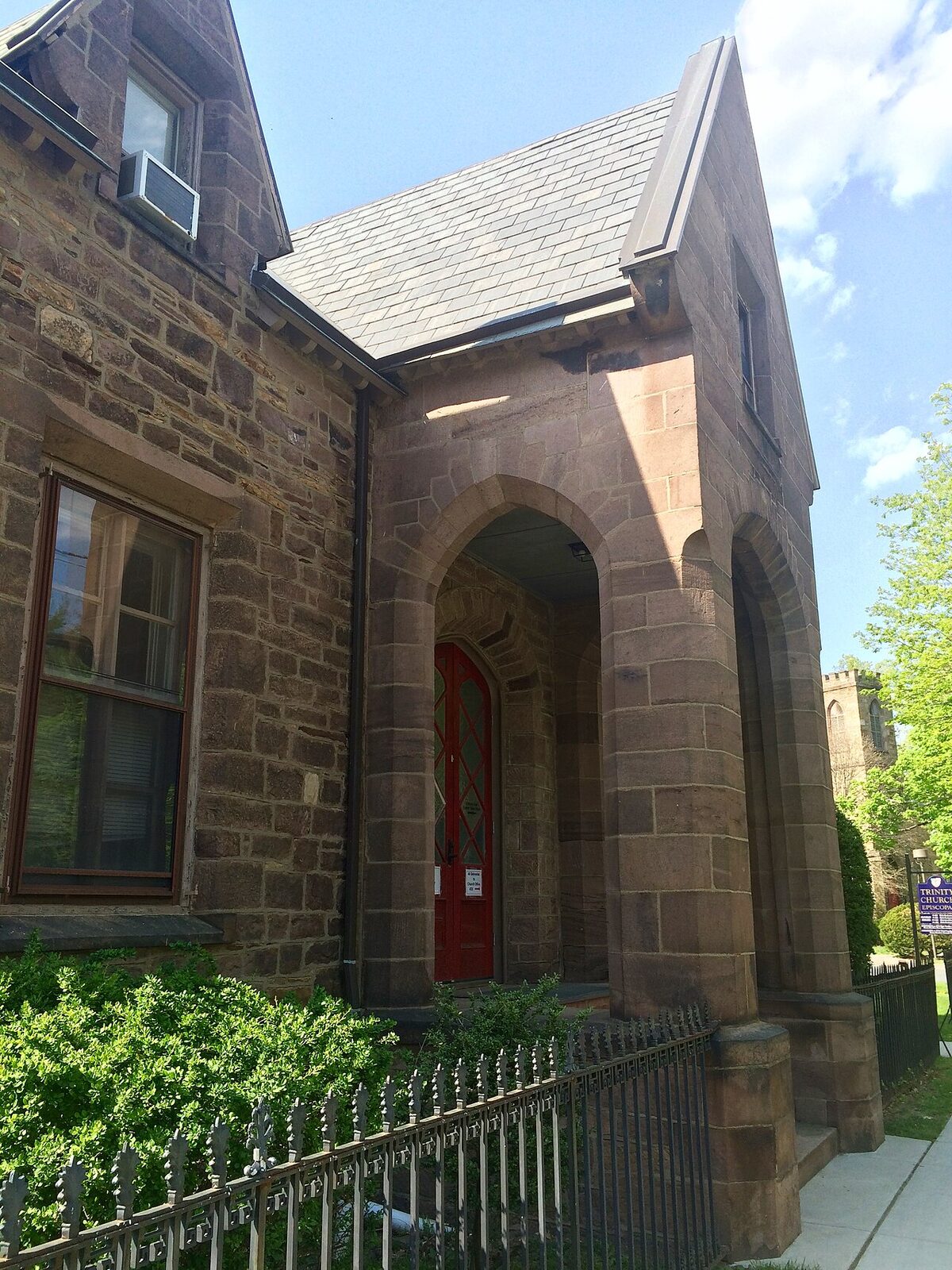
Princeton, USA · 5 min read
Princeton looks like it has been standing quietly in New Jersey since the Middle Ages. It hasn't. Most of the arches, towers, and cloisters that give the campus its hushed, ancient gravity went up in the early twentieth century — deliberately dressed to look six centuries older than they are.
That's the paradox that makes Princeton such a rewarding place to walk. This is a young American college that decided the fastest way to feel venerable was to commission antiquity outright, block by weathered block, in a style called Collegiate Gothic. The result is one of the most cohesive and theatrical campuses in the country.
If you're wondering whether Princeton is worth an afternoon on foot, the answer is yes — especially once you know what you're looking at. Here's a highlights reel of the stones and spires that tell the story, and how to walk them yourself.
The Arch That Gates Nothing
The walk begins under a vaulted stone tunnel at 1879 Hall, a gift from the class of that year — a class that included a young Woodrow Wilson. The building went up in 1904, which by the standards it imitates makes it practically brand new.
The arch darkens as you pass through it, then releases you toward Prospect Avenue like a medieval gatehouse. But there was never a wall here to gate. It's pure theatre: a college barely a century and a half old, wrapping itself in the costume of six-hundred-year-old Oxford and Cambridge.
Look closely at the deliberately rough-faced stone and the edges built to look weathered from day one. Princeton didn't inherit its antiquity — it ordered it. That audacity of manufacturing a past is the thread that runs through everything else on this route.
Stop 2
A Cathedral a College Built for Itself
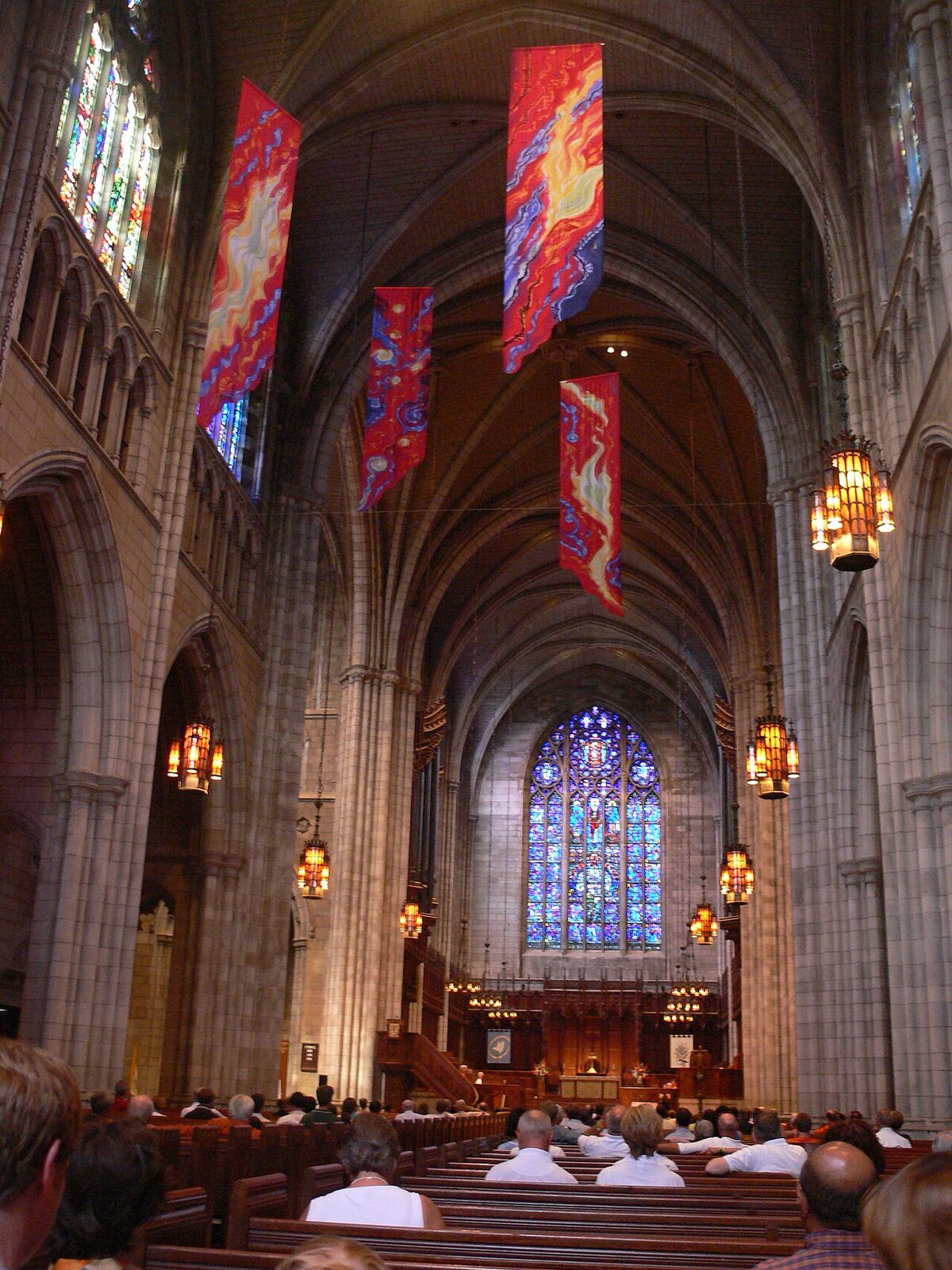
If 1879 Hall is the whisper of the Gothic idea, the University Chapel is the full shout. Finished in 1928 to Ralph Adams Cram's design, it ranks among the largest chapels at any university on earth. Cram was America's great evangelist of Gothic, and here he wasn't quoting the cathedral idiom — he was building a cathedral outright.
Inside, the nave soars on Aquia sandstone and oak, with light falling through stained glass in long colored shafts. It seats nearly two thousand. The scale isn't modesty; it's ambition made visible.
There's a reason it's so vast. The previous chapel burned in 1920, and Princeton answered the loss not with a quiet replacement but with a statement — a young college once again insisting on grandeur it hadn't inherited, reaching for Canterbury and Chartres and simply claiming the tradition as its own.
The Hinge: Where Decoration Became Commitment
Two buildings, standing side by side and twenty-four years apart, hold the turning point of the whole story. Chancellor Green, from 1873, is an octagonal jewel-box — Princeton's first free-standing library, designed by William Potter in exuberant Victorian Gothic. It's busy and delighted: polychrome brick, fussy ironwork, a stained-glass drum overhead like a lantern. This is Gothic as decoration.
Beside it stands East Pyne, from 1897 — same architect, entirely different mood. The color quiets, the forms grow disciplined and cloistered, and walking through its arch into the courtyard feels like stepping into an Oxford quad rather than a Victorian parlor.
Between these two buildings, Princeton found its costume. It stopped merely decorating with Gothic and committed to living inside it. The chapel, the great halls, the towers — all of it flows from the decision made on this spot.
Born Old: Antiquity by the Yard
Step into the courtyard of Holder Hall and try, for a second, to believe it's 1910. That's precisely what the building wants of you. Designed by Day and Klauder, its tower is modeled closely on the great gate-tower at Canterbury, commanding the quad with setbacks and pinnacles as if it had stood for centuries.
It hadn't — and the builders knew you'd know. So they cheated, beautifully. Stone was laid in irregular courses, edges softened, corners cut to look weathered by rain that hadn't yet fallen. Some sills were even set slightly uneven, manufacturing instant age.
The courtyard folds you in and muffles the town outside, and it stands as the fullest expression of the conceit that opened the walk: not a building that grew old, but a building born old, with antiquity delivered as a design specification, right on schedule.
The Stage Set With a Scheduled Audience
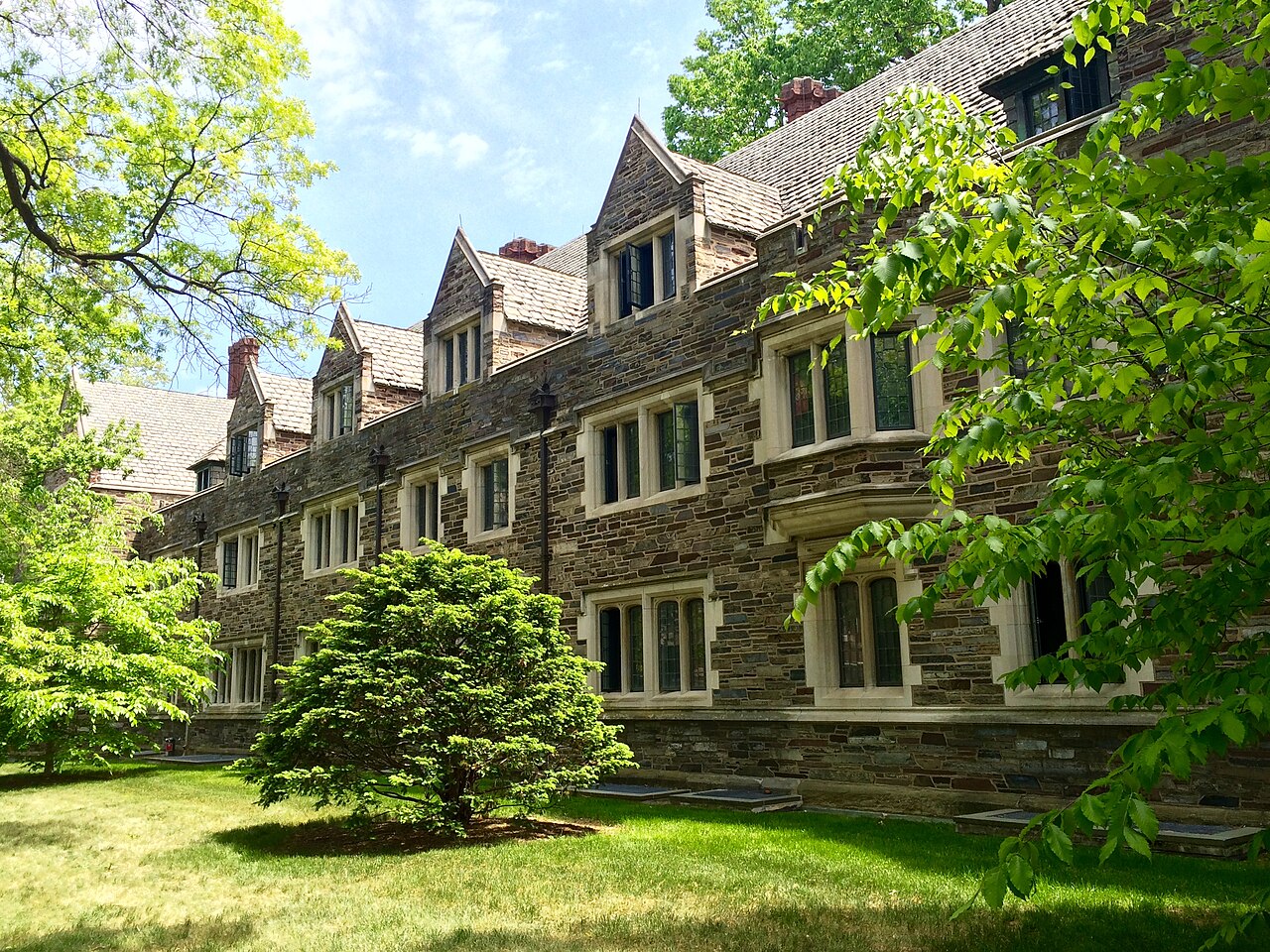
Everything traces back to Blair Hall. Built in 1897 by the Philadelphia firm Cope and Stewardson, it was the building that set Princeton's course. Before Blair, the college had merely flirted with Gothic. After Blair, it was committed. The architects had studied Oxford and Cambridge closely and brought that learning here first.
The grand stair and archway once faced the railroad, so arriving students climbed straight up from the station platform into the picture — greeted by an instant vision of an ancient university. It was, quite literally, a stage set with a scheduled audience.
Look for the deliberate asymmetry: the off-center tower, the broken and irregular roofline. A real medieval college accreted over centuries. Cope and Stewardson faked that piecemeal history in a single campaign, designing the accidents of age on purpose.
Good to know
Plan on roughly 1.5 to 2 hours at an easy pace. The core loop through 1879 Hall, the Chapel, and the older quads is compact and walkable, but the final leg out to the Graduate College and Cleveland Tower adds a longer stretch on foot — that walk is deliberately part of the experience. Wear comfortable shoes, bring water, and check whether the Chapel doors are open if you want to step inside. Most of the route is outdoors and free to explore year-round.
The full walk also passes Cleveland Tower & the Graduate College.
The best way to read these buildings the way their architects intended is to let the story unfold as you walk. The free self-guided audio tour Princeton: Stone & Spire guides you from the arches of 1879 Hall through Cram's soaring Chapel to Cleveland Tower's quiet exile — decoding the deliberate fakery of age at every step. Load it up, put in your headphones, and let a young college's invented antiquity come alive around you.
Take the free tour: Princeton: Stone & Spire →