Philadelphia, USA · 5 min read
Most visitors to Philadelphia head straight for the Liberty Bell and Independence Hall — and they should. But a few blocks west, across the Schuylkill River, sits a campus that has quietly shaped the modern world more times than almost any place on earth. The University of Pennsylvania was founded by Benjamin Franklin on a deceptively simple creed: pursue 'useful knowledge,' learning that actually does something in the world.
Walk its blocks and you're tracing 250 years of firsts — the first collegiate business school, the first electronic computer, North America's first medical school, and the labs where a Nobel-winning vaccine platform was born. It's a surprisingly compact stretch, dense with the kind of history that changed how the rest of us live.
If you're wondering whether West Philadelphia is worth the detour, here's the case — a highlights tour of the campus where the future kept getting invented.
The Radical Idea That Business Could Be Taught
At the western edge of campus stands Huntsman Hall, home to the Wharton School — the world's first collegiate business school. In 1881, steel and zinc magnate Joseph Wharton did something no one had done before: he endowed a school to teach business as a discipline, treating management, finance, and commerce as subjects worthy of a university rather than trades picked up on the job.
It sounds obvious today. At the time it was almost presumptuous — could you really lecture someone into being a good manager? Wharton bet yes, and every business school that followed traces its lineage to this single idea. It's Franklin's 'useful knowledge' creed in its purest form, and a fitting place to begin a walk that runs from ledgers to vacuum tubes to vaccines.
Where the Digital Age Drew Its First Breath
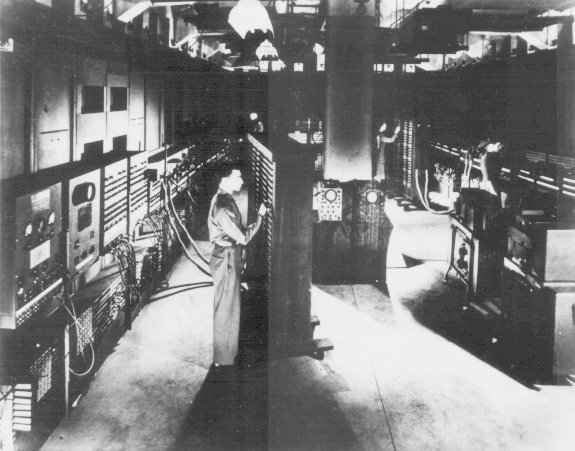
The Moore School of Electrical Engineering is the heart of this walk. Behind its walls, between 1943 and 1946, John Mauchly and J. Presper Eckert built ENIAC — the world's first fully electronic, general-purpose digital computer. Picture nearly eighteen thousand vacuum tubes filling an entire room, glowing hot and guzzling power, with tubes burning out so often that keeping the machine alive long enough to finish a calculation was its own marathon.
The real leap came next. The follow-on machine, EDVAC, introduced the stored-program concept — the idea that a computer's instructions could live in its own memory alongside its data. John von Neumann set it down in his famous 'First Draft' report, and every computer since, including the phone in your pocket, is built on that architecture.
A Pennsylvania historical marker stands on 33rd Street, and surviving ENIAC panels can be seen from outside and in the lobby. There's no full walk-in, but this is unmistakably where the digital age began.
Stop 3
The Hospital That Reinvented How Doctors Learn
The Hospital of the University of Pennsylvania — HUP — opened in 1874 as the first hospital in America built by a university expressly to teach medicine. Before this, medical students learned mostly from books and lectures, glimpsing real patients almost by accident. Penn put teaching, treating, and researching under one roof, with students learning at the bedside.
That model — the academic medical center — became the global standard, and it's the institutional engine behind many of the firsts on this walk. Penn counts twenty-nine Nobel laureates across its history, a remarkable share of them in medicine and physiology. It's also the ecosystem that would, more than a century later, produce the mRNA vaccines that close out this tour.
The 1765 Root of American Medicine
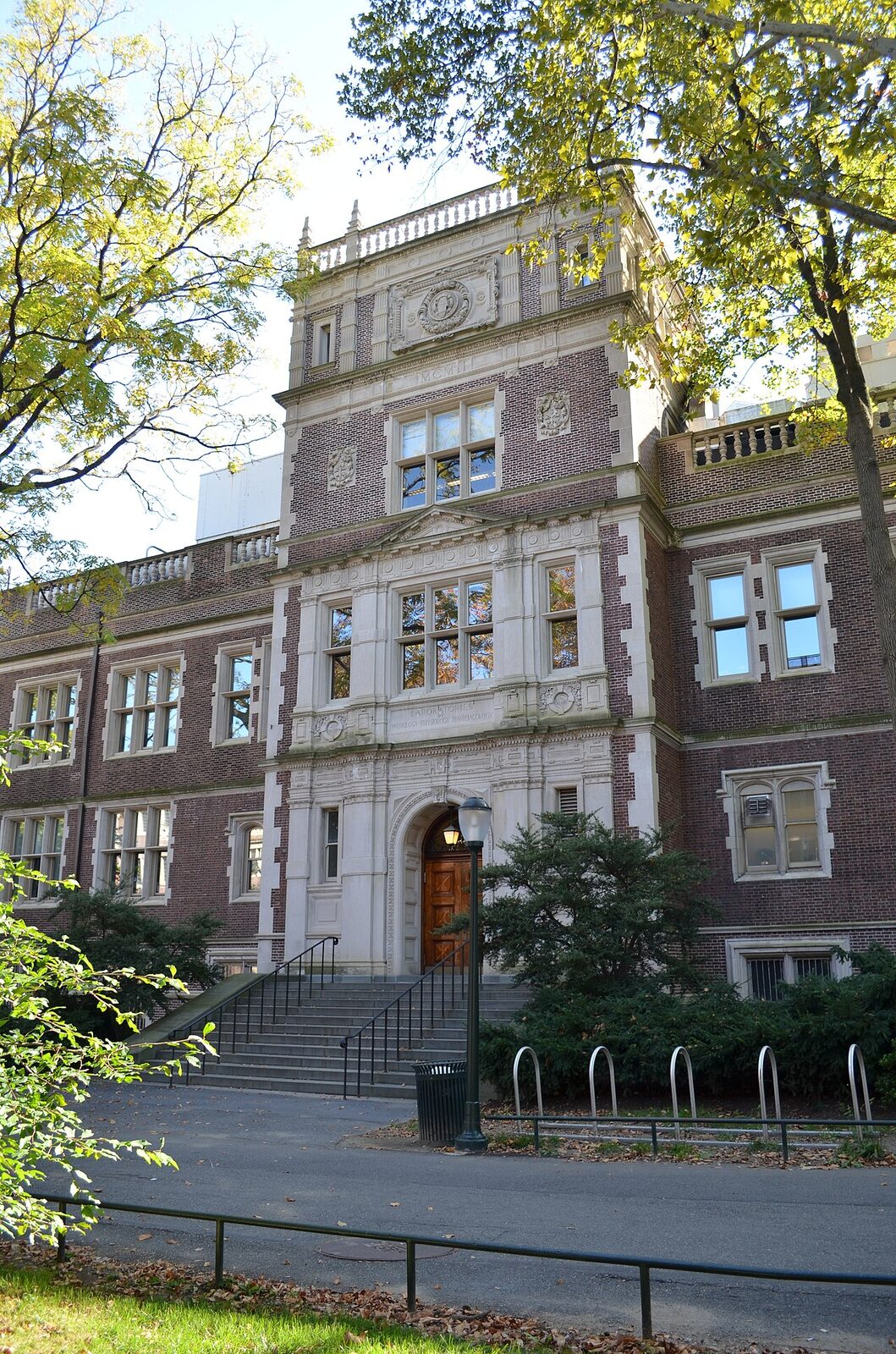
The John Morgan Building on Hamilton Walk carries a name worth pausing on. In 1765 — eleven years before the Declaration of Independence — John Morgan founded North America's first medical school right here. Trained in Edinburgh, Morgan came home convinced that American physicians deserved formal, rigorous education in anatomy, chemistry, and the theory and practice of medicine, rather than cobbling together scraps as apprentices.
It wasn't a smooth start. Morgan made enemies, feuded with rivals, and the Revolutionary War nearly wrecked the whole enterprise. But firsts rarely arrive gently, and the institution held. Every American medical school that followed grows from this root — the 1765 answer to Franklin's question of what knowledge is truly useful.
The Galloping Horse That Became Cinema
Picture Penn's campus in the 1880s, with a bank of cameras rigged to fire in sequence. Near the old veterinary-anatomy grounds, Eadweard Muybridge conducted his celebrated motion studies — settling once and for all the question of whether a galloping horse ever has all four hooves off the ground at once. His stop-motion photographs proved it did, capturing what the human eye alone cannot.
By photographing humans and animals frame by frame, Muybridge dissected movement into slices of time. String those frames back together and you have the moving image — cinema's DNA. His exact open-air studio is long gone, but the through-line is striking: ENIAC sliced calculation into electronic pulses, Muybridge sliced motion into frames. Different centuries, the same instinct to break something continuous into pieces you can finally understand and rebuild.
Good to know
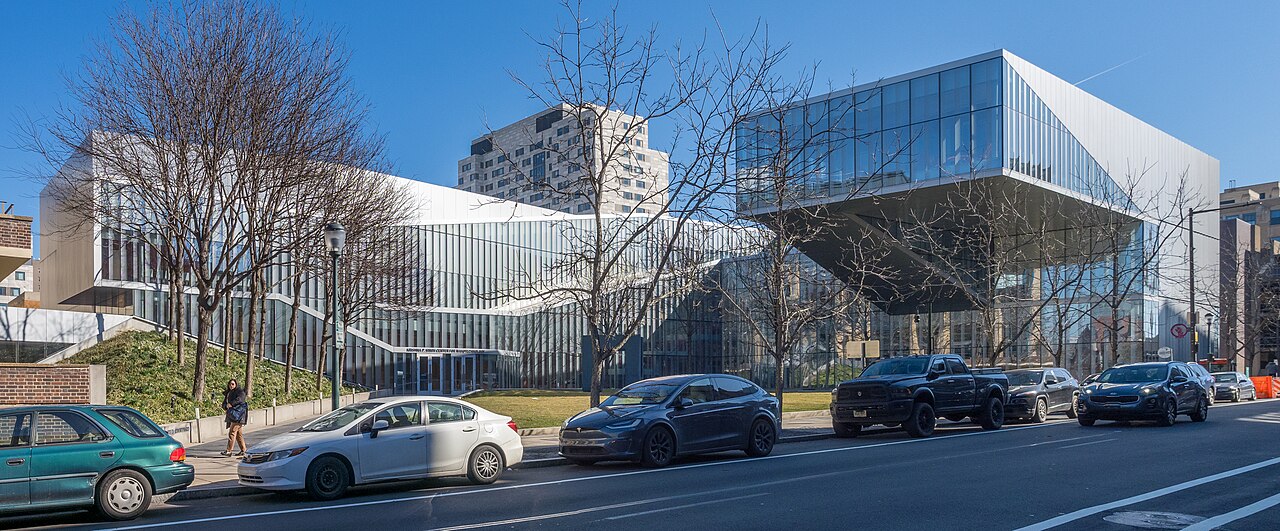
The route runs roughly a mile from Huntsman Hall at the western edge of campus east down Walnut Street to the Moore School and Singh Center, then south to the medical campus around HUP, Hamilton Walk, and Penn Medicine. Expect about an hour at an easy pace. Wear comfortable shoes, bring water in warmer months, and note that most of these are exterior stops — the labs, hospital, and engineering buildings aren't walk-in, so the payoff is in the stories and the surviving markers rather than interiors.
The full walk also passes The mRNA Revolution.
The easiest way to connect these scattered landmarks into one narrative is the free self-guided audio tour 'Penn: Birthplace of the Modern,' which walks you from Wharton to the mRNA labs and tells the full story at each stop. Cue it up, start at Huntsman Hall, and let Franklin's 250-year experiment in useful knowledge unfold block by block.
Take the free tour: Penn: Birthplace of the Modern ENIAC →