Providence, USA · 5 min read
Providence rewards travelers who wander uphill. Above the red-brick bustle of downtown, the College Hill neighborhood climbs into a leafy, walkable stretch of history — and at its center sits the compact green heart of Brown University, an Ivy League campus small enough to cross in a few minutes but layered with more than 250 years of stories.
What makes Brown worth a detour isn't just the architecture, though there's plenty of that. It's the idea baked into its founding: chartered in 1764, it was the first American college to admit students regardless of their faith, born in Roger Williams's Rhode Island — the colony built expressly for freedom of conscience.
And it's the honesty of how the campus now tells its own story, ending not with self-congratulation but with a reckoning. This is a short walk that carries a lot. Here's what to see, and why it lingers.
The Gates That Only Open Twice
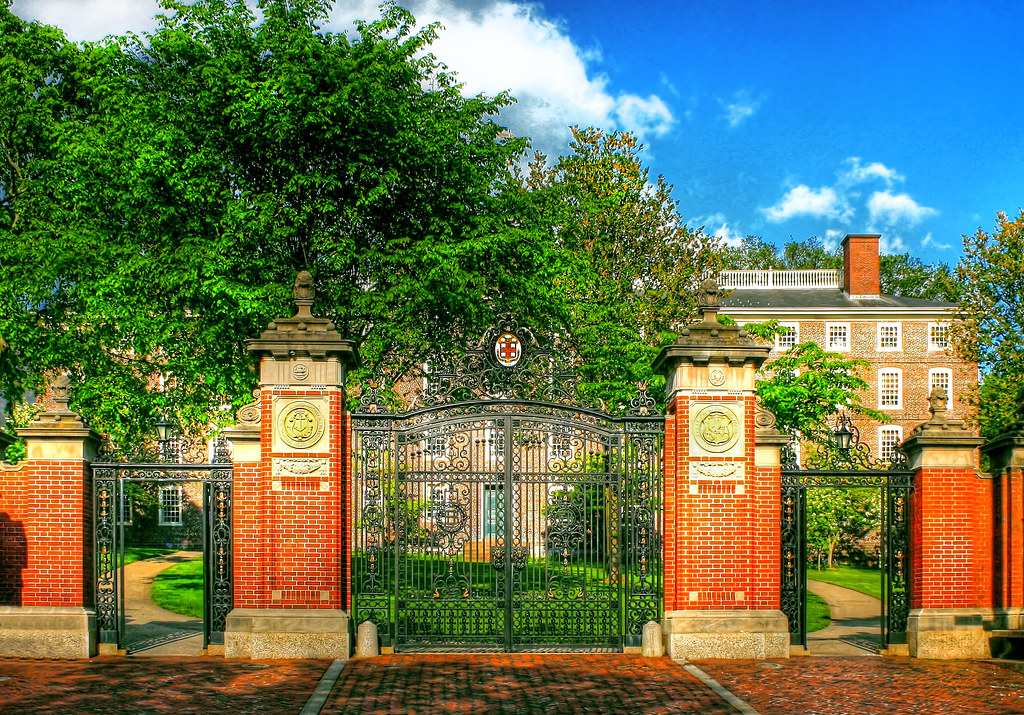
The black iron Van Wickle Gates, installed in 1901, keep one of Brown's most beloved traditions. They swing inward once a year at Convocation to welcome new students, and outward once at Commencement to release the graduating class into the world. Superstition warns that anyone who walks through the center before earning their degree forfeits it — so undergraduates dutifully slip through the side gates and save the middle for the day it counts.
Just behind the gates rises University Hall, built in 1770 and the oldest building on campus. Its lines echo Princeton's Nassau Hall, on which it was modeled. During the Revolutionary War it served not as a classroom but as a barracks and hospital for Continental and French troops — old brick with a long institutional memory.
A Lawn Built on an Idea
The Main Green is the wide lawn the whole campus leans toward, but the real ground here is philosophical. When Brown was chartered in 1764, it did something no American college had done before: it opened its doors to students of every religious affiliation and promised none would be tested on their faith. No creed at the gate, no sect required.
That was no accident of geography. This is Rhode Island, the colony Roger Williams founded as a sanctuary of conscience, on the radical premise that belief cannot be commanded. Brown grew straight out of that soil, and students crossing the green between classes are, in a sense, walking across the oldest promise the college ever made.
The University's Ceremonial Living Room
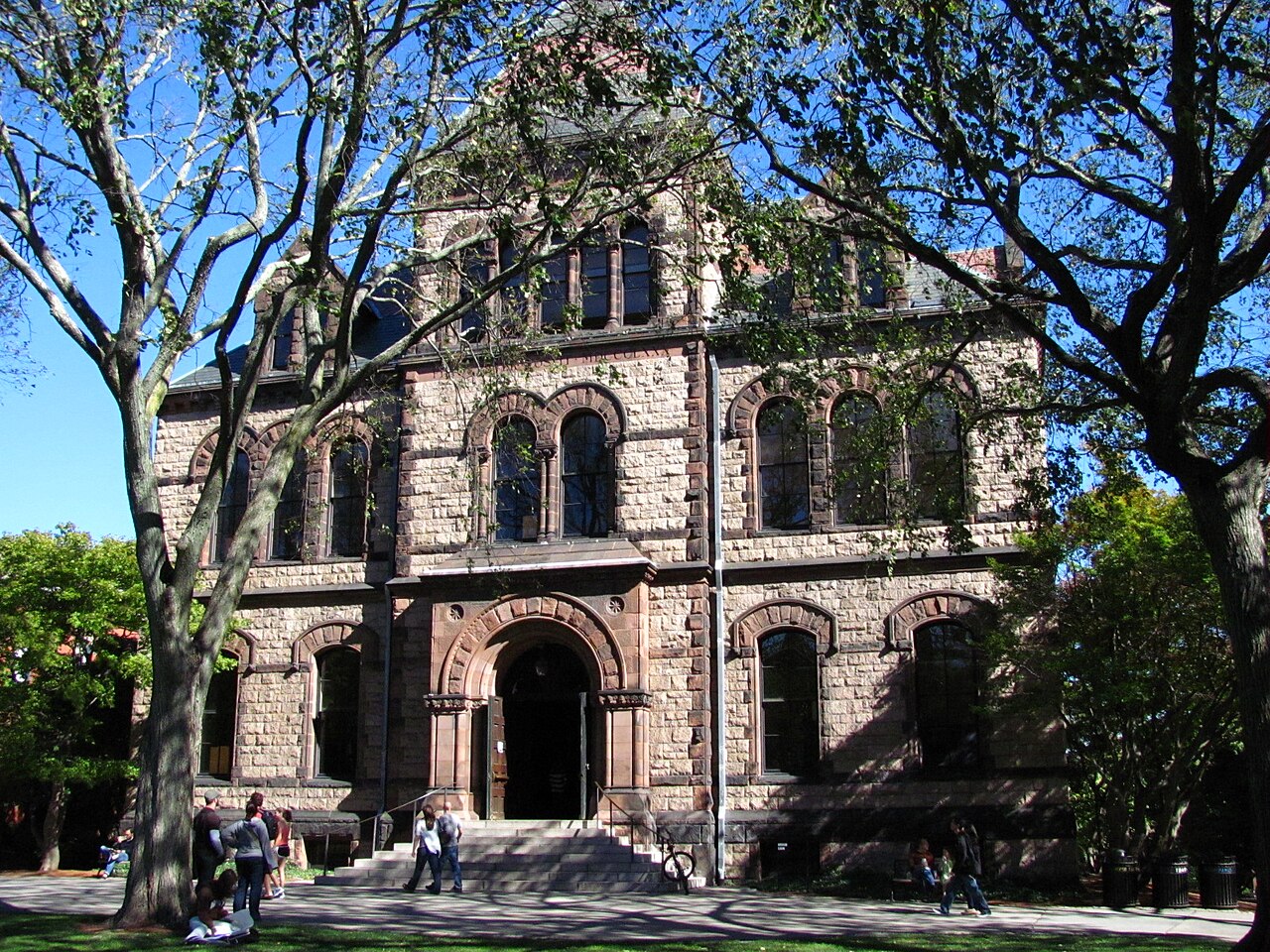
Sayles Hall, a stately pile of stone from 1881, functions as the university's ceremonial living room. Inside, a great hall waits beneath a grand memorial organ, its walls lined with rows of portraits — presidents, benefactors, and the faces that watched the college grow. When Brown gathers for its most solemn occasions, it gathers here.
There's a quiet continuity in that. The founding promise made out on the green — welcome, whatever you believe — looks back down from every frame. It's a room built to remember, and to remind visitors that an institution is ultimately the sum of the people who kept its word.
A Clock Tower That's Really a Love Letter
Rising ninety-five feet in Italianate brick and stone, Carrie Tower was completed in 1904 — and unlike so much else on campus, it commemorates neither power nor learning. It's a memorial to grief and devotion, given by Paul Bajnotti in memory of his wife, Carrie Mathilde Brown, a granddaughter of Nicholas Brown, the family whose name the university carries.
Around the tower runs a single inscription: 'Love is strong as death.' Amid all the stone raised to founding, faith, and scholarship, here is one structure raised simply for love. The clock keeps the university's time; the words keep something older.
Chapel, Library, and the First President
Manning Hall, built in 1834, wears clean Greek Revival columns that give it the look of a small temple — fitting, since for a long stretch of Brown's history it served as both chapel and library, a house for prayer and a house for books under one roof.
It takes its name from James Manning, Brown's first president. Like University Hall, he arrived by way of Princeton, a graduate who shaped the fragile young college in its earliest years and helped turn a bold charter into a functioning school. Standing here, the walk has nearly come full circle — but the campus is about to tell a harder truth just steps away.
An Honest Reckoning in Iron
The walk ends at Martin Puryear's Slavery Memorial, dedicated in 2014 — a broken length of iron chain, half-risen from the earth, marking Brown's ties to the transatlantic slave trade. The college that celebrated a founding blind to a student's faith was also built, in part, on wealth drawn from human bondage; the Brown family and others among its early benefactors were entangled in that trade.
The memorial didn't appear by accident. It grew from Brown's landmark 2006 Slavery and Justice report, commissioned under President Ruth Simmons, the first African American president of an Ivy League university, who asked the college to look squarely at its own past. The result is a place that holds two truths at once: a charter of conscience and a debt of conscience — a college that opened its doors to every faith learning, at last, to reckon with whom it once kept out.
Good to know
This is a short, easy loop — the College Green is compact, so the whole walk covers well under a mile and takes roughly 45 minutes to an hour at a reflective pace. Wear comfortable shoes for College Hill's slopes and brick sidewalks, bring water on warm days, and set aside a moment at the Slavery Memorial. The green is open year-round; the campus is liveliest during the academic term.
If you want the full story as you walk it, the free self-guided audio tour 'Brown: Founding & the College Green' is the perfect companion — it guides you from the Van Wickle Gates to Martin Puryear's Slavery Memorial with narration that connects each stop into a single arc. Load it up, put in your headphones, and let the campus tell you both of its truths.
Take the free tour: Brown: Founding & the College Green →