New York, USA · 6 min read
Columbia University looks, at first glance, like every postcard of the Ivy League: domed libraries, wide granite steps, students crossing quads with coffee. But this is a campus that in the space of a single century helped birth both a landmark student uprising and the atomic age itself. Two of the twentieth century's biggest stories are written into a few hundred feet of Morningside Heights ground.
If you're deciding whether Columbia is worth a detour beyond the tourist core of Manhattan, the answer depends on what you want from a place. Come here for architecture and you'll be satisfied. Come here for history — the messy, consequential, still-argued kind — and you'll leave with far more than you expected.
This is a walk about a university entangled with power: the 1968 revolt against a segregated gym and Vietnam-era weapons research, and the quiet basement laboratory just to the north where uranium was first split on American soil. Here's how to read the ground.
The Climb That Was the Whole Argument
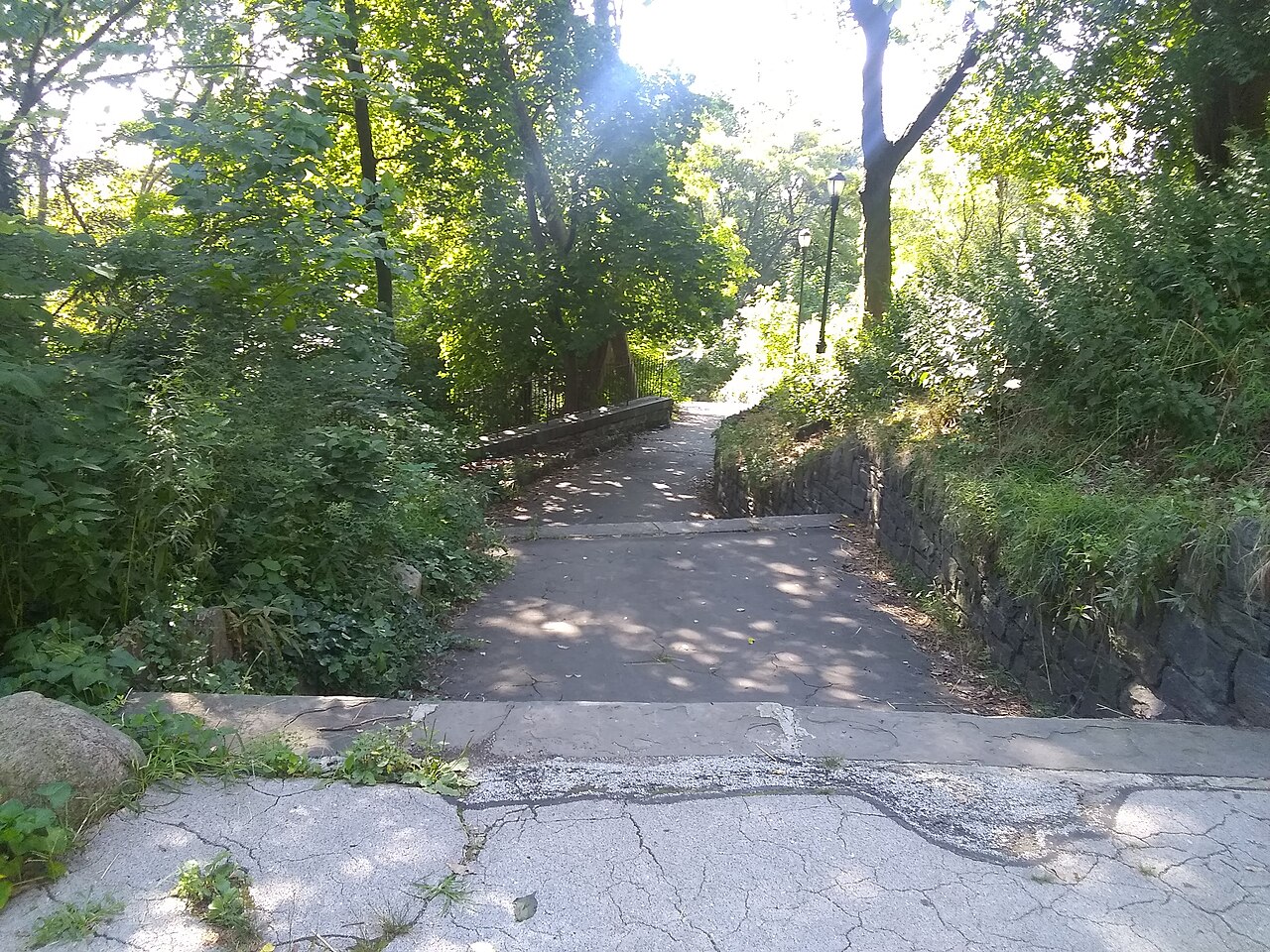
Start not on campus but below it, in Morningside Park — public land, and part of Harlem. In 1968, Columbia planned to build a gymnasium here, on parkland, ostensibly shared with the surrounding community. But the design gave that community only a small share of the building, entered through a separate door lower down the hill. Critics gave it a bitter name that stuck: 'Gym Crow.'
Stand at the foot of the slope and count the stairs — roughly a hundred and fifty-nine of them, climbing some hundred vertical feet from park to campus. That climb is the entire conflict in miniature: who sits above, who is left below, and who gets to decide. Everything the uprising became grew out of this hillside, and the walk up plants that question in your legs before a single building comes into view.
Noon at the Sundial
At the crossing of the campus's main paths sits a low granite drum — the Sundial. For more than a century it has been Columbia's speaking place, where crowds gather and voices carry. On April 23, 1968, a noon rally here lit the fuse.
Among the speakers were Mark Rudd, chairman of the Students for a Democratic Society, and Cicero Wilson, president of the Student Afro-American Society. Two grievances converged: the gym down in the park, and Columbia's ties to the Institute for Defense Analyses, a consortium conducting weapons research for the Vietnam War. What began as protest became occupation within hours. From this spot, hundreds of students moved off toward the buildings, and the university would not be the same for a week — or, arguably, ever again.
Hamilton Hall and the Malcolm X Liberation College
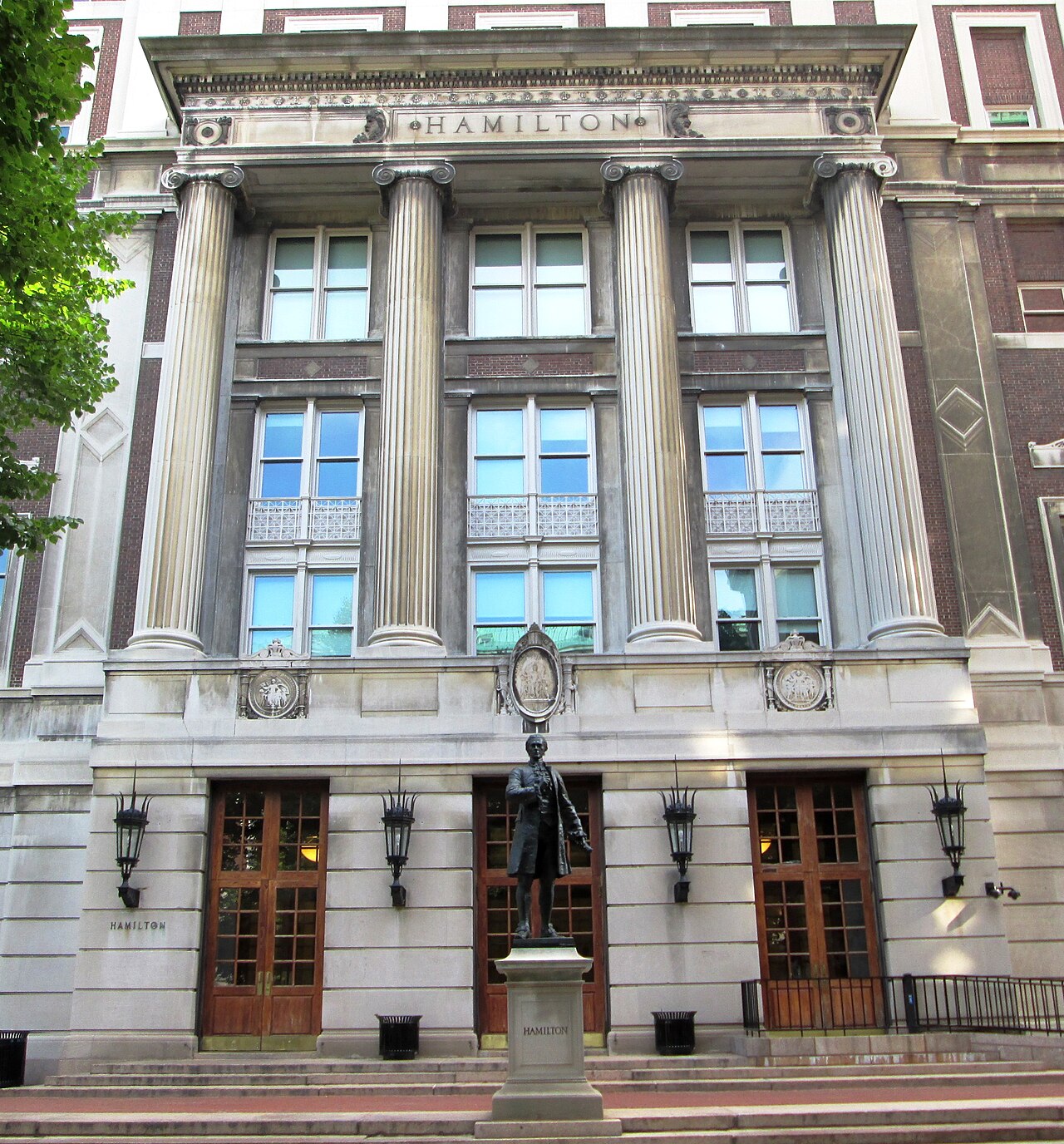
Hamilton Hall, home to Columbia College, was the first building seized that April afternoon. Inside, protesters held the acting dean, Henry Coleman, in his office. But within a day something significant happened: the Black students of the Student Afro-American Society asked their white allies in SDS to leave, and chose to hold Hamilton on their own.
It was a deliberate strategy. By occupying alone, they kept the focus squarely on the gym and on Harlem's stake in the parkland below, renaming the building the Malcolm X Liberation College. From that point the wider uprising and the Black student occupation ran on parallel tracks — joined in cause but distinct in leadership, a distinction that shaped how the entire crisis unfolded.
At the President's Desk
Low Library, the domed centerpiece of the campus, holds not books but the university's administration — and in 1968, the office of President Grayson Kirk. After leaving Hamilton, SDS students crossed the quad, climbed into this building, and occupied the president's office.
There they produced the enduring image of the whole crisis: students seated at Kirk's desk, his cigars and papers before them, telephones in hand. The symbolism was unmistakable. The leadership of one of America's great universities had lost physical control of its own headquarters. For days, power on this campus was an open question — negotiated, contested, and photographed for the world.
The Commune in Mathematics Hall
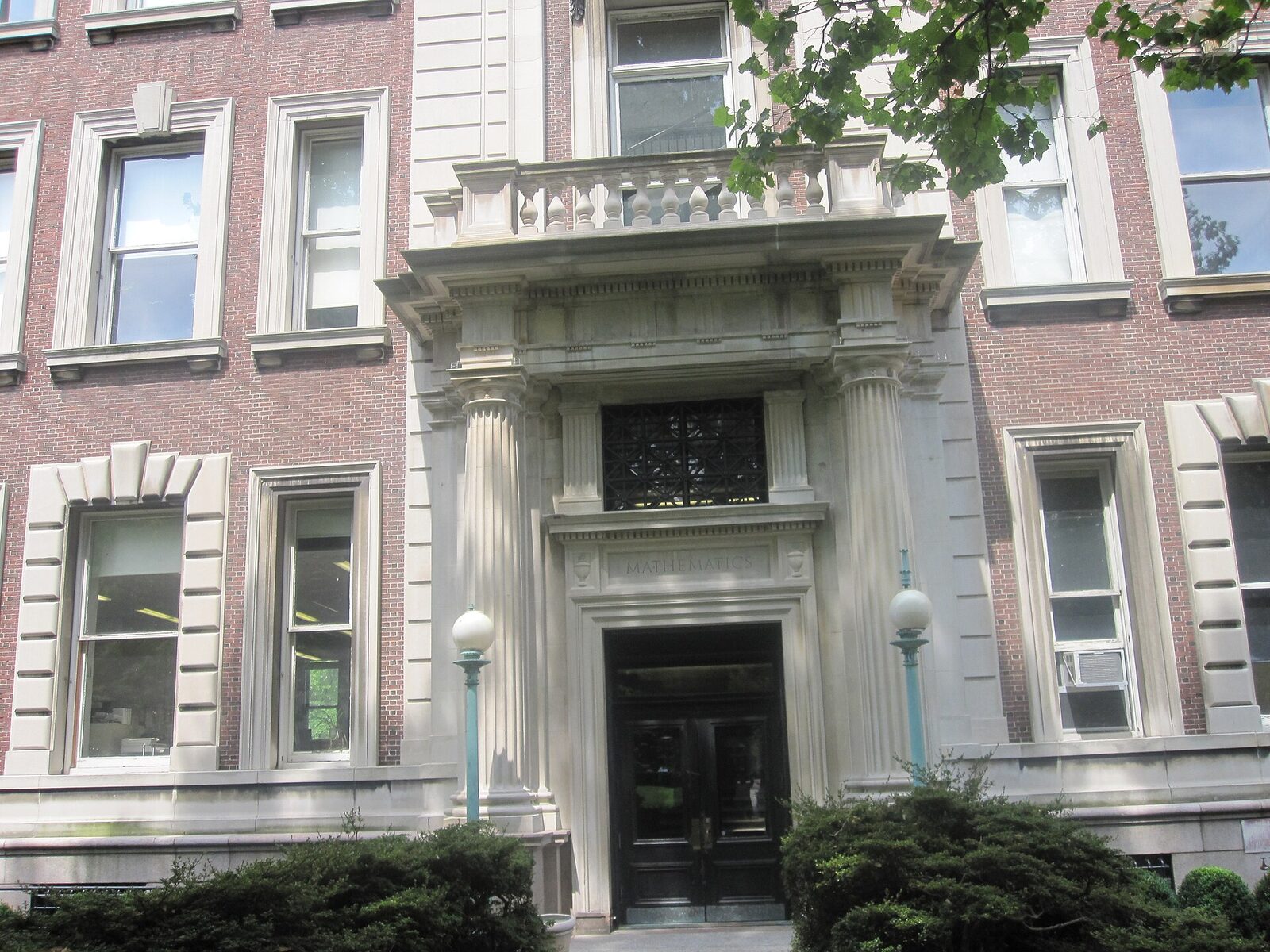
As the occupation grew, students spread from one building to five, and each took on a character of its own. Mathematics Hall, at the northwest corner of campus, became known as the most radical of the occupied buildings — the 'communes,' as the students called them. Those who gathered here were the most committed to holding out and the least inclined to compromise, organizing their days by collective vote.
It's worth pausing on that word: commune. Inside these walls, students weren't only protesting; they were improvising a way to live together — cooking, debating, sleeping on the floors, testing what a self-governed community might look like. It was idealistic, chaotic, and, they understood, temporary. The clearing was only days away.
April 30, and What the Students Actually Won
Avery and Fayerweather Halls, home to the architecture school and graduate departments, marked the occupation at its fullest, with graduate students holding out alongside the undergraduates elsewhere. Then came the end. Before dawn on April 30, 1968, the NYPD moved in to clear all the buildings. Nearly seven hundred people were arrested, and many were injured — students and police alike — in scenes that shocked much of the campus into a wider strike.
And yet, consider the outcome. The protesters won their two central demands. The gymnasium in Morningside Park — where the walk began — was scrapped. And Columbia severed its formal ties to the Institute for Defense Analyses. The war research they had marched against was pushed off this campus. But its deepest root lay just a few hundred feet to the north.
Good to know
Plan on roughly an hour to ninety minutes at an unhurried pace — the route is short in distance but starts with a real climb from Morningside Park up some 159 steps to campus, so wear comfortable shoes and pace yourself. Most of the walk is outdoors on paved campus paths; buildings like Pupin and Low are best appreciated from outside. Bring water in warm weather, and note that campus access can vary, so check current visitor policies before you go.
The full walk also passes Pupin Physics Laboratories.
The best way to read this layered ground for yourself is with the free self-guided audio tour 'Columbia: 1968 & the Atom.' It carries you from the 'Gym Crow' site in the park up through the occupied halls of 1968 and north to the basement where the atom was split, narrating each turn so the stories connect as you walk. Cue it up, start at the foot of the hillside, and let the century unfold under your feet.
Take the free tour: Columbia: 1968 & the Atom →