Valldemossa, Spain · 6 min read
High in the folds of the Serra de Tramuntana sits Valldemossa, the highest village on Mallorca and one of the most photographed — honey-colored stone, green shutters, cobbles that climb toward pine and sky. But the postcard undersells it. This is a place with a genuinely strange and layered history, where an asthmatic medieval king, a community of silent monks, a coughing Romantic composer, and a farmer's daughter turned saint all left their mark within a few hundred meters of one another.
If you're deciding whether to make the trip up from Palma — a short but winding drive into the mountains — the short answer is yes. Valldemossa rewards slow walking and a little context. Half its beauty, as locals will tell you, is simply in stopping to look.
Here's what to see, the stories behind the stones, and how to string it all together on foot.
Starting at the Village Edge
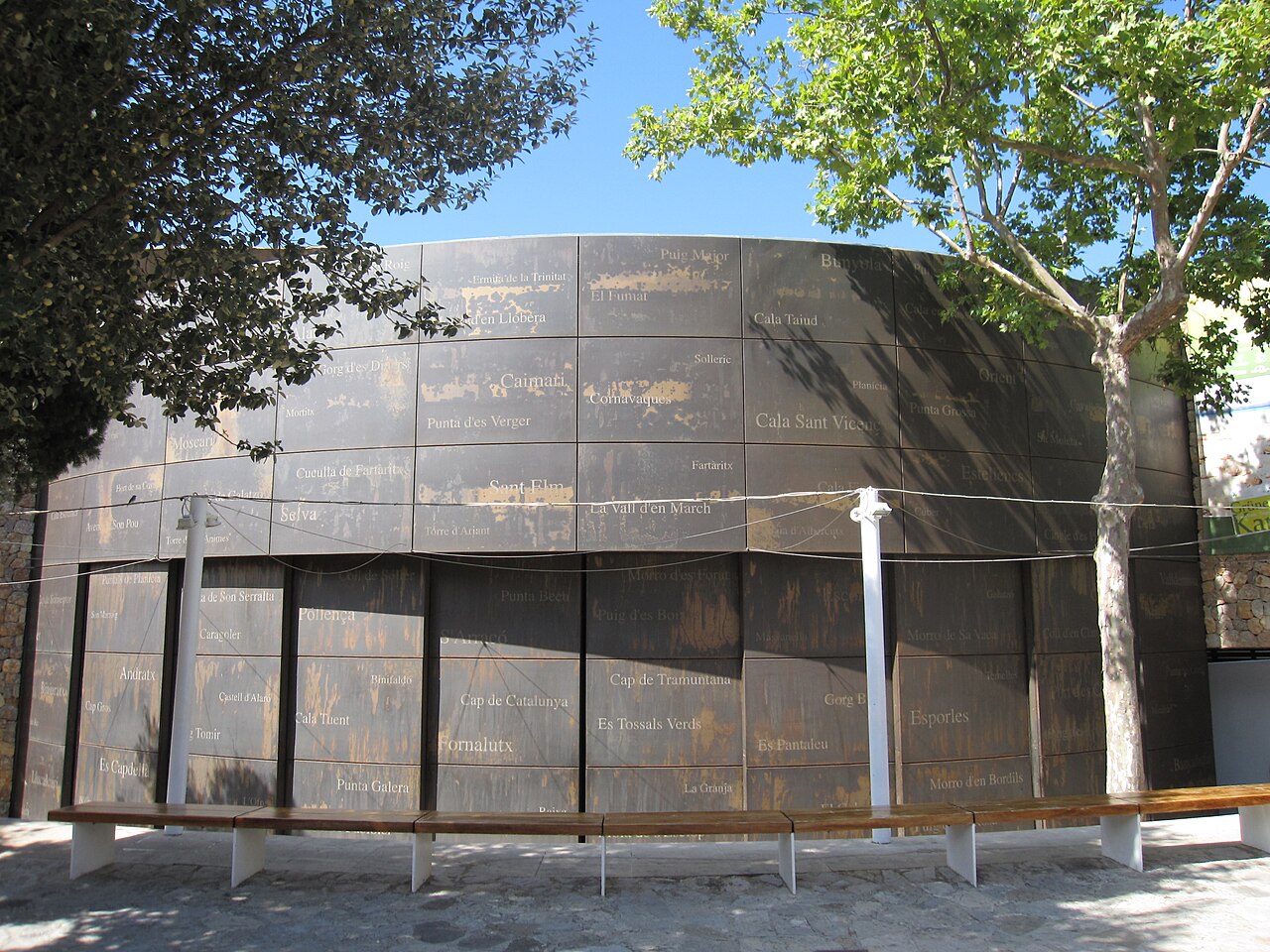
The Costa Nord cultural centre, on the Avinguda de Palma, makes a natural threshold into the old town. It was founded in the 1990s by the actor Michael Douglas, who fell for these mountains and wanted a place to tell their story — the story of the Tramuntana coast, a UNESCO World Heritage landscape shaped over centuries by monks, farmers, and the dry-stone terraces that still climb the slopes.
It's a fitting place to begin, because everything Valldemossa is famous for gathers within a short walk from here. The air alone is worth pausing for: pine, wild herbs, and the sea somewhere beyond the ridges. From this quiet edge, the village unspools downhill into stone lanes and shaded squares.
The Terraced Gardens and the Valley View
Between the lanes and the monastery, the Jardins del Rei Joan Carles I offer a place to sit and take stock. These terraced gardens hug the flank of the Charterhouse, their low walls built from the same honey-colored stone as the rest of the village, their benches shaded and unhurried.
Below, the valley opens into silver-green olive groves — some centuries old, their trunks twisted like slow music — and beyond them the warm terracotta rooftops give way to the grey shoulders of the Tramuntana. It's the same view that stopped Carthusian monks in their tracks, and later the travelers drawn by Chopin's winter. George Sand wrote of these mountains with awe and frustration in equal measure: the beauty undeniable, the cold rather less romantic than she'd hoped.
The Monastery Where the Music Was Written
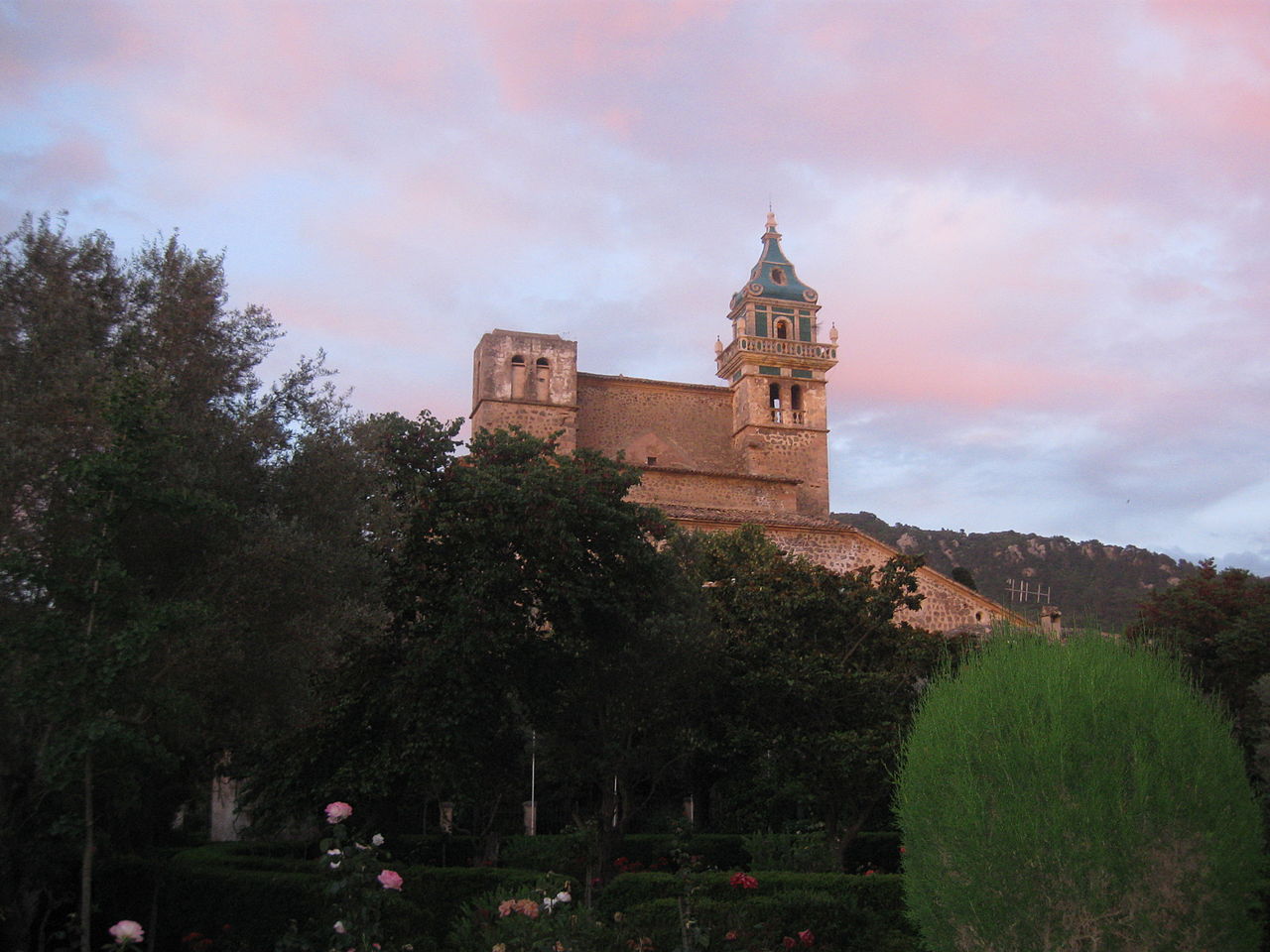
The Real Cartuja — the Royal Charterhouse — is the reason many travelers come. Founded in 1399 on the site of King Sanç's old palace, it spent four centuries as a Carthusian monastery, home to monks who lived in near-total silence, each in his own cell and walled garden. When Spain dissolved the monasteries in 1835, the empty cells were rented out to visitors, and that quirk of history set the stage for the village's most famous chapter.
In the winter of 1838, Frédéric Chopin arrived here with the French writer George Sand and her two children, hoping the mild Mediterranean climate would ease the composer's failing lungs. Instead came rain, damp, and a cold that seeped through the stone. Suspicious villagers kept their distance from the unmarried couple and the coughing foreigner. It was, by most accounts, a miserable few months.
And yet, on a piano hauled all the way up the mountain, Chopin composed some of his Preludes here — including the celebrated 'Raindrop.' Today the preserved cells, the old monastery pharmacy, and the art collections let visitors walk straight into that fraught, productive winter.
A King Who Came for the Mountain Air — Just Like Chopin
Beside the monastery rises the Palau del Rei Sanç, whose roots reach back to the early 14th century and Sanç of Mallorca, a king troubled by asthma. His physicians believed the clean, thin mountain air of Valldemossa would ease his labored breathing, so a royal residence was built here, high above the coastal heat.
There's a quiet symmetry in that. Five centuries later, another frail visitor — Chopin — climbed to this same village hoping the air would heal his lungs. Two seekers of mountain breath, generations apart, drawn to the same sweet air.
The palace preserves period rooms, old kitchens, and a chapel, but its finest touch is musical: it hosts live piano recitals of Chopin's work. Time your visit right and you may hear those very Preludes rise again through the old stone — the composer's difficult winter transformed, at last, into something enduring.
La Beateta: The Neighbor Who Became a Saint
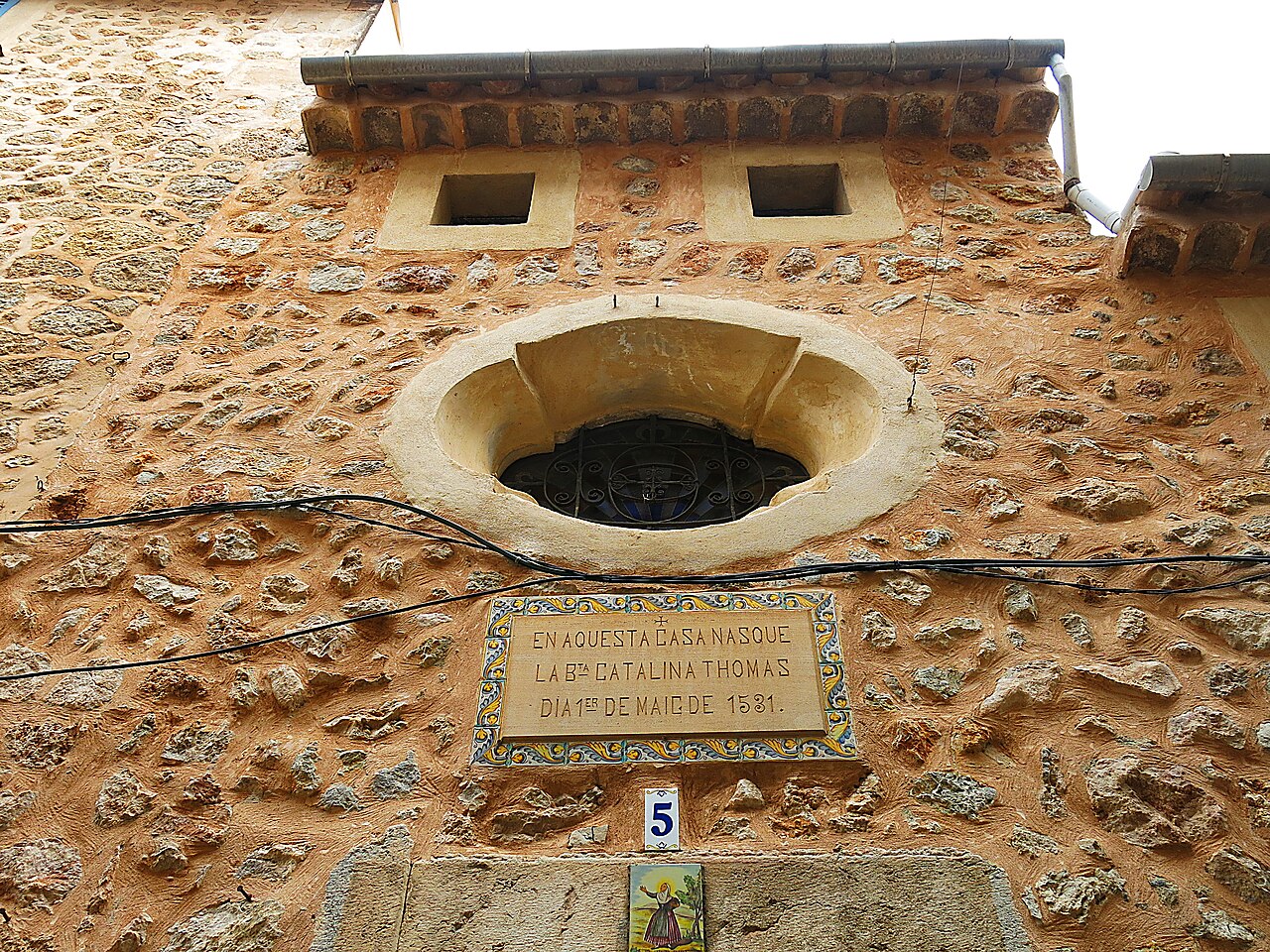
On the edge of the old town, on Carrer de la Rectoria, a small flower-tended shrine marks an unassuming house. In 1531, a girl was born here who would become the only saint Mallorca has ever produced: Santa Catalina Thomàs. Orphaned young, she worked as a farm servant, known for her deep piety and, it's said, her visions. She entered a convent in Palma, lived a life of humble devotion, and died in 1574. She was canonized nearly two centuries later, in 1930.
Villigers still call her, affectionately, 'la beateta' — the little blessed one — and honor her every August with a festival and procession, complete with a local girl chosen to play Catalina. Look for the blue-and-white tiled plaques on doorways all over the village: they ask her blessing and protection, and they all lead back to this house. In Valldemossa, sainthood isn't distant history. It's a neighbor.
Getting Lost in the Old Lanes
The walk ends where Valldemossa shows its truest face: the Carrer de la Rectoria and the cobbled lanes around it. Green wooden shutters, stone walls worn smooth by centuries, bright flower pots against honey-colored façades, and those blue-and-white saint tiles watching over the doorways — this is the image that fills every postcard of the village.
But it's no stage set. People still live behind these shutters, sweep these steps, and hang their washing in the mountain air. That everyday life is what keeps the beauty honest.
Stand here long enough and the whole story settles into the stones: a king who came for the mountain breath, monks who kept their silence, a composer and a novelist who endured one bittersweet winter, and a farmer's daughter who became a saint — all held within a few quiet streets. The best thing to do next is simply follow a lane wherever it leads.
Good to know
The full walk is short — well under a kilometer through the compact old town — but plan on two to three hours if you go inside the Charterhouse and Palace of King Sanç, both of which charge admission and often include a Chopin recital. The streets are steep and cobbled, so wear comfortable shoes with grip. Bring water, and note that mornings are quieter before the day-trippers arrive from Palma. Even in summer the mountain air can turn cool, so a light layer helps.
The full walk also passes Plaça de la Cartoixa, Church of Sant Bartomeu.
The easiest way to tie all these stories together at your own pace is the free self-guided audio tour 'Valldemossa: Stone Streets & Chopin's Winter.' It starts at the Costa Nord centre and guides you through the Charterhouse, the main square, the saint's birthplace, and the old-town lanes to a mountain viewpoint — with the history narrated as you stroll. Download it before you go, slip in your headphones, and let Valldemossa unfold one stone lane at a time.
Take the free tour: Valldemossa: Stone Streets & Chopin's Winter →