Berlin, Germany · 5 min read
Most visitors spill out of the S-Bahn at Hackescher Markt, glance at the brick arches, and head straight for the bars and boutiques. Linger, though, and the streets behind the station turn out to be one of the most layered few blocks in all of Berlin — a neighborhood where ordinary life and unimaginable history are packed into a handful of courtyards and cobbled lanes.
This is the Spandauer Vorstadt, the old 'barn quarter' that became home to poor Eastern European Jewish families around 1900. In the space of a short walk you can stand at a blind man's brush workshop, step through eight interlinked Jugendstil courtyards, read the names of people who vanished from a bombed-out house, and look up at a golden dome that refused to disappear.
If you're wondering whether this corner is worth your time beyond the coffee and the shopping, the answer is an emphatic yes — and here's why.
The Barn Quarter That Became a Beginning
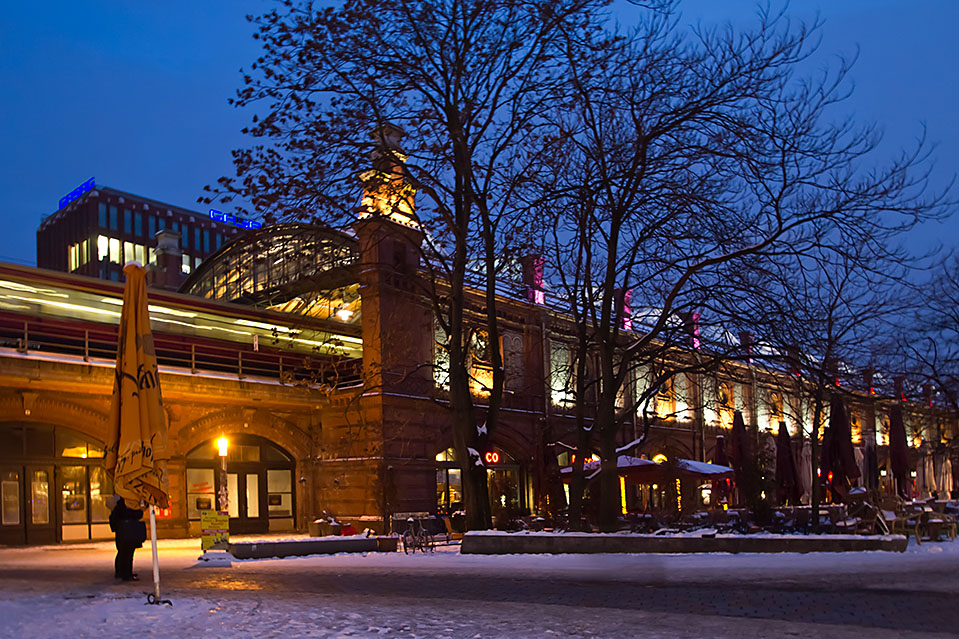
The red-and-cream brickwork of Hackescher Markt station has watched this corner since 1882, and it makes a fitting gateway. Behind it begins the Spandauer Vorstadt, a district once called the Scheunenviertel — the barn quarter — because hay barns stood here beyond the old city walls.
Around 1900 it was poor, crowded and loud, and it became a landing place for Jewish families fleeing the pogroms of Eastern Europe. They arrived with little, spoke Yiddish in these lanes, prayed in small backyard synagogues, mended clothes and raised children. It was never a ghetto and never grand — simply a place where a new life might begin.
Everything else on this walk grew out of that ordinary, extraordinary neighborhood, and it helps to picture those arrivals stepping off trains near here, uncertain and hopeful, just as travelers still do today.
A Brush-Maker Who Simply Refused
One unassuming doorway hides one of the quietest acts of courage in the city. Up a flight of stairs, Otto Weidt made brushes and brooms, and he deliberately employed blind and deaf Jewish workers — because, he said, they did fine work and deserved a wage.
It became far more than a workshop. As the deportations began, Weidt forged papers, bribed officials, and hid a Jewish family in a tiny windowless room behind a wardrobe. Some he saved; many he could not. He even tried to rescue his assistant, Alice Licht, after she was sent east. He had no power and no weapon — only the repeated decision to risk everything for people the state had marked for death.
Today the rooms are kept almost as they were, preserved as a small museum, and Weidt is honored as Righteous Among the Nations. It is a rare story of rescue in a neighborhood that otherwise remembers overwhelming loss.
Eight Courtyards, One Lost World
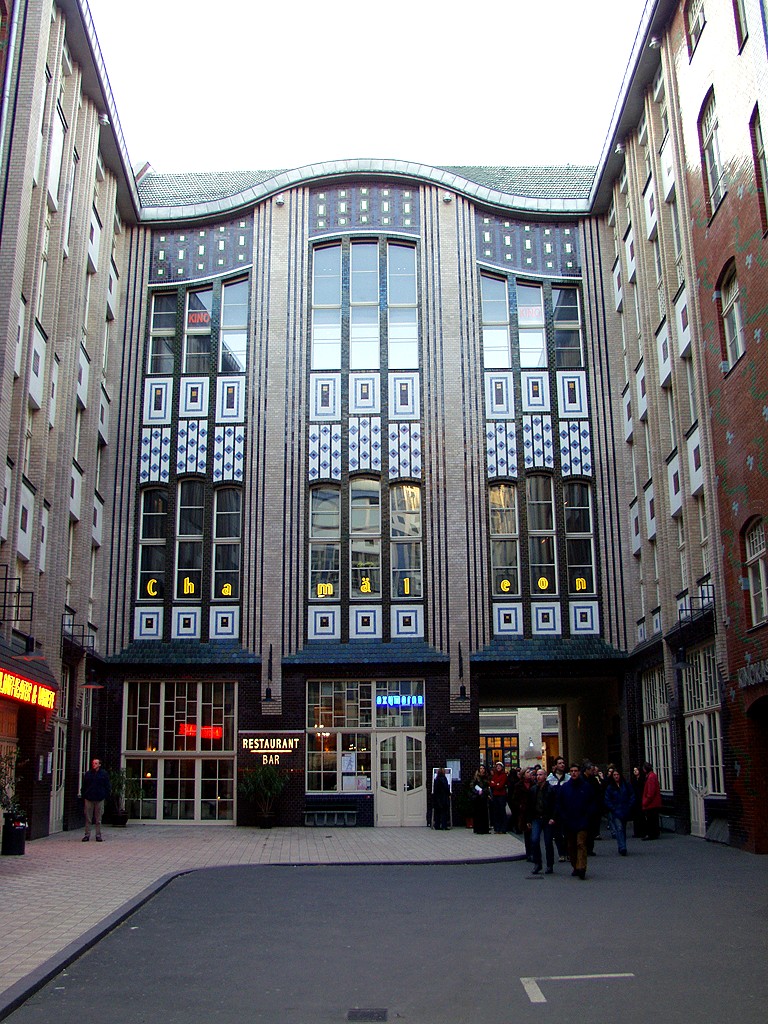
Step through the archway and let your eye travel up. The Hackesche Höfe are eight courtyards threaded one into the next, opened in 1906, with glazed Jugendstil tiles in blues and greens catching the light in that famous first court.
This was a whole little world under one roof: families lived upstairs while below them ran workshops, offices, a celebrated dance hall and a cabaret. Many tenants and traders here were Jewish — tailors, printers, shopkeepers — living and working cheek by jowl with everyone else. That mix was precisely the point, and after 1933 it was emptied out shop by shop, name by name. The courtyards then crumbled through the East German decades before a careful 1990s restoration brought them back.
It's the natural place to pause for a coffee or a beer. The ordinary liveliness around you is part of the story too — because that everyday vitality is exactly what was nearly lost.
The Street of Absences
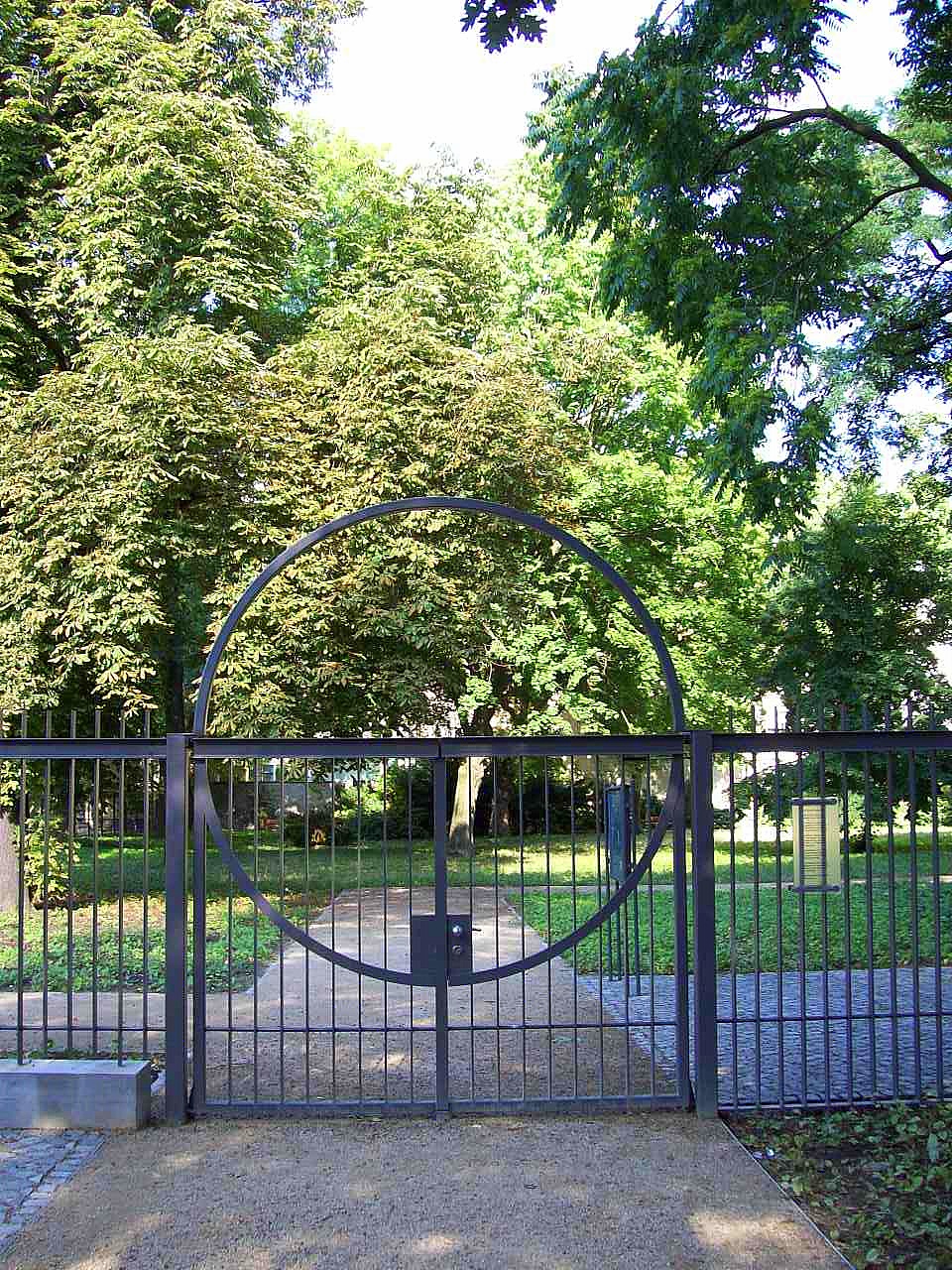
Few stretches of road in Berlin hold more grief per metre. On one side lies the oldest Jewish cemetery in the city, opened in 1672, where the philosopher Moses Mendelssohn — the great voice of Jewish enlightenment — was buried. In 1943 the Gestapo smashed it and uprooted the stones; what remains is mostly a green emptiness with a single symbolic gravestone for Mendelssohn.
Beside it stood a Jewish old people's home, which the Nazis turned into an assembly camp. Thousands were held here before being deported east to their deaths.
Across the road, blank firewalls mark where a house was destroyed by bombing. The artist Christian Boltanski fixed small plaques to them, naming the people who once lived in that vanished building — their names, their trades, the dates they lived and left. He called it 'The Missing House': an absence, carefully labeled, so that no one passes without knowing someone was here.
The Golden Dome That Came Home
Rising above the rooftops is the ribbed, gleaming golden dome of the Neue Synagoge. Finished in 1866 with Moorish arches and coloured brick, it was built to seat three thousand people — a proud, deliberately visible statement that Jews belonged in the heart of Berlin.
On the November night of 1938, when synagogues across Germany burned, a police officer named Wilhelm Krützfeld stood in this doorway and turned the arsonists away, insisting the building was protected. The fire was put out — one man doing his duty as plain decency. War later finished what the mob began: Allied bombing gutted the building and the ruins were demolished, leaving only the facade and this dome, restored in 1995 as the Centrum Judaicum.
Notice the police still standing guard today. It says something about memory, about fragility, and about a Jewish Berlin that, against every odd, chose to come back.
Good to know
The route is short — roughly 0.4 miles and about 25 minutes of listening, plus however long you linger over coffee in the Hackesche Höfe. The ground is flat but cobbled in places, so comfortable shoes help. Keep an eye on the pavement outside many doorways for Stolpersteine, the small brass 'stumbling stones' set into the cobbles to mark where deported residents once lived. The Neue Synagoge's Centrum Judaicum and Otto Weidt's museum both reward a longer visit if you have time.
If you want these streets to open up rather than just pass by, download the free self-guided audio tour 'Spandauer Vorstadt: Jewish Berlin Remembered.' It walks you stop by stop in about 25 minutes, turning quiet doorways and blank walls into the stories that make this one of Berlin's most moving corners — and leaves you right where a good coffee or beer awaits.
Take the free tour: Spandauer Vorstadt: Jewish Berlin Remembered →