Seville, Spain · 5 min read
Some places make you gasp before you've fully understood them. Plaza de España is one of them — a vast brick-and-tile semicircle that curves toward you like a pair of open arms, complete with a canal, ornate bridges, and towers rising against the Andalusian sky. First-time visitors often assume it's centuries old. It isn't. And that surprise is exactly what makes it worth understanding.
This corner of Seville — the plaza and the leafy Maria Luisa Park that cradles it — is where the city put its whole self-image on display: empire, craft, regional pride, and a flair for spectacle that borders on the cinematic. It's free to wander, endlessly photogenic, and blissfully shady when the summer heat turns fierce.
If you're deciding whether it's worth the walk south of the historic centre, here's what you'll actually find — and why the detail rewards slowing down.
A Palace That's Younger Than It Looks
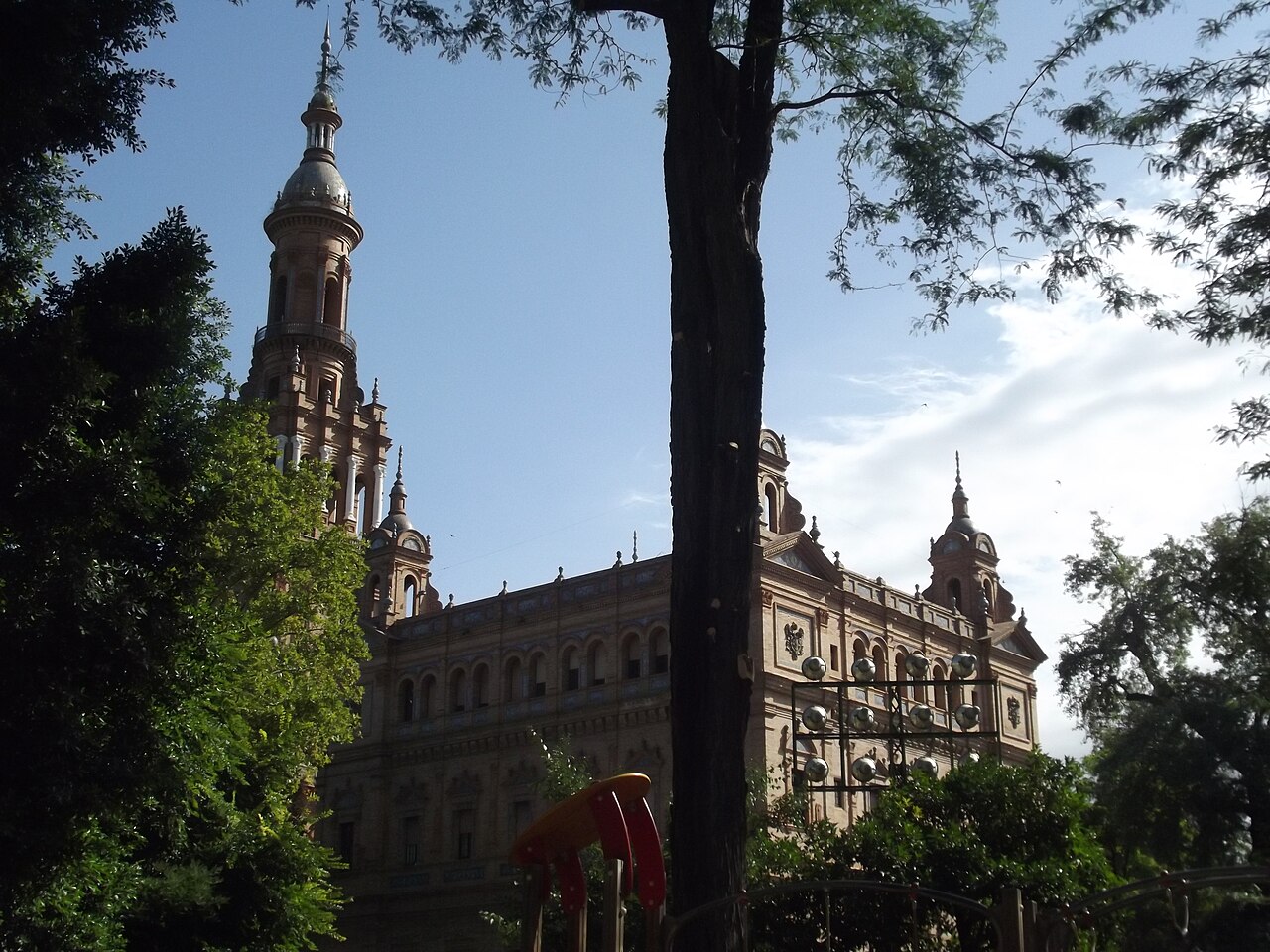
Plaza de España was built for the Ibero-American Exposition of 1929, a world's fair designed to reconnect Spain with Latin America through architecture, gardens, and pure showmanship. The architect Aníbal González conceived it as something deliberately theatrical — part palace, part stage set, part national self-portrait rendered in warm brick and glazed ceramic.
Approach it slowly and let the whole scene open up before stepping inside. The towers at either end, the sweeping curve of the façade, the colour of the tilework — it all feels ancient, yet every stone is a twentieth-century invention borrowing freely from Renaissance, Baroque, and Mudéjar traditions. That deliberate layering is the perfect introduction to Seville itself: beautiful, performative, and always conscious of its own history.
Standing at the Centre of It All
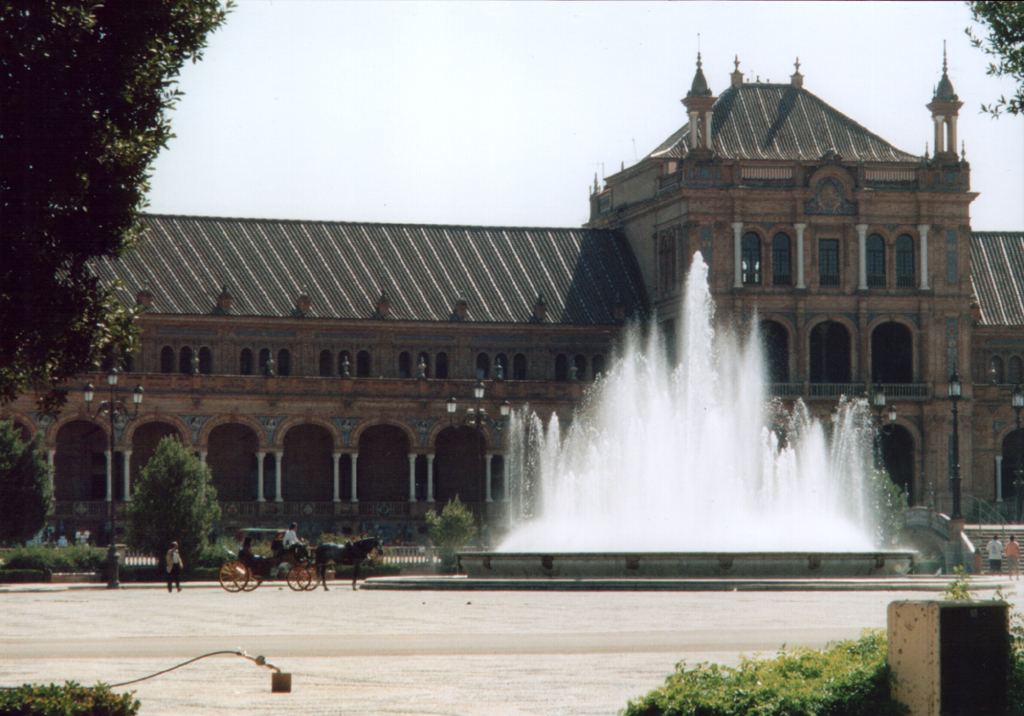
From the central fountain, the design finally makes sense. This isn't merely a square — it's a giant semicircle that seems to extend outward like an embrace, with the canal tracing the front of the building, bridges stitching the space together, and towers anchoring each end of the composition.
The fountain itself was designed by Vicente Traver, who completed parts of the project after Aníbal González stepped away. Its spray brings movement and sound to a space that might otherwise feel overwhelmingly grand. Look closely and you'll see the logic: brick for strength, tile for colour, arches for rhythm, water for reflection. This is civic architecture as theatre — and the invitation is to walk right into the middle of it.
Fifty Provinces in Painted Clay
The tiled alcoves running along the base of the building are, for many visitors, the most beloved detail of the entire plaza. Each one represents a Spanish province, complete with a ceramic map, a coat of arms, and a painted historical scene. These are azulejos — the glazed tilework craft deeply tied to Andalusia, and especially to nearby Triana, Seville's traditional ceramics district.
The effect is both national and intimate. Spain is presented as a mosaic of distinct places, each with its own memory and pride, and visitors instinctively hunt for their own family province or a city that means something to them. Lean in to study the brushwork and the depth of colour — this is storytelling in clay, glaze, and fire, history made durable enough to sit on.
The Bridges That Made It a Movie Set
The canal running along the plaza's front is shallow, purely decorative, and utterly transformative. Without it, this would be a magnificent paved square; with it, the whole space becomes a scene of reflection and movement. The bridges crossing it are traditionally said to represent four historic kingdoms of Spain — Castile, León, Aragón, and Navarre — their ceramic balustrades turning a short walk into something closer to a ceremony.
Filmmakers noticed the drama long ago. Plaza de España has stood in for distant planets and exotic empires on screen, appearing in both Star Wars and Lawrence of Arabia. But the real spectacle needs no special effects: brick, tile, water, and sky, and the simple pleasure of crossing a bridge in the heart of Seville.
Where the Grandeur Gives Way to Shade
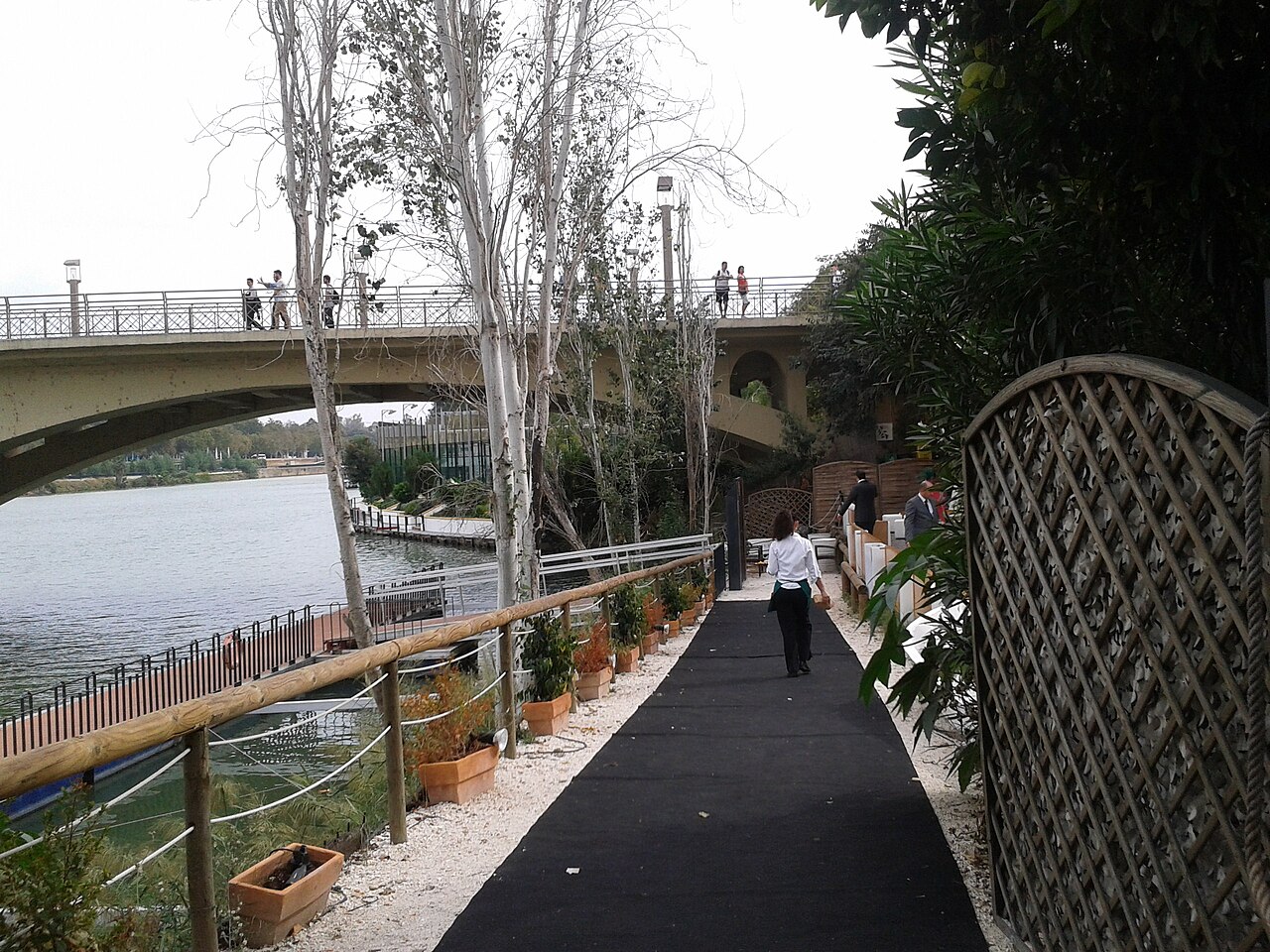
Step into Maria Luisa Park and the mood shifts almost instantly. Where the plaza was built to impress, the park invites you to breathe. This land once belonged to the gardens of the Palace of San Telmo, until the Infanta María Luisa donated part of it to the city in the late nineteenth century — and it later became the green setting for the 1929 Exposition.
The French landscape architect Jean-Claude Nicolas Forestier shaped it into a sequence of shaded avenues, fountains, ponds, and tiled corners. Listen for birdsong, trickling water, and gravel underfoot beneath the sudden hush of the trees. In a city as hot as Seville, that shade is more than a comfort — it's architecture of another kind, and the gentle counterpoint to all the ceremony next door.
Good to know
Plan for roughly an hour to explore at a relaxed pace, though it's easy to linger longer. The route is short and flat — well under a mile — covering the plaza, its canal and bridges, and the shaded edges of Maria Luisa Park. Bring water and sun protection in summer, when the open plaza gets intensely hot; the park's avenues are the best refuge. Comfortable shoes help, and early morning or late afternoon offers the softest light for photos.
The best way to weave all these details together is the free self-guided audio tour, "Seville: Plaza de España & Maria Luisa Park." It walks you from the grand entrance through the fountain, tiled provinces, and bridges before easing into the park's shaded paths — narrated at your own pace, so you can pause, wander, and take it all in. Load it up before you go and let the plaza's whole story unfold as you walk.
Take the free tour: Seville: Plaza de Espana & Maria Luisa Park →