Cape May, United States · 6 min read
Most seaside towns spread out over centuries, layer by layer, style piled on style. Cape May is different. Walk its shaded streets and you notice something uncanny: the porches, the towers, the lacy trim all seem to belong to the same moment, as if the whole town were built in one deep breath. In a sense, it was.
On a November morning in 1878, fire tore through the resort's core and consumed some thirty-five acres in a matter of hours. What could have finished the town instead triggered one of the most concentrated building booms in American history — a decade of frantic, extravagant Victorian construction that gave Cape May the coherent, dreamlike look it still wears today.
That accident of timing is the reason this small New Jersey town is now a National Historic Landmark and one of the most rewarding walking destinations on the East Coast. Here's how to read it, block by block.
The House That Rebuilt a Town's Nerve
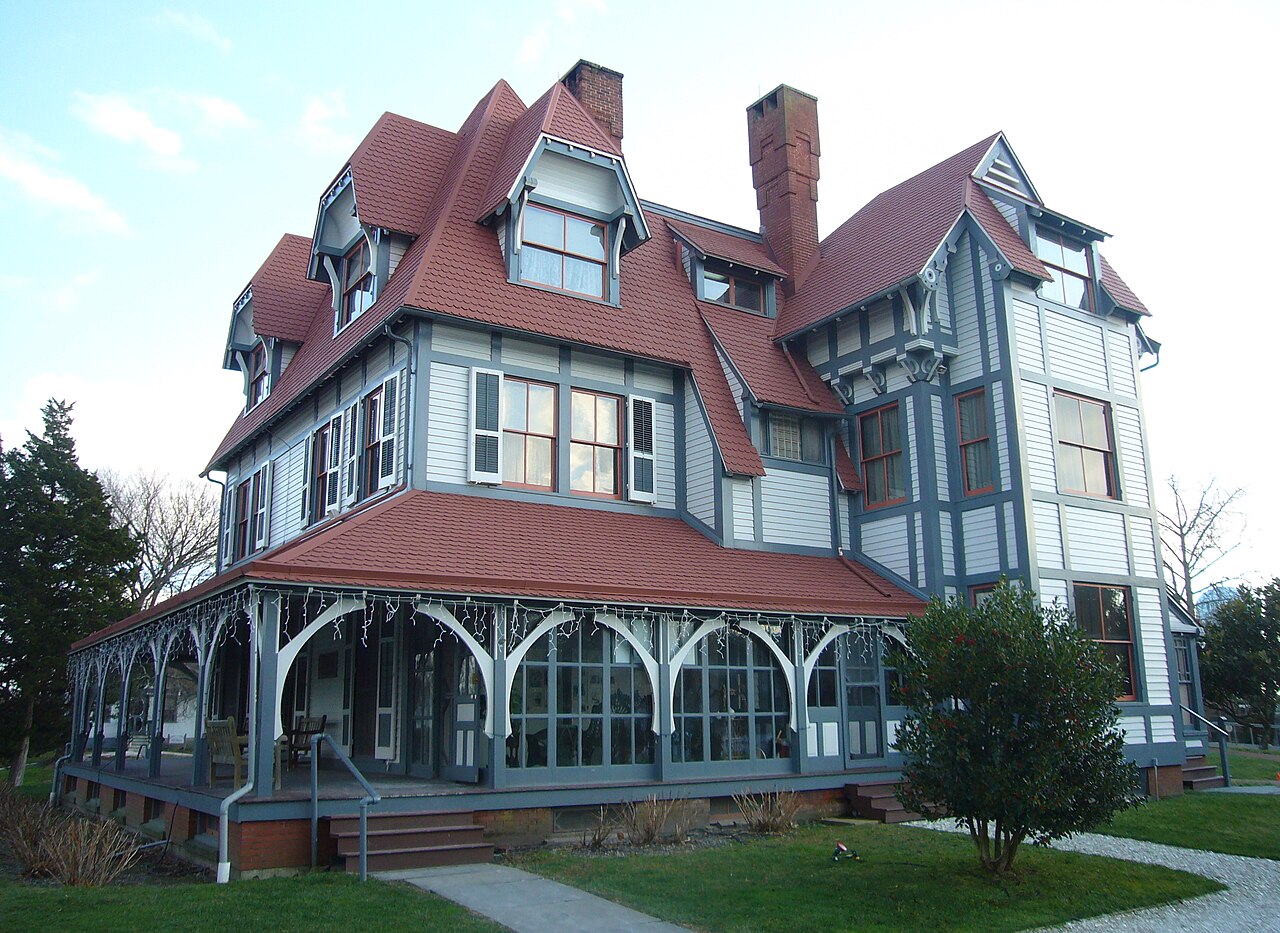
Finished in 1879, just a year after the flames, the Emlen Physick Estate is Cape May's marquee house museum and its boldest statement of intent. Built in the muscular Stick style widely attributed to the great Philadelphia architect Frank Furness, it favors oversized brackets, flaring chimneys, and deep porches with beams that look almost too heavy for their posts. Nothing about it is delicate — it is deliberately, confidently strange.
Dr. Emlen Physick was a gentleman of means who never really practiced medicine; he built the mansion as a country seat. In doing so, he handed the rebuilt town its thesis statement: Cape May would not shrink after the fire, it would show off. Rescued from demolition in the 1970s, the estate later became the spark for the preservation movement that saved the rest of the streetscape.
The Seven Sisters and the Art of Mass-Produced Charm
On Columbia Avenue stands a run of matching summer cottages, the most famous of them the 'Seven Sisters,' often credited to architect Stephen Decatur Button and arranged in two facing clusters like a family lined up for a portrait. Play spot-the-difference as you pass: the bones are identical, but each has picked up its own coat of paint and personality over the decades.
This is the story of Cape May's rebuild in miniature. Speculative builders loved the formula — throw up several near-identical cottages, sell or rent them to Philadelphia families fleeing the summer heat, then repeat. The town didn't merely replace what burned; it mass-produced charm, block by block, in a boom that lasted barely ten years.
Gaslight and Gingerbread on the Prettiest Street in Town
If any single block feels like time travel, it's Hughes Street — the most intact gaslit Victorian streetscape in Cape May. Gas lamps still line the walk, the scale stays low and human, and the carriage-era houses were never swept away by later development.
It's also the best place to study the ornament up close. That lacy woodwork edging the porches and gables is bargeboard, or scrollwork, cut with the newly affordable steam-powered scroll saw that made such decoration cheap and fast in the 1870s and '80s. Spindles, fretwork brackets, pointed finials — run your eye along a single porch and you're reading a whole catalog of Victorian taste, all handmade-looking, all machine-enabled.
The Hinge of the Whole Story
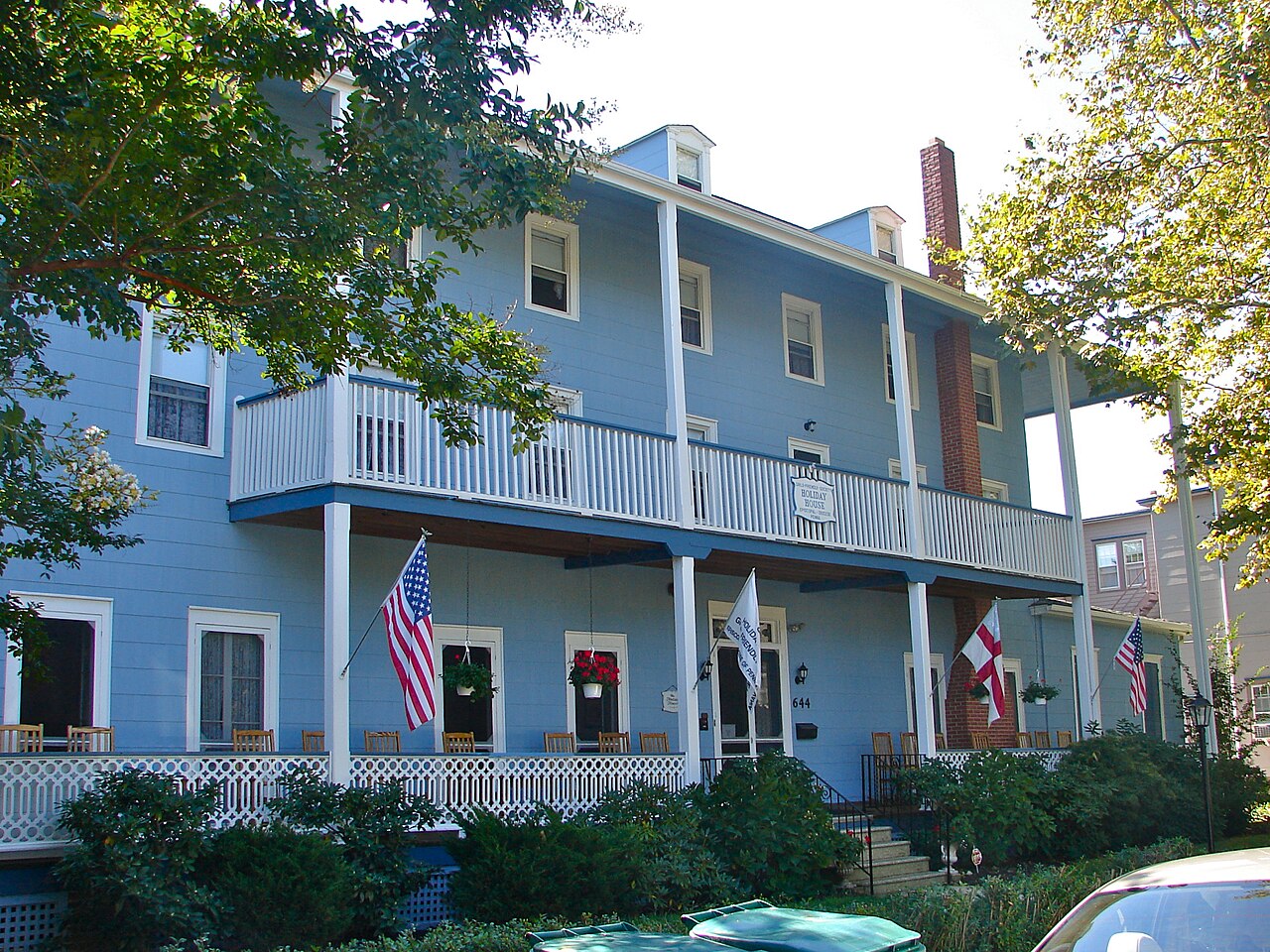
Near where the blaze began, a marker commemorates the event that explains everything else. The Great Fire broke out on the morning of November 9th, 1878, and over roughly eleven hours devoured close to thirty-five acres of the resort's core — dozens of hotels, cottages, and businesses, gone. The town had burned before, and each time faced the same question: rebuild, or surrender to the sea.
This time Cape May answered with astonishing speed and ambition, filling these blocks in barely a decade with the elaborate Victorian houses that now define it — all of one moment, one style, one burst of confidence. It's the paradox worth carrying through the rest of the walk: the disaster that nearly ended the town is the very reason it became America's Victorian fantasia.
Frosting on a Cake: The Pink House
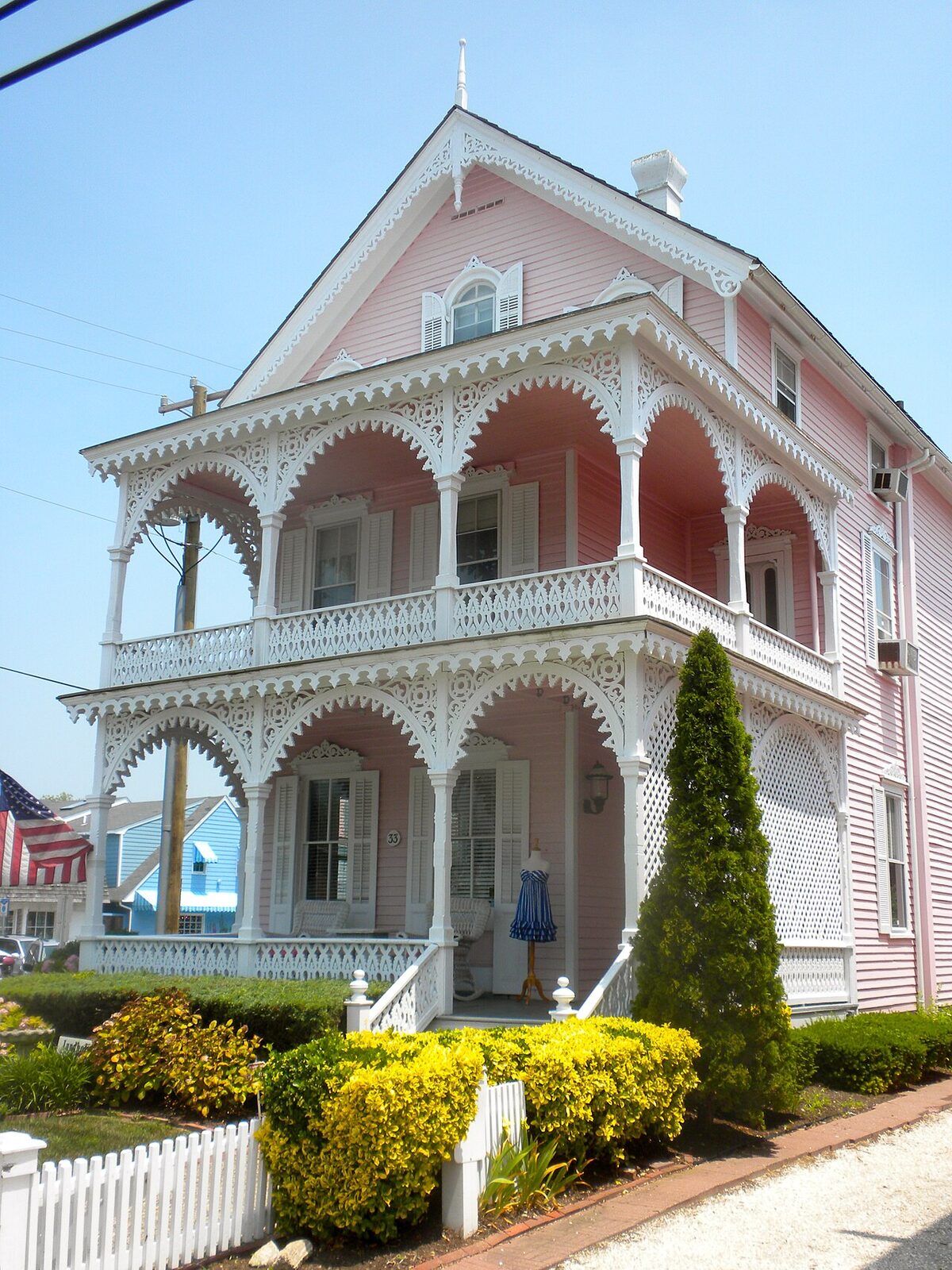
Formally the Eldridge Johnson House, the Pink House is almost certainly the most photographed façade in town — and the blush-pink paint is only half the reason. Look at the trim: layer upon layer of white scrollwork dripping from every eave and porch rail like lace, or icing.
It's Carpenter Gothic taken to a joyful extreme, made possible by the same steam scroll saws churning out ornament by the yard in the boom years. The house is really a monument to a Victorian conviction — that if a little decoration is charming, an overwhelming amount is better. Like the Physick Estate, it survives thanks to the preservation wave that swept the town in the twentieth century.
The Playground of Presidents
The walk ends at the great yellow sweep of Congress Hall, the hotel long known as the playground of presidents. A hostelry has stood here since 1816, when Thomas Hughes built a boarding house so large that skeptics dubbed it 'Tommy's Folly.' The folly worked: presidents Pierce, Buchanan, Grant, and Harrison all summered here, and Harrison even made Cape May a temporary summer capital.
But the building you see today is a rebuild too. The 1878 fire destroyed Congress Hall, and it rose again in brick in 1879 — the same urgent year as the Physick Estate. There's a neat symmetry in that: the town's humblest cottages and its grandest hotel were both reborn from the same ashes, in the same decade. End on the long veranda, look toward the sea, and picture a resort that simply refused to disappear.
Good to know
The route is a roughly 1.2-mile loop through Cape May's compact National Historic Landmark district, easily done in one to two hours depending on how long you linger over porches and photos. The terrain is flat and largely walkable on sidewalks, though Hughes Street's period surfaces reward comfortable shoes. Bring water, sun protection, and a camera — and note that most of the grand houses are private homes or working inns, best admired from the street.
The full walk also passes The Southern Mansion (1863), Washington Street Mall, The Mainstay Inn, The Abbey, Carroll Villa / The Mad Batter (1882).
If this is the Cape May you want to see — the story beneath the gingerbread, not just the pretty pastel façades — the free self-guided audio tour 'Queen of the Seaside Resorts: Cape May's Victorian Core' is the ideal companion. It walks you through all eleven stops on this loop, from the Physick Estate to Congress Hall, with the fire's dramatic arc tying every porch and tower together. Pop in your headphones and let the town tell its own resurrection story.
Take the free tour: Queen of the Seaside Resorts: Cape May's Victorian Core →