Berlin, Germany · 5 min read
For nearly three decades, West Berlin was a geographic absurdity — a slice of capitalist city marooned a hundred miles inside communist East Germany, ringed by fence and watchtower. There was no country behind it, only the Wall. And yet, instead of hunkering down like a fortress, it did something stranger and far more memorable: it went shopping, lit the neon, and dared the other side to look.
Nowhere is that defiance more legible than around the Kurfürstendamm and Breitscheidplatz, a compact knot of streets where a rebuilt department store, a revolving Mercedes star, and a church left deliberately in ruins all tell the same story. This is a corner of Berlin where consumerism was politics and a broken tower was a statement.
If you're wondering whether this much-trafficked, much-photographed patch of West Berlin is worth your time — it is, provided you know what you're looking at. Here's the highlights reel, and the stories hiding in plain sight.
KaDeWe: A Department Store That Survived the Century
The Kaufhaus des Westens — the Department Store of the West — opened in 1907 and has been a boast ever since. Seven floors of glass and gold, topped by a food hall Berliners discuss with the reverence others reserve for cathedrals. But its glitter sits on a harder history: built up by Jewish owners, the store was seized under the Nazis' so-called 'Aryanization' in the 1930s, a polite word for robbery. In 1943 a crashing aircraft and the bombs that followed gutted the building.
It rose again, and became the shining promise of the West. On a November night in 1989, when the Wall finally opened, East Berliners poured through its doors — many not to buy anything, but simply to stand wide-eyed before shelves heavy with fruit, shoes, and perfume. Few buildings compress Berlin's twentieth century so neatly into one city block.
The Star That Turned Toward the East
Look up from Breitscheidplatz and you'll find a Mercedes star rotating slowly on a rooftop — it has been turning since the mid-1960s, and it was never just a logo. The Europa-Center opened in 1965 as West Berlin's first proper high-rise shopping tower, glass and shops and offices stacked into the sky.
The star on top was aimed, quite deliberately, eastward — over the Wall, visible for miles into the grey of East Berlin. Think about what that meant for an island half-city surrounded by the GDR on every side. The West's answer to encirclement wasn't a bunker; it was neon, consumer goods, and a revolving silver badge of the good life, glowing night and day where the other side couldn't miss it. Propaganda, certainly — but propaganda you could walk inside and buy an ice cream in.
The Hollow Tooth and the Golden Scar
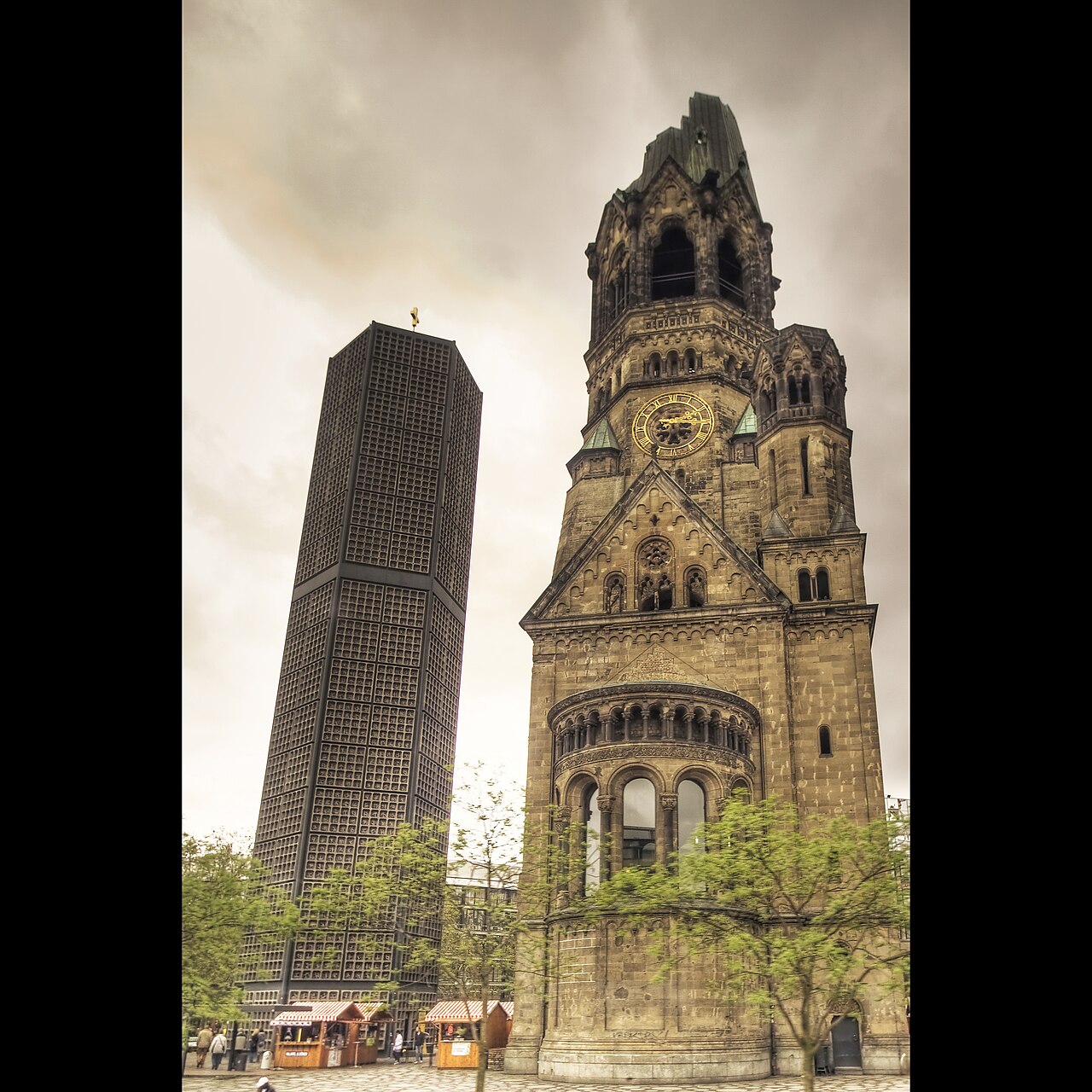
Berliners call the broken tower der hohle Zahn — the hollow tooth. It's what remains of the Kaiser Wilhelm Memorial Church, built in the 1890s to glorify the Hohenzollern emperors and smashed by bombs in November 1943. After the war there were plans to clear the ruin away. Berliners said no. So it stands exactly as the fire left it — jagged and roofless — beside Egon Eiermann's 1961 church, whose deep blue honeycomb glass turns its interior into something like the bottom of the sea.
The old ruin and the new blue light together form a city refusing to pretend the wound never happened. And the refusal continues underfoot: on the steps runs a thin golden line filled into the pavement, with names beside it. In December 2016 a man drove a hijacked truck into the Christmas market here, killing twelve people that night and a thirteenth later. The gold is not decoration. It is a scar, kept on purpose, like the tower above it.
Bikini-Haus: Serious Architecture, Undercut by a Joke
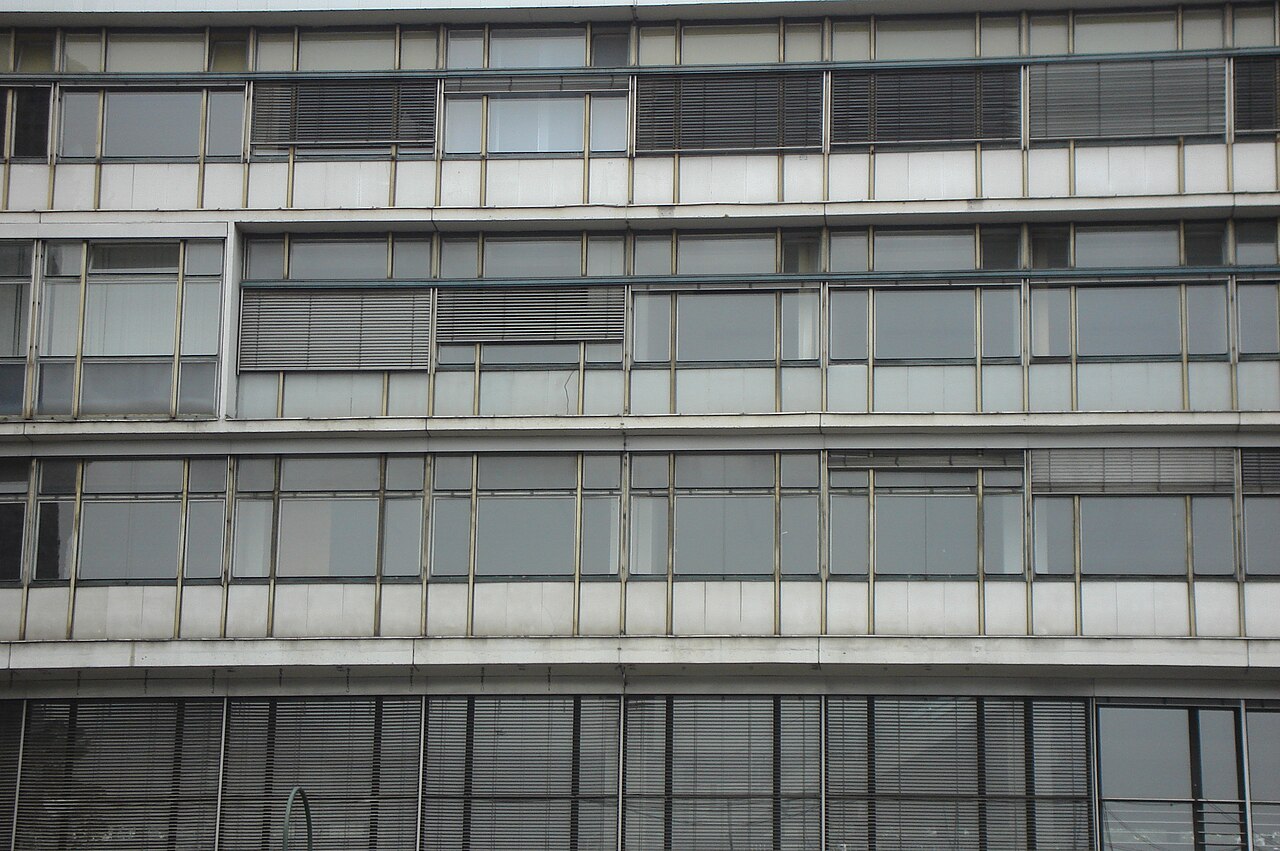
After the weight of the church, the city offers some relief in the form of a long, clean-lined 1950s block whose architects left its middle floor open — a band of fresh air cutting straight across. Someone decided it looked like a two-piece swimsuit, and the name Bikini-Haus stuck. It's a very West Berlin gesture: serious modernist architecture, cheerfully undercut by a gag.
Once a fashion and textile centre, it's now a concept mall full of young designers and coffee. But the detail worth the detour is at the back: the rear windows look straight down into the monkey enclosure of the zoo next door. You can be trying on an overpriced jacket and meet the unimpressed eye of a macaque — exactly the comic deflation the neighbourhood needs after the heaviness of the ruined church.
The Elephant Gate and the Animals That Refused to Die
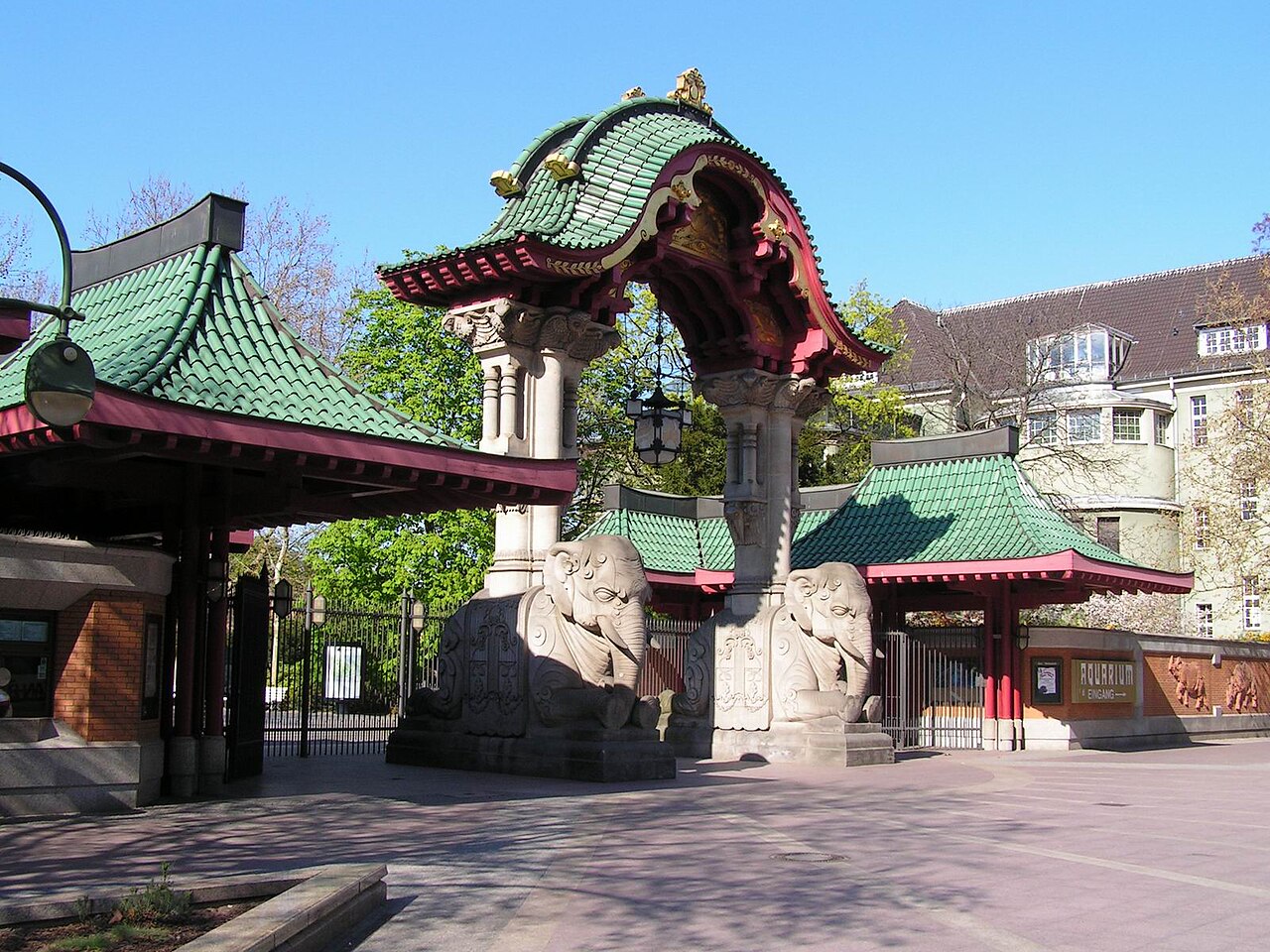
The walk ends under the elephants — two great stone beasts holding up a bright pagoda roof, built in 1899 for the Berlin Zoo, the oldest in Germany. The Elephant Gate looks pure whimsy, and it is, but it carries a hard memory too. In 1945 the zoo was almost annihilated; bombing and the final battle for Berlin left it in ruins, and of thousands of animals only a handful survived.
Among them were a hippo named Knautschke and an elephant cow. In a starving, shattered city, people clung to them — the survival of a few zoo animals became a small, stubborn proof that life went on. It's the perfect note to end on, because it echoes the whole route: a looted shop reopened, a star turned toward the Wall, a church kept broken on purpose, a swimsuit joke, and finally these elephants. An island city insisting, against all odds, on being gloriously, defiantly ordinary. Beyond the gate, the Tiergarten opens up toward the distant Victory Column.
Good to know
The core walk is short and easy — roughly 0.6 miles from KaDeWe to the Zoo's Elephant Gate, with about 15-20 minutes of listening. It's flat, fully paved, and runs along busy city pavements, so expect crowds and wear comfortable shoes. If you want to keep going, you can continue on foot through the Tiergarten past the Victory Column (around 2.5 miles) toward the Reichstag, or hop on bus 100. Bring a little time to step inside the blue-glass church and, if you like, the KaDeWe food hall.
If this corner of West Berlin has caught your imagination, the easiest way to unlock its stories is the free self-guided audio tour 'Ku'damm Corner: West Berlin.' It threads these five stops together in about 15-20 minutes of warm, unhurried narration — the perfect companion for a short, revealing walk through the half-city that shopped back at the Wall.
Take the free tour: Ku'damm Corner: West Berlin →