Cape May, United States · 5 min read
Long before air conditioning and interstate highways, wealthy Americans fled their sweltering cities each July for a breezy sandbar at the southern tip of New Jersey. Cape May didn't just host the seaside vacation — it arguably invented it, and it did so from the wide, columned porches of its grand hotels.
Today it's the oldest seaside resort in the country and a National Historic Landmark city, its streets lined with candy-colored Victorians and its Beach Avenue promenade still catching the same three-sided sea breeze that once drew presidents. If you're wondering whether Cape May is worth a stop, the answer is written into its architecture.
Here's a highlights guide to the oceanfront stretch — the porches, the pavilions, and the survivors — and why it still feels like a town gathering itself together at dusk.
The Porch That Started It All
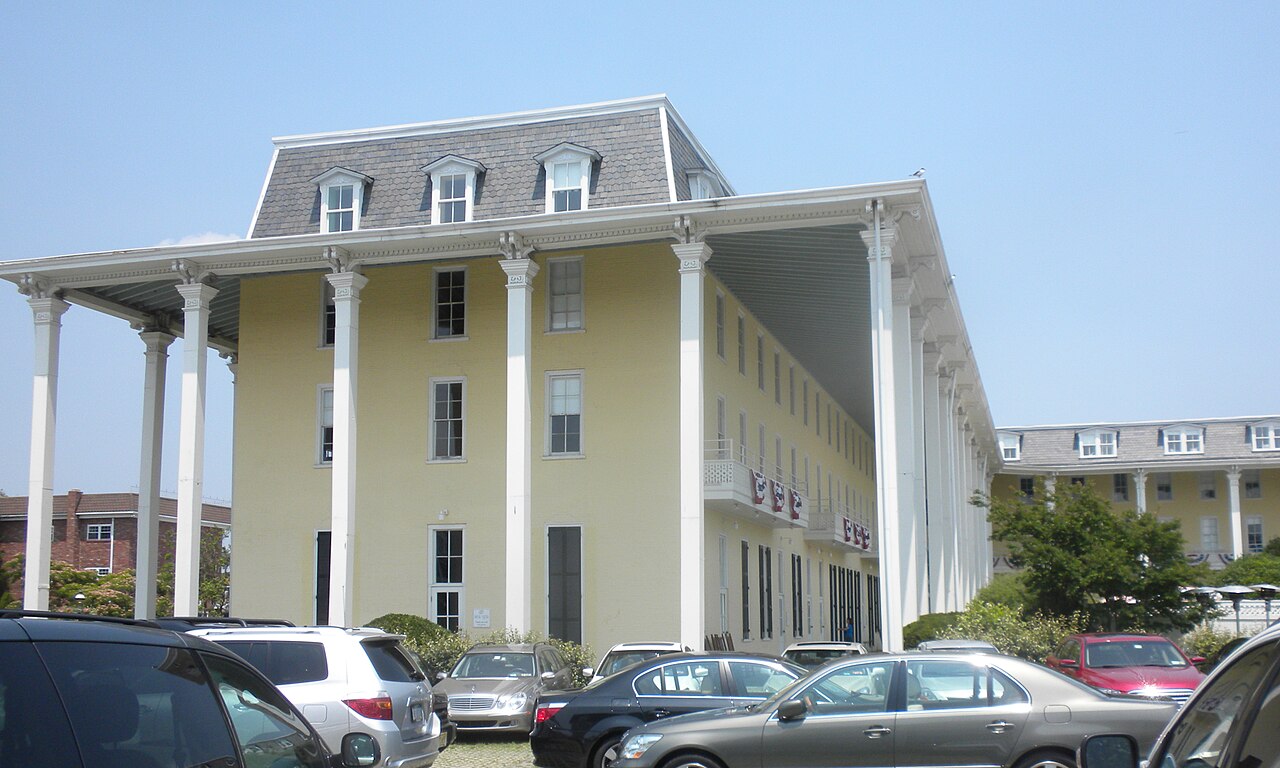
Congress Hall is the anchor of the whole story. That long yellow facade with its three-story veranda and marching white columns began in 1816 as a plain boardinghouse locals mockingly dubbed "Tommy's Folly" — nobody believed a hotel out on a sandbar could turn a profit. It did, spectacularly. By mid-century it had become a Summer White House, hosting Franklin Pierce, James Buchanan, Ulysses S. Grant, and Benjamin Harrison, who ran the country from its rooms.
But the gilded society on that porch had a hard truth underneath it. Before the Civil War, Congress Hall mingled Northern industrialists with Southern planters — and those planters' wealth was built on enslaved labor. The easy summer leisure came with that history attached.
The original wooden hotel burned in the catastrophic fire of 1878. What stands today is the brick rebuild — the same porch culture, this time made to last.
The Breeze That Built a Vacation
Step onto the promenade and feel the wind coming off the water. That breeze is the entire reason Cape May exists as a resort. Picture American cities in July before air conditioning — dense, smoky, breathless furnaces. Then picture Cape May, jutting out where the Delaware Bay meets the Atlantic, catching cool sea air from three sides. Doctors literally prescribed a stay by the shore as medicine.
The wealthy arrived first by steamboat, later by rail, and a brand-new idea took hold: travel purely for pleasure. Not work, not just health — leisure. Strolling, seeing and being seen.
The word promenade means a leisurely walk, and that's exactly what people came to do here, dressed to the nines with parasols raised, nodding to neighbors. The porch culture of the hotels simply spilled out onto the edge of the sea.
A Rare Survivor
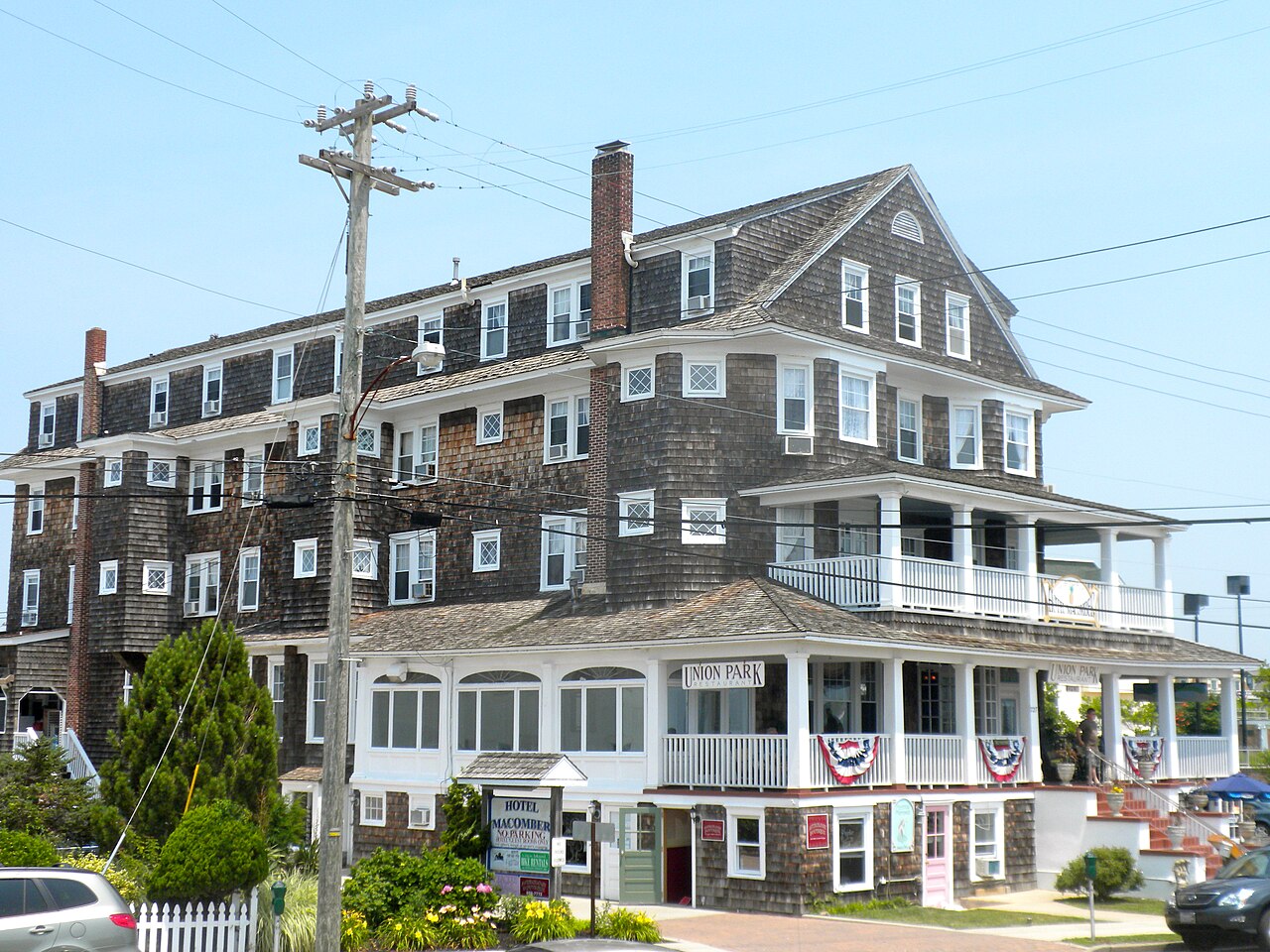
The Hotel Macomber, built in 1918, is one of the last great wooden seaside hotels still standing — all weathered shingles, stacked stories, and deep shaded porches. And that survival is the whole point.
Cape May once bristled with enormous ornate wooden hotels of hundreds of rooms. Almost all of them are gone. Fire was the great destroyer — wood, gas lamps, and salt wind are a dangerous mix, as the 1878 Congress Hall blaze made clear — and others were simply torn down when fashion moved on.
So the Macomber isn't just a handsome old hotel. It's a genuine survivor, a rare piece of the real thing. That, honestly, is the story of Cape May: not that it preserved everything, but that just enough survived to show us what the entire coast once looked like.
Porches as Social Theater
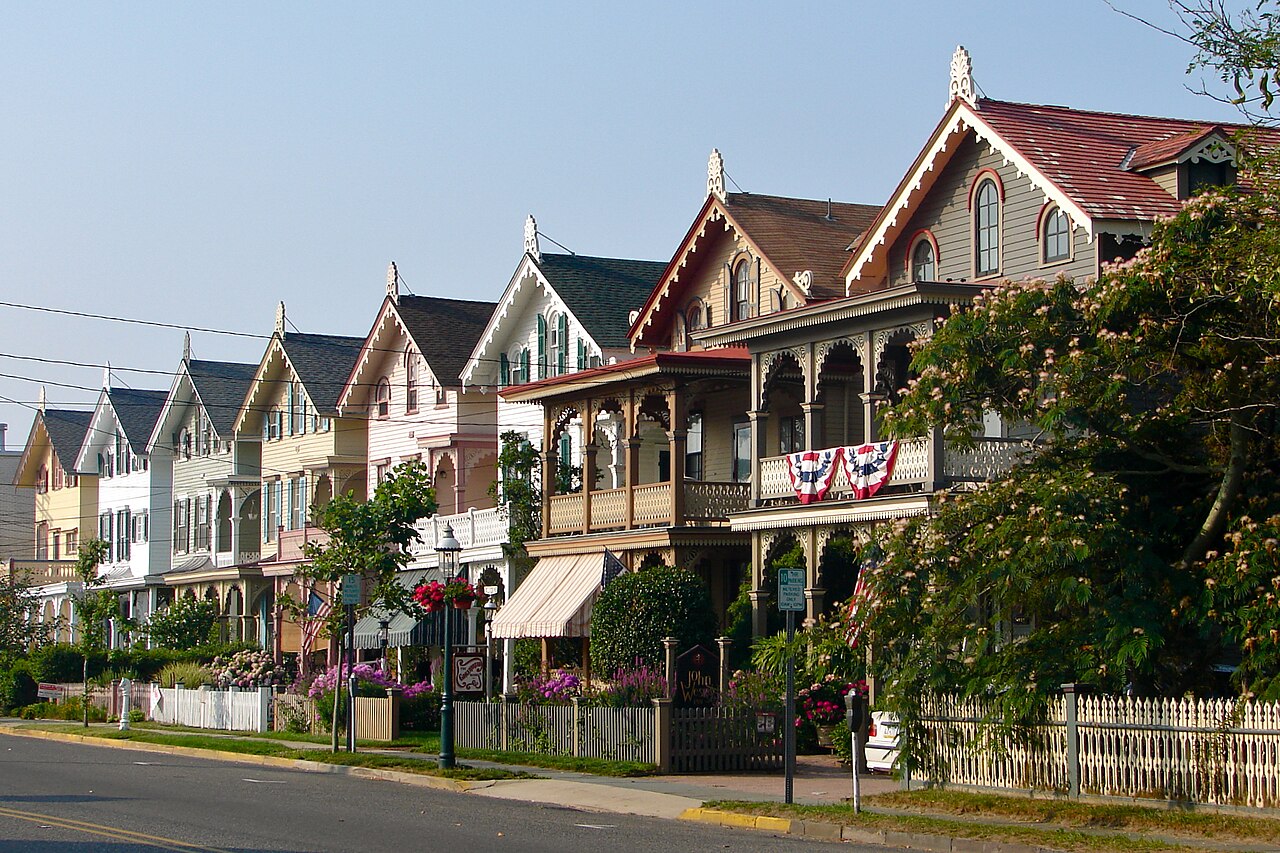
Down Gurney Street stands the Stockton Row Cottages — a line of near-identical Victorian cottages built together in the late 1860s, every one of them facing outward toward the street. This is the porch culture distilled to its purest form.
Those verandas, one after another and practically touching, weren't built for privacy. They were built for society — for sitting out in the cool of the evening, watching the parade of the promenade, calling to a neighbor, being seen in your summer best. A porch here was theater, the front rail your box seat and the street the show.
It's the same impulse that filled the Congress Hall veranda and spilled onto the promenade, shrunk down to the private cottage — so ordinary families could play at the same leisure the presidents enjoyed a few blocks west.
The Atlantic, and One Debunked Legend
The walk ends looking out at the Atlantic that made everything possible. It's also the spot to clear up a favorite local myth. You'll hear that Abraham Lincoln summered in Cape May. It's a charming tale, and it isn't true — there's a reasonable case he visited briefly as a congressman in 1849, long before the presidency, but the image of Lincoln lounging on these porches is the kind of story a proud resort town tells itself.
The real history is more than enough. A breeze off this ocean invented the American seaside vacation. It built the porches, drew the presidents, filled the bandstands, and raised the cottages. Two hundred years on, it's still the same salt air they came for — and standing at the water's edge, it's easy to understand why they kept coming back.
Good to know
The route is a relaxed one-mile stroll east along Beach Avenue, from Congress Hall to the east promenade beach overlook, and takes roughly 35–40 minutes of listening at a leisurely pace (longer if you stop to browse or grab an ice cream). It's flat and stroller- and wheelchair-friendly. Bring sunscreen, water, and a hat — the oceanfront offers little shade — and consider timing it for late afternoon or a summer evening when the sea breeze kicks up and the bandstand comes alive.
The full walk also passes Rotary Park & the Bandstand, Cape May Convention Hall.
If this stretch of coast sounds like your kind of afternoon, let the free self-guided audio tour "Cape May: Presidents, Porches & the Promenade" be your guide. It threads together all seven stops with warm, honest narration — the presidents, the fires, the survivors, and the breeze that started it all — so you can simply walk, listen, and watch the ocean do what it's done for two centuries.
Take the free tour: Cape May: Presidents, Porches & the Promenade →