Cape May Point, United States · 6 min read
At the very bottom of New Jersey, the land narrows to a slender green finger and simply runs out. This is Cape May Point — a place where the Delaware Bay and the Atlantic Ocean meet and quarrel over the sand, and where more than 150 years of American history have washed up along a single stretch of shoreline.
It's an easy place to underestimate. There are no boardwalk arcades here, no crowds of the sort you'll find up the coast. What there is, instead, is a rare kind of layering: a Civil War-era lighthouse, half-buried WWII bunkers, one of the continent's greatest bird-migration corridors, a ghost ship made of concrete, and a nightly ceremony that honors the nation's veterans as the sun goes down.
If you're deciding whether the Point is worth the drive past the busier resort blocks, the short answer is yes — and the best way to read it is on foot, slowly, letting the threads connect.
The Light That Has Held Since 1859
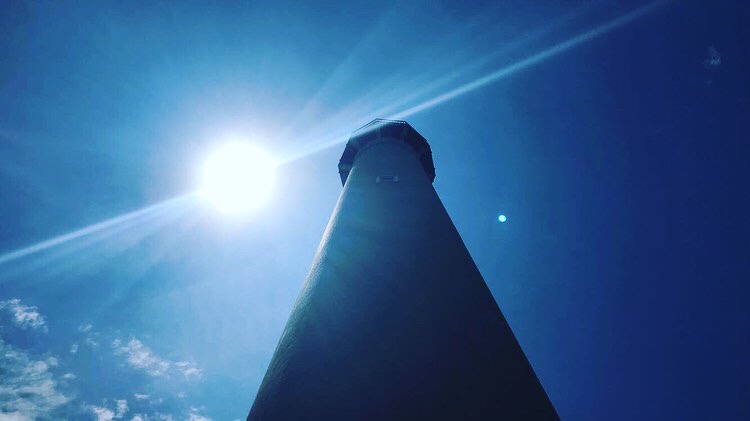
Everything on the Point orients around the lighthouse — 157 feet of tapering brick with 199 iron steps spiraling up inside. It's a working navigational beacon that has warned ships off the shoals since 1859, and in season you can climb it for the widest view on the peninsula.
What gives the tower its weight isn't just its height, though. It's the third lighthouse to stand near this spot; the sea took the first two, as the sea eventually takes everything here. For a century and a half its light has repeated the same message to every passing mariner: you are near the edge, steer true. That idea — the edge as a threshold between the safe world and the open, dangerous sea — sets the tone for the entire walk.
A War That Washed Up on the Beach
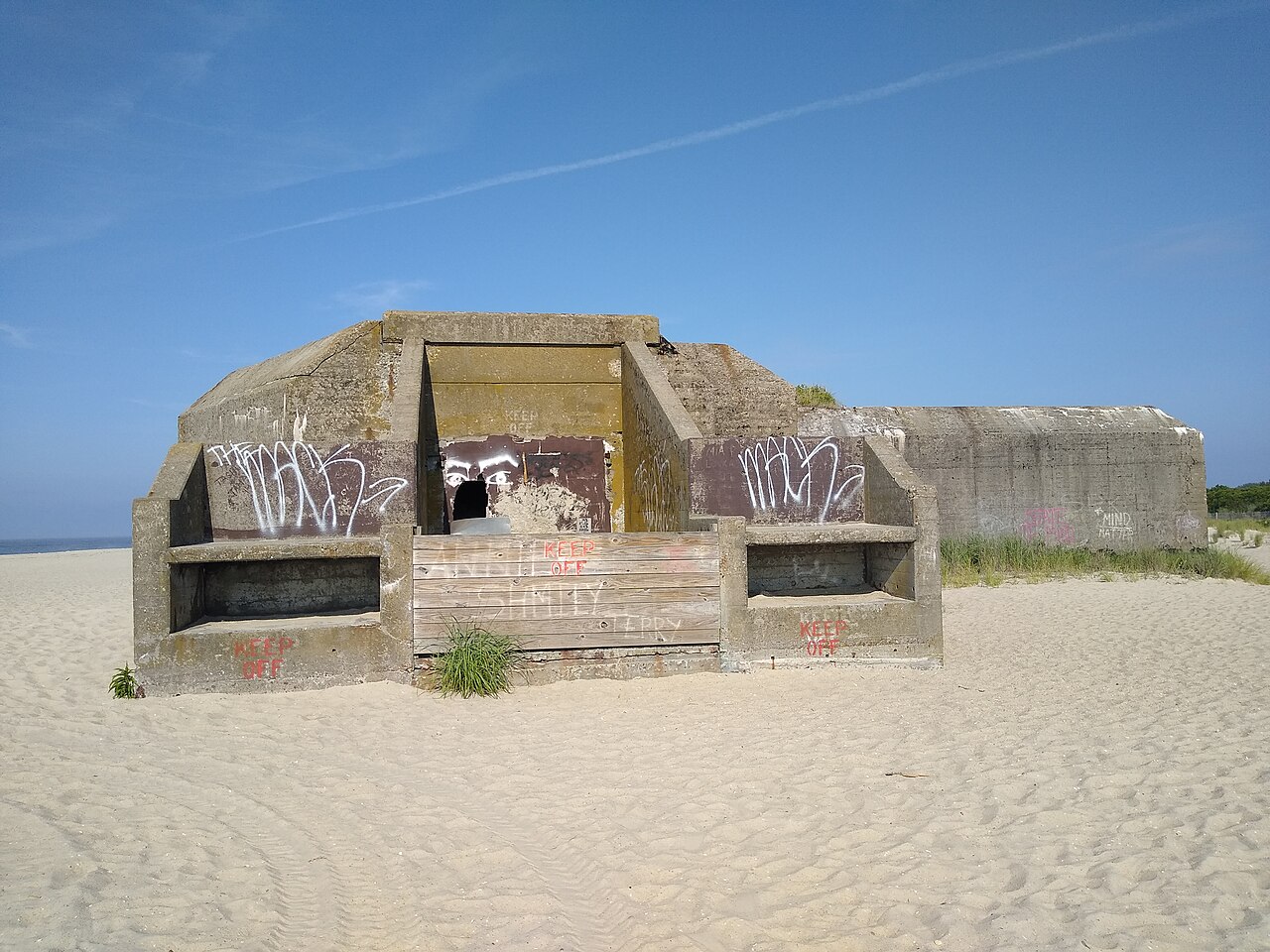
Farther along the sand sits a great slab of concrete, tilting where the beach has eroded out from under it. It looks ancient. It was poured in 1942. This is Battery 223, a coastal gun emplacement where crews once stood ready with six-inch guns trained on the Atlantic.
The threat wasn't abstract. In the first terrible year of the war, German U-boats hunted just off this coast, and freighters burned within sight of the shore — close enough that people on the beaches saw the glow. The battery was buried under earth and grass to hide it from the water. Now the water has come to it, leaving it exposed on the sand: a monument nobody planned, and a stark counterpoint to the lighthouse behind it. One tower was built to guide ships home; this was built to sink them, on the very same shore.
A Sanctuary on the Same Front Line
Behind the dunes, the roar of the surf softens and the air fills with a different sound — wings, calls, rustle. Boardwalks thread out over freshwater ponds and marsh grass through Cape May Point State Park, one of the great migration crossroads of North America.
The geography does the work. As the peninsula narrows toward the Point, it funnels travelers south: hawks and falcons riding autumn winds, restless clouds of warblers and swallows, monarch butterflies drifting like scraps of orange paper. They pause here at the water's edge, gathering their nerve before the long crossing over the bay. The same narrow finger of land that once made this a front line now makes it a refuge — same edge, entirely different travelers.
The Tower Built to Watch, Not to Fight
Rising tall and narrow above the trees is Fire Control Tower No. 23, a restored coastal-defense spotting tower and one of the last of its kind still standing. Unlike the battery, it was never meant to fight. It was meant to see.
Spotters stood at its slit windows scanning the horizon. When they caught a ship, a chain of towers strung along the coast each took a bearing, and where those sightlines crossed, they had a target — fed down to the guns of batteries like the one now stranded on the beach. It's easiest to understand as a grim cousin of the lighthouse: both are towers built to keep vigil at the edge and make sense of what moves out in the haze. One watched in order to save. This one watched in order to strike.
The Ship Made of Concrete
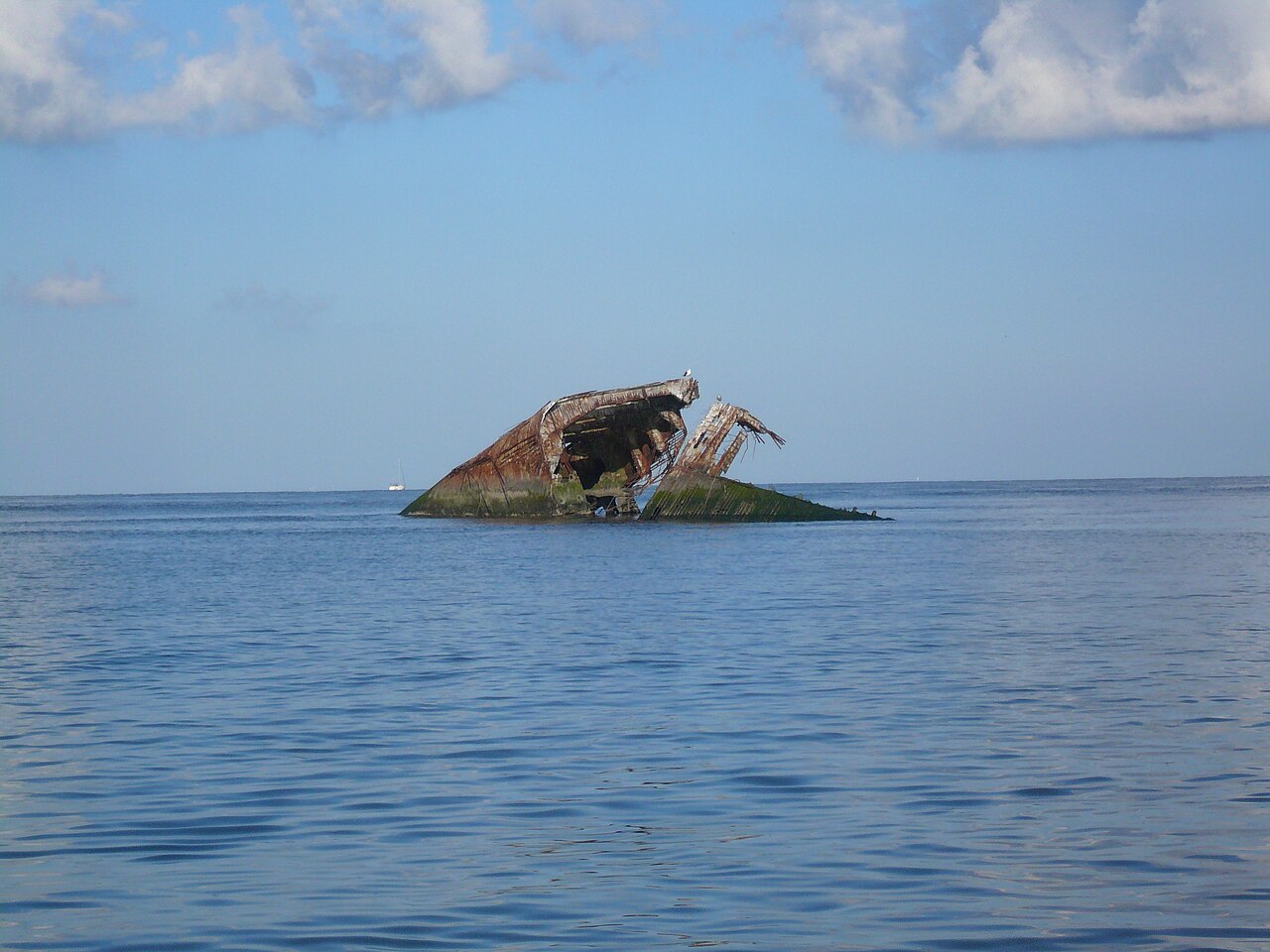
Out in the shallows off Sunset Beach, a long grey shape breaks the surface: the SS Atlantus, a ship built of concrete. It sounds absurd, but in the First World War steel was scarce, and the reasoning held — she actually sailed. She was simply too heavy and slow to be worth it, and the experiment was abandoned when the war ended.
Towed here in 1926 to serve as part of a ferry dock, she broke free in a storm and grounded exactly where she sits today. For nearly a century the surf has been dissolving her grain by grain. She belongs to this coast of vanishing things — the two lost lighthouses, the bunker sliding into the sea — an idea that outlived its moment and was left to the patient, reclaiming tide.
Diamonds, and a Flag at Dusk
The walk ends at Sunset Beach, the western tip and the last of the land. Look down and you may catch a glint underfoot: 'Cape May diamonds,' little pebbles of quartz polished smooth by their long journey down the Delaware River and rolled ashore here, clear as glass.
Linger until the light goes gold, and you'll witness the Point's quietest tradition. Each evening a flag is lowered with ceremony — and these are flags that once draped the coffins of America's veterans, flown here one last time in their honor. It's a fitting close to a place that has been a guiding light, a front line, and a migration waypoint all at once. At the end of the day, at the end of the land, the edge of the continent becomes a place of remembrance.
Good to know
The full loop runs about 1.5 miles over flat ground, mixing paved paths, boardwalks, and sand — plan on roughly 1.5 to 2 hours if you pause at the overlooks and time your finish for sunset. Bring water, sun protection, and sturdy shoes for the beach stretches; binoculars are well worth packing during spring and fall migration. Lighthouse climbs and tower access are seasonal, and time your arrival so you reach Sunset Beach before the evening flag ceremony.
The full walk also passes The Point Overlook.
If this stretch of coast intrigues you, the free self-guided audio tour 'Cape May Point: The Lighthouse & the WWII Coast' is the ideal companion — it walks you through all seven stops in order, weaving the history and the wildlife together as you go. Load it up, start at the lighthouse, and let it carry you all the way to the sunset flag at the edge of the continent.
Take the free tour: Cape May Point: The Lighthouse & the WWII Coast →