Budapest, Hungary · 5 min read
Budapest wears its name like a hyphen. For most of its history there was no single city here at all, but two rivals staring each other down across the Danube: royal, hilly Buda on one bank and flat, merchant, ever-louder Pest on the other. They didn't merge until 1873 — and the story of how they finally became one is written in stone and iron along the riverbank.
If you're deciding whether Budapest's Danube waterfront is worth your time, the answer is yes — but not just for the postcard views. Walk the Pest side from St. Stephen's Basilica down to the water and you're tracing the exact spine of that merger, past a fascist-era memorial that stops you cold and a Parliament dome designed, quite literally, to a specific number.
Here's what that walk holds, and why the details reward anyone who slows down to notice them.
The Dome That Refuses to Look Down
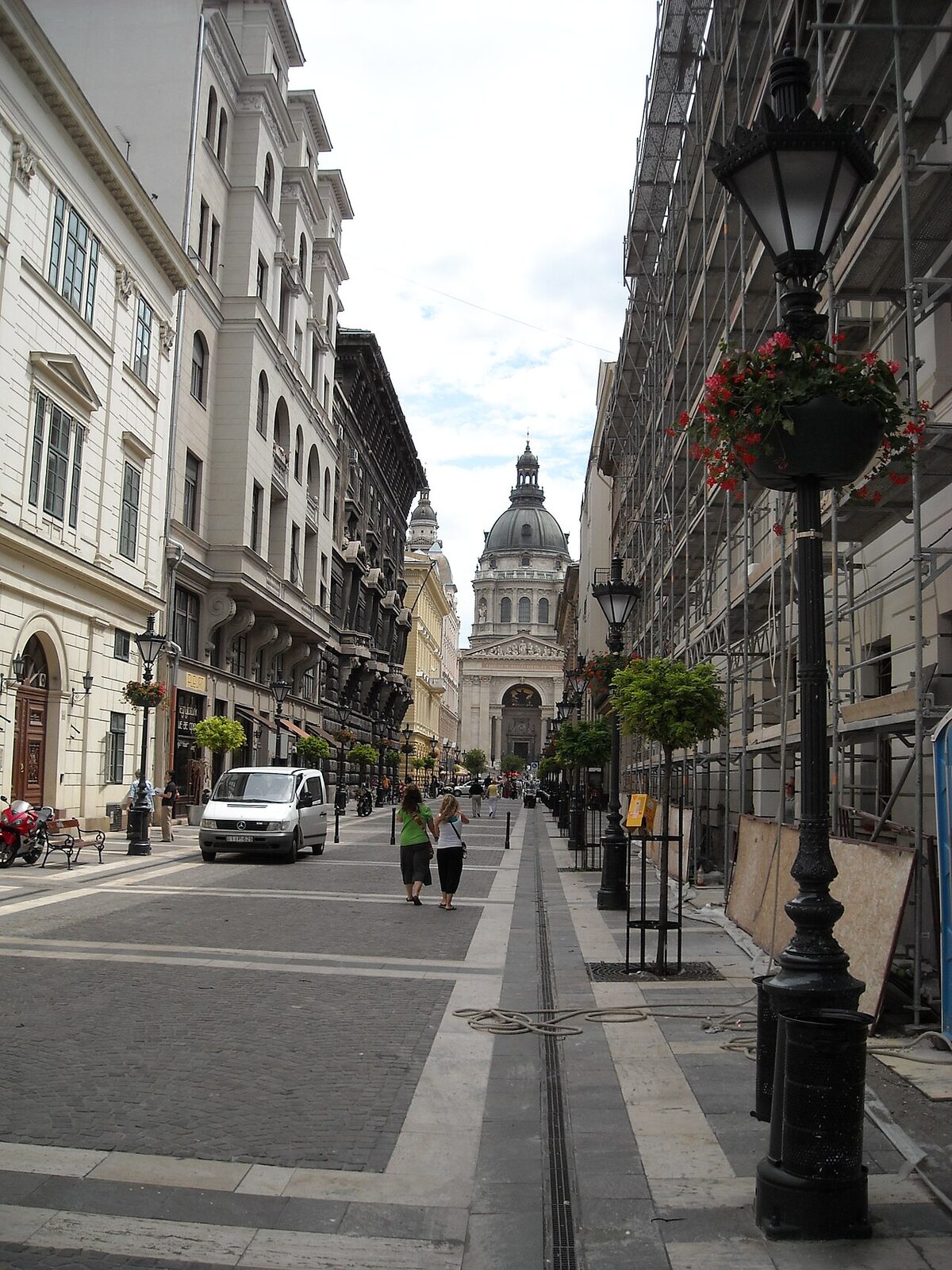
St. Stephen's Basilica is the largest church in the city, and it took its time. Construction began in the 1850s, and in 1868 the half-finished dome collapsed in a storm — so they started over. It wasn't consecrated until 1905, when the Emperor himself came to see it.
The dome rises exactly ninety-six metres, and that number is no accident. It matches the height of the dome on Parliament, across the river — a deliberate leveling of spiritual power and worldly power so that neither could look down on the other. Keep that number in mind; it returns near the end of the walk.
Inside rests the country's most sacred relic: the mummified right hand of King Stephen, who made Hungary Christian a thousand years ago. A nation's founding, kept in a glass case.
A Building With a Grudge in Its Stone
The Hungarian State Opera House, opened in 1884, is Miklós Ybl's masterpiece — and it carries a quiet act of defiance. Franz Joseph, Emperor in Vienna and King in Budapest, paid for much of it on one condition: it must not be larger than the opera house in Vienna.
And so it isn't. It's smaller by decree. But step inside and the other half of the story emerges — the acoustics are among the finest in Europe, better, Budapesters will insist, than anything upstream. Legend has it the Emperor visited only once and never returned, having noticed exactly that.
True or not, the tale captures the city's whole temperament in this era: forever measuring itself against the imperial capital, made smaller by law, determined to be greater in every way that couldn't be legislated.
Stop 3
The Bridge Born of Grief
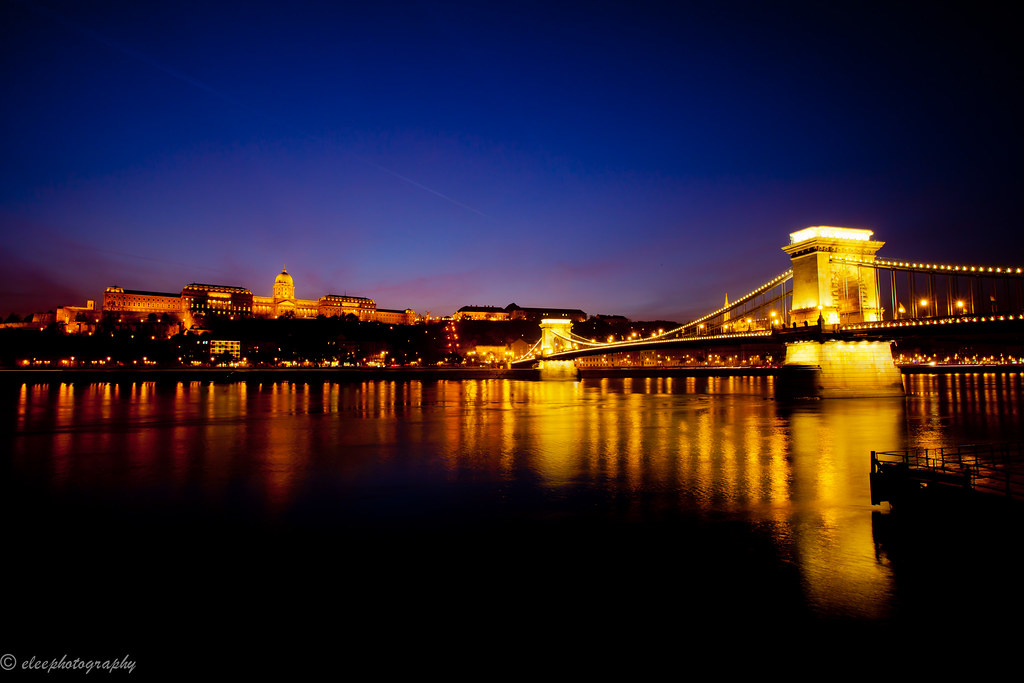
The Széchenyi Chain Bridge, opened in 1849, is the reason there is a Budapest at all. Before it, crossing between Buda and Pest meant ferries in summer and, in a hard winter, walking across the ice and hoping.
Count István Széchenyi learned that cost the hardest way. In 1820 his father died on the far bank while the river ran thick with drifting ice — neither open water nor solid footing. He waited a week. He missed the funeral. Out of that grief grew an obsession: a permanent bridge, the first ever to link the two towns in stone and iron.
It changed everything. Once people could cross freely in any season, the case for two separate cities dissolved. In 1873 Buda, Pest, and Óbuda merged into one — and it was this bridge, more than any official decree, that made the union inevitable.
Sixty Pairs of Iron Shoes
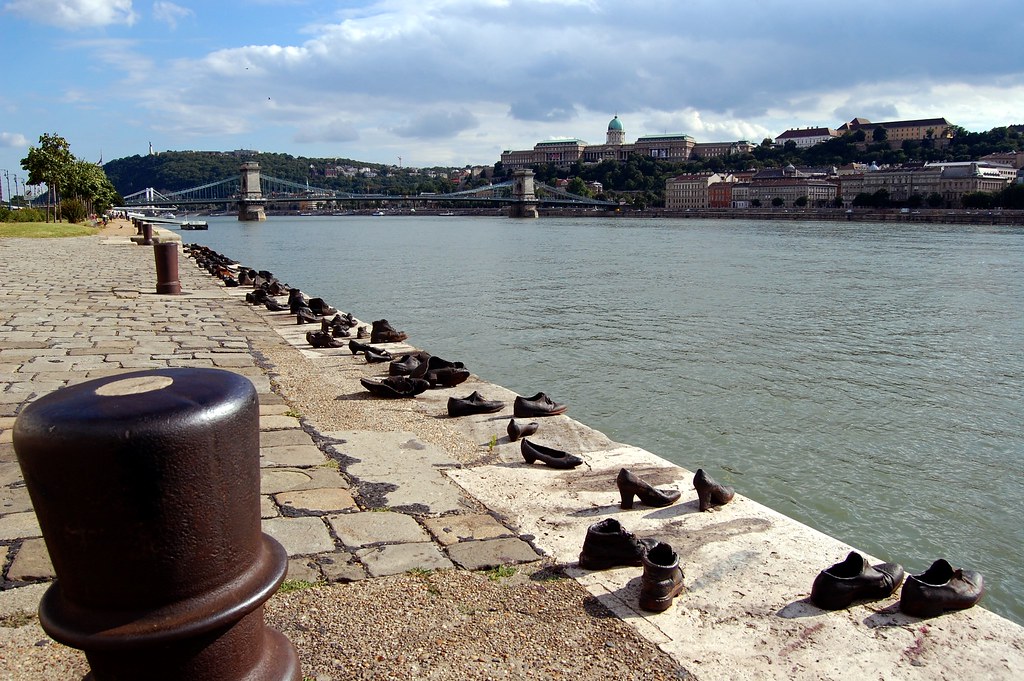
At the water's edge sit sixty pairs of shoes cast in iron — men's work boots, a woman's heel, a child's small shoes, left as if just stepped out of. It is one of the most quietly devastating memorials in Europe.
In the winter of 1944 and into 1945, this stretch of embankment was a killing site. Militiamen of the Arrow Cross, Hungary's own fascist party then in power, brought Jewish Budapesters here, ordered them to remove their shoes at the river's edge, and shot them so the current would carry the bodies away. The shoes were taken because leather had value; the people, in the eyes of the killers, did not.
Placed here in 2005, the memorial shows no faces and no figures — only the shoes, and the empty space where the people should be. The same river that Széchenyi's bridge was built to conquer became, for a season, an instrument of murder.
When the Number Returns
Look up at the great dome of Parliament and you meet that number again: ninety-six metres, precisely the height of the Basilica where the walk began. When the building was completed in 1902, the two domes were set level on purpose — church and state, God and nation, neither permitted to stand taller than the other.
The ninety-six carries its own memory. The Magyar tribes are said to have settled this basin in the year 896, a thousand years before the building's era of completion. The city was counting in millennia.
It is the largest building in Hungary, all neo-Gothic spires and arches, a deliberate nod to Westminster on its own river. Inside, under armed guard, sits the Holy Crown of St. Stephen — the same king whose right hand rests beneath the Basilica dome. Two domes, one height, quietly finishing a sentence they began together across the city.
Good to know
The route runs roughly 2.5 kilometres along the flat Pest bank and takes about 1.5 to 2 hours at an unhurried pace with stops. It's an easy, mostly level walk on paved promenade and city streets — no hills on this side of the river. Bring comfortable shoes and, ideally, time your finish for late afternoon so you catch the Buda skyline lighting up across the water. The Shoes on the Danube memorial deserves a quiet moment; approach it with that in mind.
The full walk also passes Danube Promenade at Vigadó tér.
The easiest way to follow this story on the ground — from the Basilica dome to the last lamp flickering on across the river — is the free self-guided audio tour 'Budapest: Two Cities, One Bridge.' It threads all seven stops together at your own pace, filling in the history as you walk, and it's the natural next step for anyone who wants the Danube to make sense rather than just look pretty.
Take the free tour: Budapest: Two Cities, One Bridge →