Budapest, Hungary · 6 min read
Cross the Danube to the Buda side and start climbing, and you'll find a hilltop that seems to have stood unchanged for a thousand years: a Baroque palace, a spiky Gothic church, a white fairy-tale rampart looking out over the river. It's one of the most photographed skylines in Central Europe, and almost none of it is what it claims to be.
Castle Hill has been burned by Mongols, held by the Ottomans, rebuilt in imperial Baroque by the Habsburgs, and then shelled to rubble in the winter of 1945. What stands today is a careful, sometimes theatrical act of reconstruction — a place rebuilt, by one count, seven times over. Once you know that, the whole district reads differently, and far more interestingly.
This is a guide to walking Castle Hill with that lens on: not as a frozen medieval postcard, but as a survivor that keeps rewriting itself. Here are the stops worth lingering over, and why the fakery is part of the magic.
Where Hungary Begins: Kilometre Zero
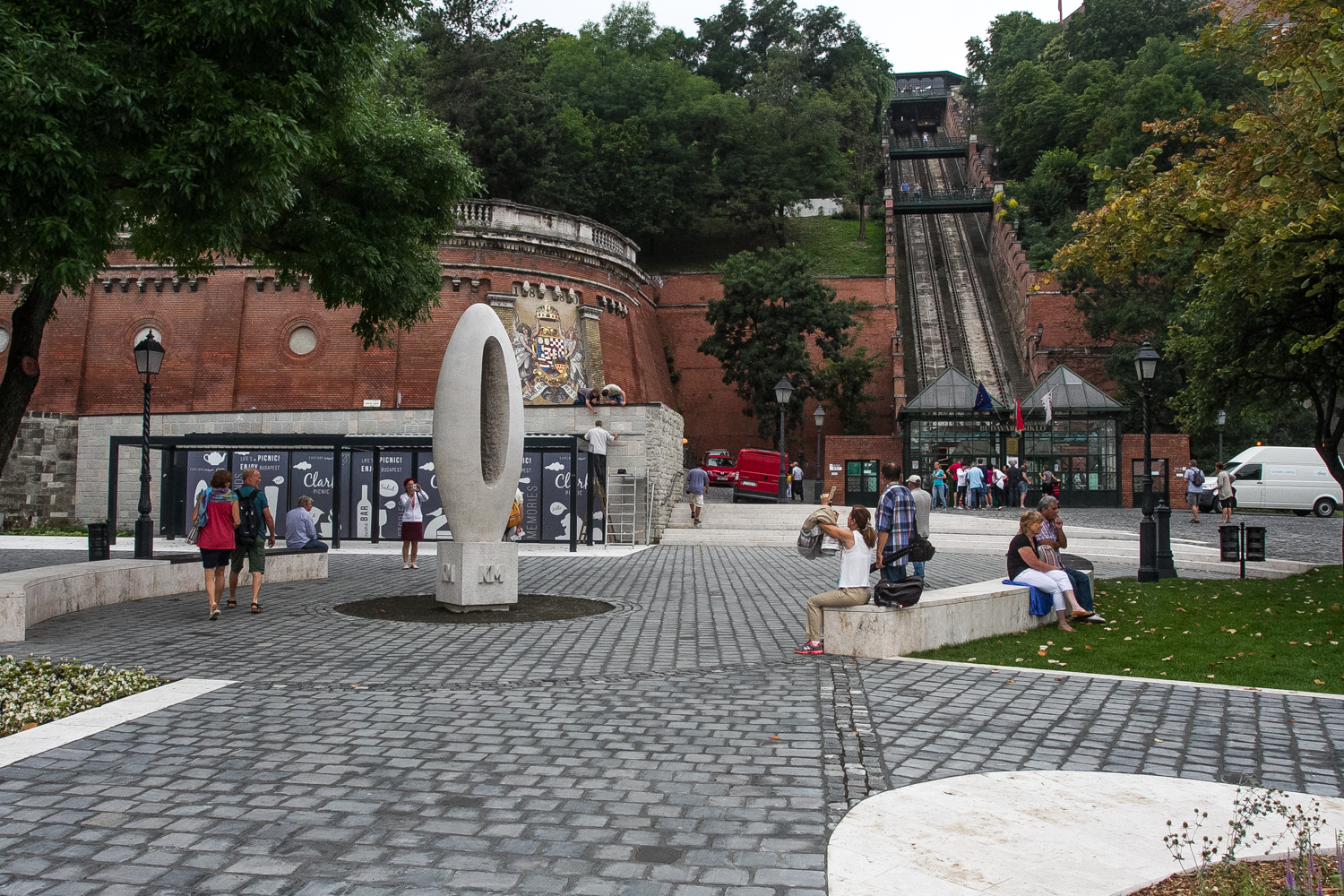
At the Buda foot of the Chain Bridge sits an unassuming stone in Clark Ádám tér, and every road sign in the country that counts down the kilometres to Budapest is counting to exactly this spot. It's the point from which the whole nation measures distance — the true center of the map.
The square is named for Adam Clark, the Scottish engineer who oversaw the Chain Bridge behind it and bored the tunnel through the hill in front of it — and who, like so many who came to Budapest for a job, simply never went home. There's a well-worn local joke that the tunnel exists to keep the bridge dry when it rains.
It's the perfect place to set the theme for everything above. The hill you're about to climb has been erased and rewritten by Mongols, Ottomans, Habsburgs, and one catastrophic siege. What waits at the top is beautiful — but almost none of it is as old as it pretends to be.
Buda Castle: A Palace Built on a Palace on a Palace
If one building sums up Castle Hill, it's Buda Castle — a structure that has been destroyed and rebuilt in essentially every century since the 13th. Peel it apart layer by layer and you get the entire story of the hill. Medieval Hungarian kings raised a fortress-palace here. The Ottomans took it and let it decay. The Habsburgs cleared the ruins and built a grand Baroque residence to broadcast who was now in charge.
Then came 1945, when the palace was gutted, burned, and shelled to a hollow shell. What visitors admire today is the postwar reconstruction — a rebuild of a Habsburg palace, raised on Ottoman rubble, standing on medieval foundations. So when someone calls it a centuries-old royal palace, they're right and wrong in the very same breath.
Look for the Lion Courtyard, where two pairs of stone lions guard the gate. Carved in the early 1900s, they've presided over the fall of an empire, a siege, a communist government, and now the daily tide of tourists — and they manage to look entirely unbothered by all of it.
Matthias Church: The Fairy Tale That Was Once a Mosque
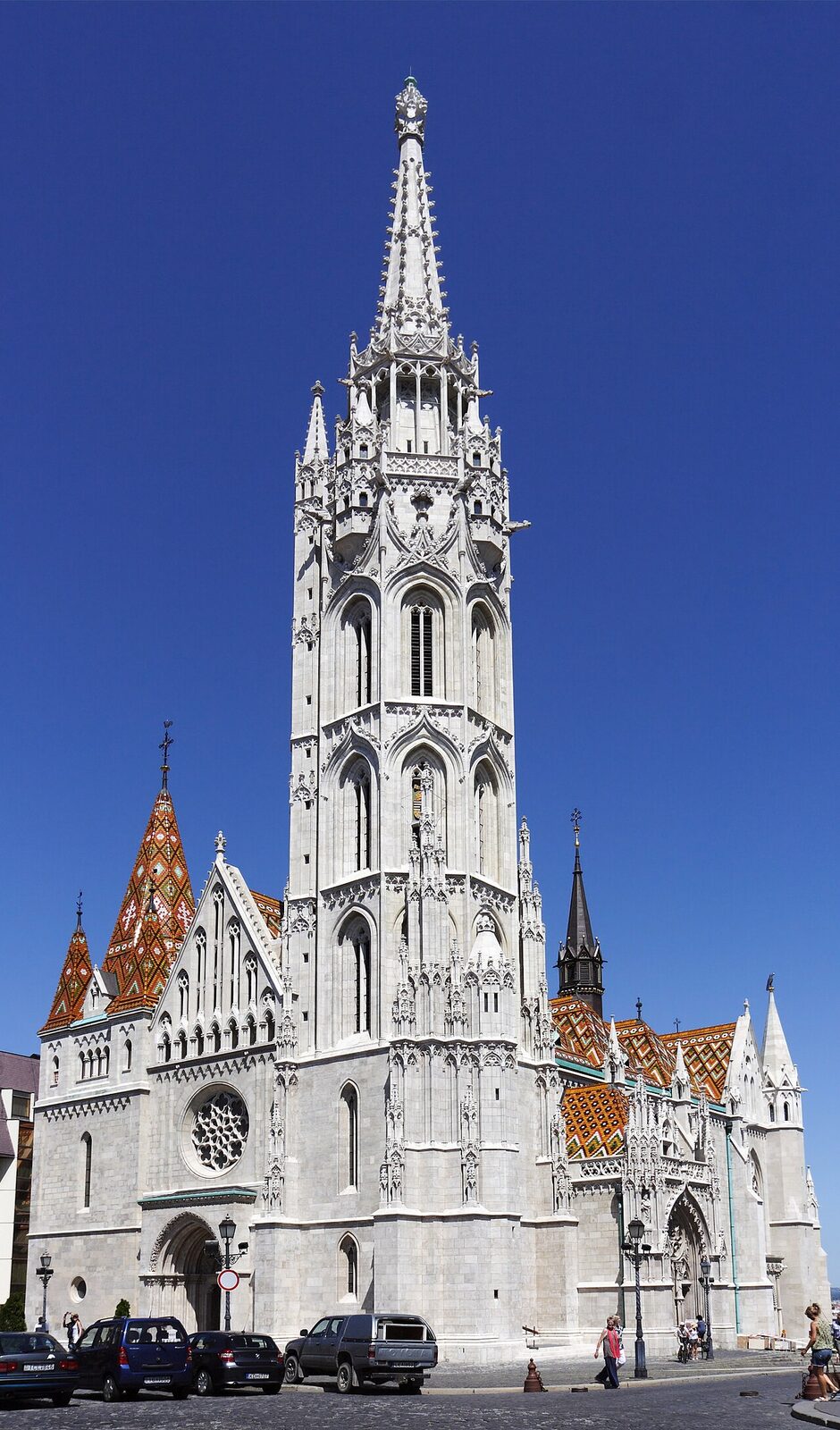
That diamond-patterned tiled roof gleaming above the district looks like something conjured from a medieval storybook — which is precisely the point. Much of Matthias Church's Gothic drama is the 19th-century imagination of architect Frigyes Schulek, who reshaped a battered old church into a romantic vision of what medieval Hungary ought to have looked like. On this hill, that's entirely on-brand.
But the building has worn far stranger faces. For 145 years under Ottoman rule it served as a mosque — altars removed, walls whitewashed, prayers turned toward Mecca. Its reinventions are as layered as everything else up here.
Real history happened inside its walls, too. Two kings were crowned in this church, including the last of them all: Charles IV, in 1916, with the First World War raging and the Habsburg monarchy already dying around him. Within two years there would be no throne left at all — a coronation, as it turned out, for a monarchy taking its final bow.
Fisherman's Bastion: The Fake Fortress With the Real View
Here's the honest truth about Budapest's most Instagrammed landmark: Fisherman's Bastion never defended anything. Not a single arrow was ever loosed from its fairy-tale turrets. It was built in 1902 as pure romantic nationalism carved in white stone, its seven turrets standing for the seven Magyar tribes who, legend says, rode into this basin and founded a nation. It's a monument dressed as a fortress — theatre, essentially.
And yet the fake fortress delivers the most real thing on the hill: the view. Step to the arches and Pest unfolds across the Danube, with the Parliament building rising like its own answer to a fairy tale. Both were built in the same optimistic decades, two grand gestures staring at each other across the water, each declaring that Hungary had arrived.
Sometimes, it turns out, the most romantic lies give you the truest picture. It's worth arriving early or lingering late to catch the light — and to have those white turrets to yourself for a moment.
The Quiet Promenade Where the District Died
After the crowds at the bastion, the Tóth Árpád sétány along the western ramparts feels like a different world — plane trees, a scatter of benches, the Buda hills rolling gently away. It's the calm side of the hill, and it invites you to slow down and breathe.
But look down over these walls and imagine February 1945. The Red Army had encircled Castle Hill, and the trapped German-Hungarian garrison was starving and out of ammunition. On the night of the 11th they attempted the desperate thing: a mass breakout straight down these western slopes, into the dark and into the guns. Of roughly 28,000 who ran, only about 700 reached their own lines.
The siege of Budapest lasted a hundred days and ranks among the most brutal urban battles of the entire war. Every rebuild elsewhere on the hill — the palace, the church, the streets — traces back to this moment. This pretty, silent path is, quite literally, where the district died and its long reconstruction began.
Stop 6
Good to know
Plan on roughly two to three hours at an unhurried pace, covering a little under three kilometres from the Chain Bridge's Buda foot up over Castle Hill and back down to Batthyány tér. It's a genuine climb at the start, so wear comfortable shoes; you can save your legs by riding the historic Sikló funicular up if you prefer. Bring water, sun protection in summer, and a camera — the views from Fisherman's Bastion and the Batthyány tér embankment are the payoff. Castle Hill is largely pedestrianized and can be busy midday, so early morning or late afternoon light is ideal.
The full walk also passes The Climb — Alongside the Sikló, Batthyány tér.
If this is the version of Castle Hill you want to experience — layered, honest, and full of hidden history rather than a rushed lap of photo stops — download the free self-guided audio tour "Budapest: The Castle District, Rebuilt Seven Times." It walks you the whole route from Kilometre Zero to the Parliament view at Batthyány tér, telling the story stop by stop at your own pace, so you can look up from your phone and actually see the hill for what it is.
Take the free tour: Budapest: The Castle District, Rebuilt Seven Times →