Budapest, Hungary · 6 min read
Most visitors to Budapest come for the baths — and rightly so. But the hill that rises steeply from the Buda bank of the Danube is more than a backdrop to a soak. Gellért Hill is a limestone sponge holding nearly a hundred hot springs, and across a thousand years it has been a pagan holdout, a martyrdom site, an occupying fortress, and a summit where the city learned to change what its monuments mean without tearing them down.
If you're wondering whether Gellért Hill is worth the climb — and whether you can weave together a bath, a cave church, a Soviet-era statue, and a plate of lángos into a single afternoon — the answer is yes. The route packs an astonishing amount of Hungarian history into a compact, walkable arc.
Here's what makes the hill so rewarding, and how to see the best of it on foot, from the Art Nouveau bathhouse at its base to the roaring food hall across the river.
The Palace Built on Ancient Water
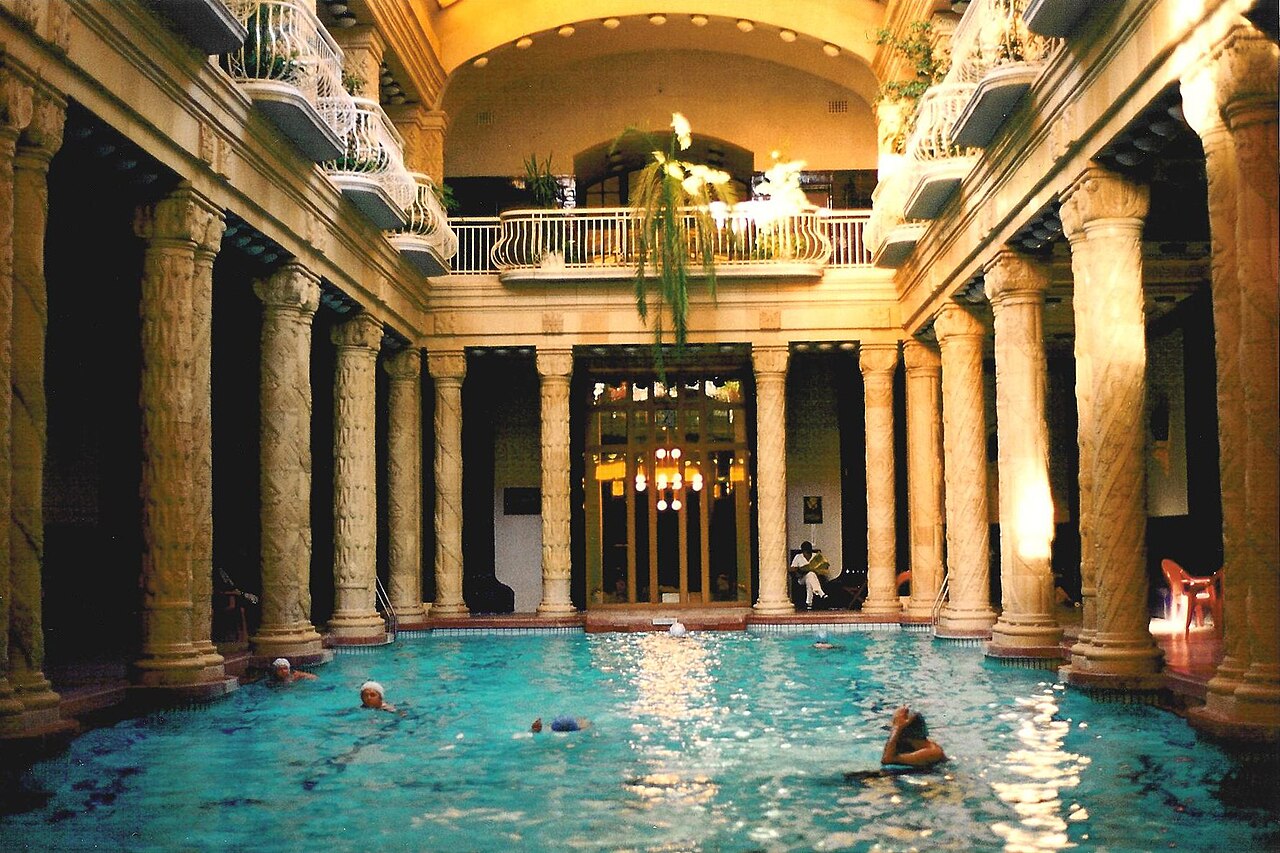
The Gellért Baths, opened in 1918, is the most photogenic starting point in the city: an Art Nouveau palace of glazed tiles, mosaic, and a glass roof. But the building is only the newest dress on a very old habit. The water beneath it is far older than any of its finery.
The hill rising behind the baths is limestone — porous, a great stone sponge. Rain sinks in, travels down to where the earth runs warm, and pushes back up through faults in the rock, surfacing as hot springs all over Budapest. The Ottomans bathed in these same waters four centuries ago. The city doesn't merely sit near its springs; it is built directly on top of them, and always has been.
A Church Sealed in Concrete for Forty Years
A short way up the hillside is the Cave Church, or Sziklatemplom, a chapel cut directly into the rock in 1926 by the Pauline monks — the only religious order founded in Hungary. It is a quietly astonishing place, but its real power lies in what happened to it.
In 1951 the communist state came for the order, arresting the monks and sentencing their leader. Then they sealed the entrance shut behind a wall of concrete nearly two meters thick, and the church simply vanished for forty years. It reopened only in 1992, after the regime fell — and the outline where that wall once stood is still traceable in the stone around the doorway. They left the scar on purpose. The same hill that holds a hundred warm springs also held this place shut in the dark.
The Statue They Rewrote Instead of Toppling
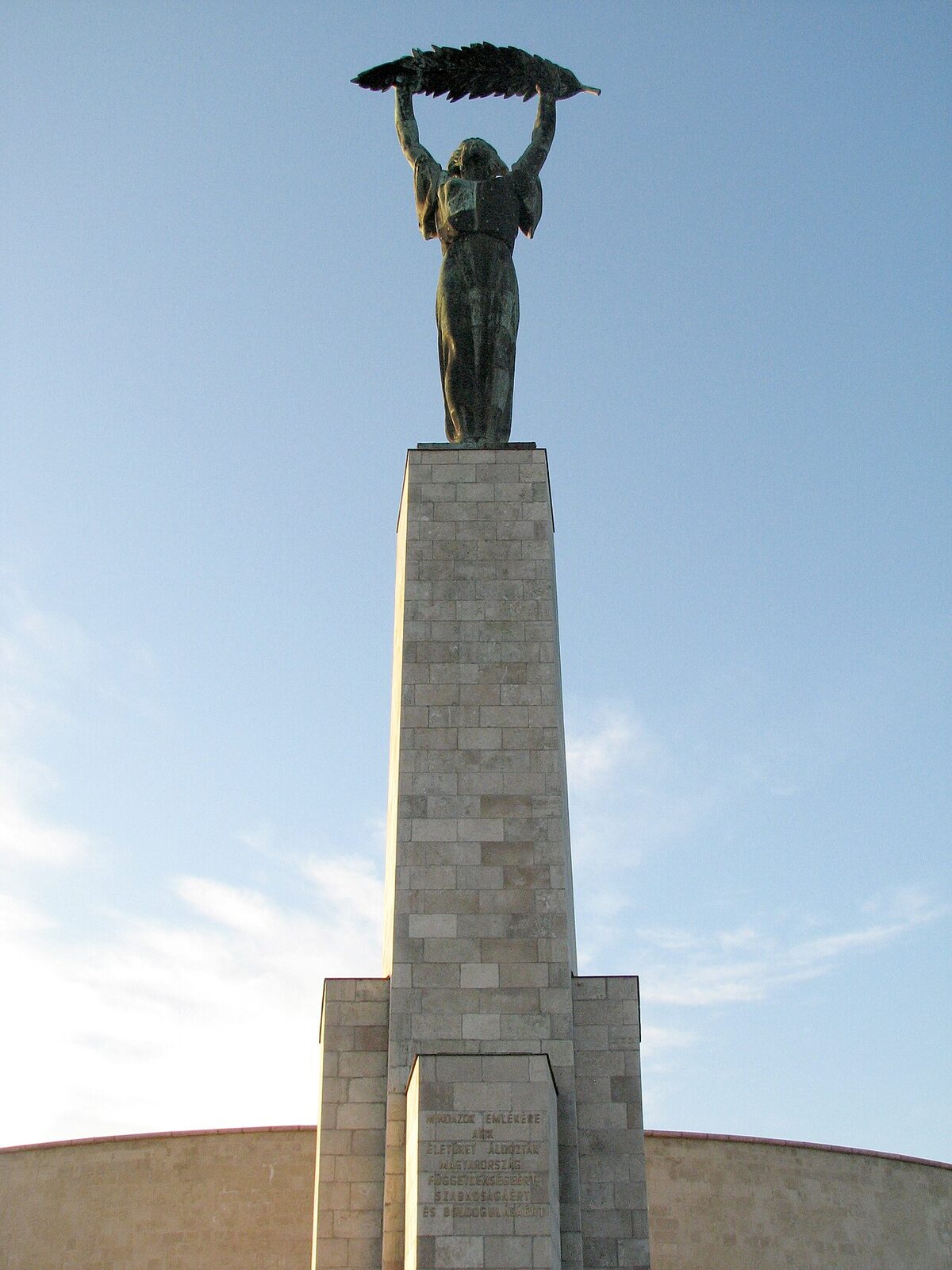
The climb earns you the Liberty Statue — fourteen meters of bronze, a woman holding a palm leaf aloft, visible from nearly everywhere in the city below. She went up in 1947 under Soviet auspices, a monument to the Red Army that drove out the Nazis, and at her base once stood a Soviet soldier with a submachine gun and an inscription honoring the liberators.
What happened in 1989 is quietly remarkable. As the old order dissolved, Hungarians didn't tear her down. They removed the soldier, rewrote the inscription to honor all who gave their lives for Hungary's independence, and let her keep standing. Same bronze, same palm leaf, same hilltop — a completely different meaning. This is a city that learned to rewrite its monuments rather than smash them.
A Fortress With Its Guns Aimed at Its Own City
Behind the statue stands the reason the hilltop was fortified at all. The Habsburgs built the Citadella in 1854, and here is the detail that matters: its cannons pointed not outward at foreign armies but downward, at Budapest itself.
It was punishment. Six years earlier, in 1848, Hungarians had risen in revolution against Vienna. The revolt was crushed, and this fortress became the reminder — stone and iron saying behave. Yet it never fired a shot in anger; it was never meant to. Its entire purpose was the threat. Standing here, you can hold both ideas at once: the statue in front, rewritten by the people, and the fortress behind, built to cow them — the long argument between a city and its rulers, carved into the rock.
The Bishop the Hill Was Named For
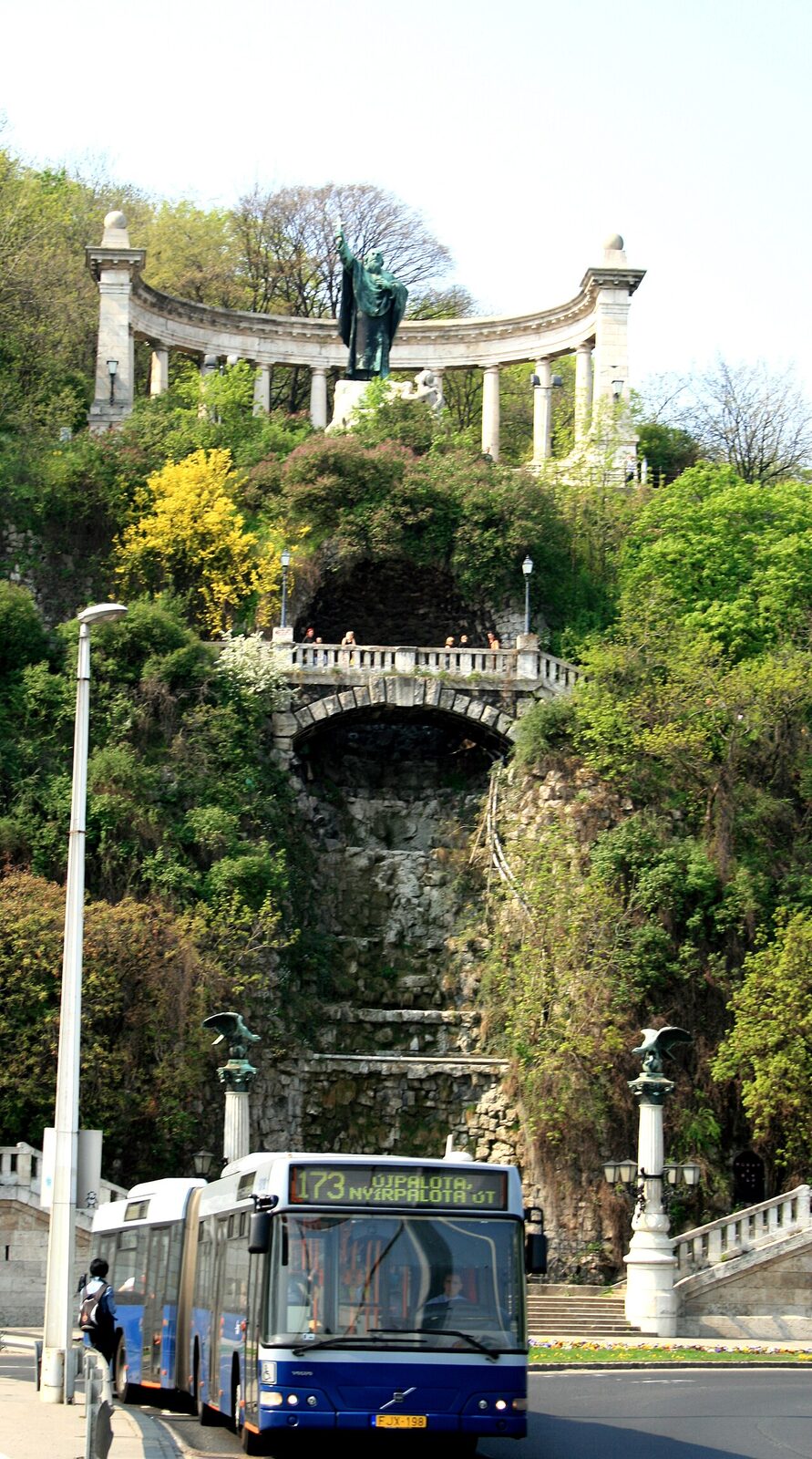
Halfway down the north slope stands Bishop Gellért in bronze, raising his cross out over the Danube. An Italian missionary brought to Hungary in the eleventh century to help convert a pagan people, he died right around here in 1046 during a pagan uprising against the new faith and the new king.
The story says he was sealed inside a barrel — some tellings say a cart studded with nails — and rolled down this very slope into the river. Whether every detail is true, no one can prove, but the meaning is fixed in the map: the hill of hot springs and fortresses and rewritten statues carries the name of a man it killed. Below him, the water he was thrown into still runs, and still surfaces, warm, all over the city.
The Oldest Working Room in Budapest
Descending the hill, you reach a low green dome that shelters the oldest working room in the city. The Rudas Baths were built by the Ottomans in 1550, when Buda was a frontier city of their empire — and unlike almost everything else from that time, it was never demolished. It's still steaming today.
Inside is an octagonal pool ringed by columns, beneath a dome pierced with small colored star-shaped windows that drop shafts of light through the rising vapor. Sixteen generations of Budapesters have soaked in exactly this water. It's the same hill breathing as at the grand 1918 Gellért, only four hundred years older and far plainer — no Art Nouveau, just stone, heat, and light. The city changes its rulers, its statues, and its bridges; the warm water underneath keeps its appointment.
Good to know
Plan for roughly two to three hours at a relaxed pace. The route runs from the Gellért Baths at the foot of the hill up to the summit and back down to the Danube, crossing Elisabeth Bridge to the Central Market Hall — a walk of a couple of kilometers, but with a genuine climb to the Liberty Statue and Citadella, so wear good shoes. Bring water, sun protection for the exposed summit, and cash for the market and any bath entry. If you want to actually soak, budget extra time and pack a swimsuit and towel.
The full walk also passes Elisabeth Bridge, Central Market Hall.
The best way to connect all of this — the geology, the martyrdom, the rewritten monuments, and the steam — is to let it be narrated as you climb. Download the free self-guided audio tour "Budapest: Gellért Hill — Hot Springs and Rebellions" and walk it at your own pace, from the Art Nouveau doors of the Gellért Baths to the paprika garlands of the Central Market Hall. It's the ideal companion for a half-day that turns a famous hill into a full story.
Take the free tour: Budapest: Gellért Hill — Hot Springs and Rebellions →