Lisbon, Portugal · 6 min read
On the western edge of Lisbon, where the Tagus River widens toward the Atlantic, sits Belém — a riverside district that packs more Portuguese history per square metre than almost anywhere else in the country. This is where caravels once weighed anchor for India and Brazil, where monks prayed for departing sailors, and where the world's most famous custard tart was born.
If you're deciding whether Belém deserves a spot on your Lisbon itinerary, the short answer is yes — but not just for the postcard monuments. What makes this stretch of riverfront so rewarding is the way it layers different Portugals on top of one another: the Age of Discovery and the dictatorship that mythologised it, imperial ambition and its uncomfortable costs, spice-trade gold and 21st-century art museums.
Here's a highlights reel of what to see, why it matters, and how to string it together into one very walkable afternoon.
The Gateway to the Atlantic
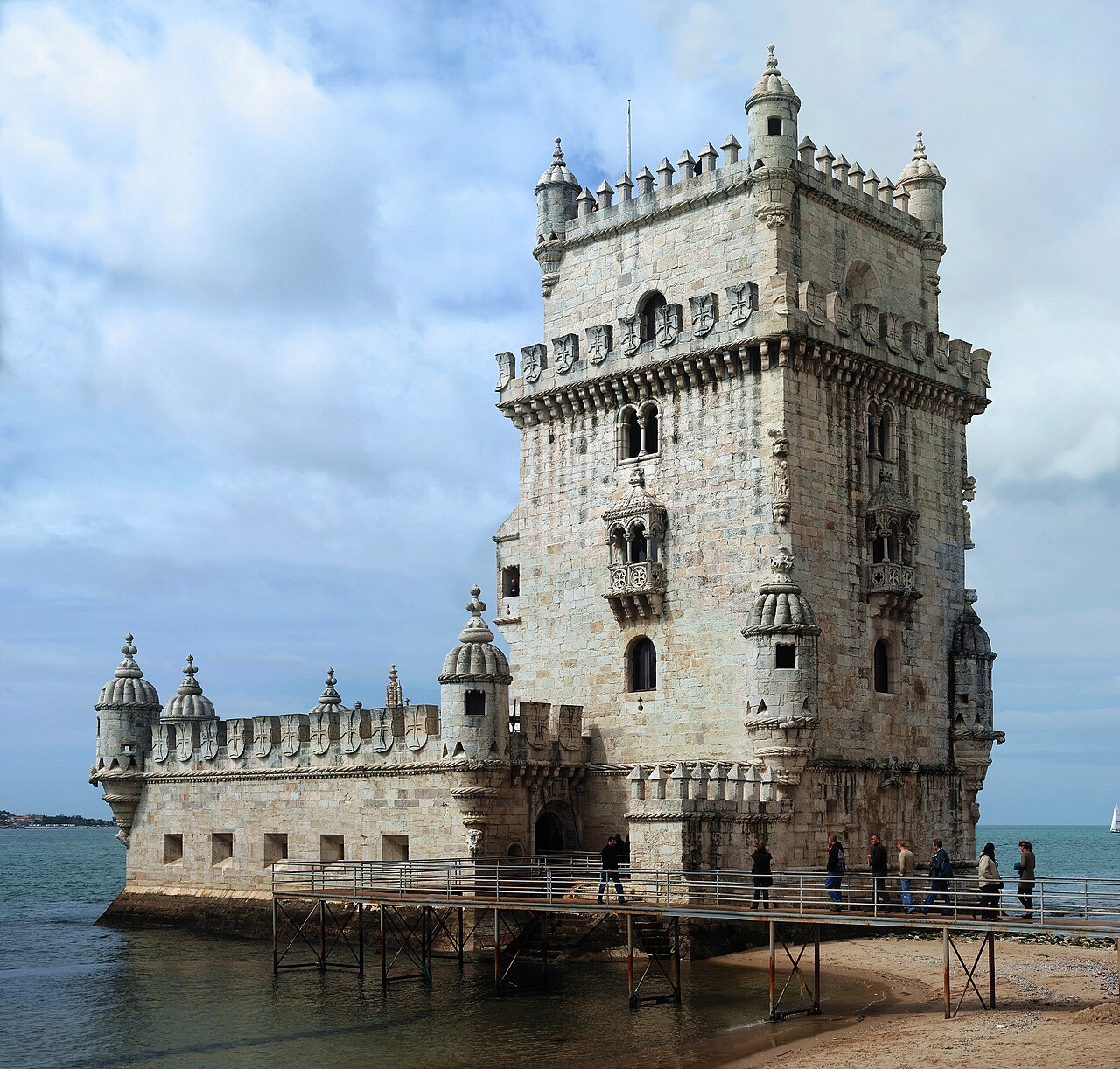
Belém Tower is the image that launches a thousand Lisbon guidebooks, and in person it lives up to the hype. Built between 1514 and 1520 during the reign of King Manuel I, it was designed to do two jobs at once: guard the mouth of Lisbon's harbour and serve as a ceremonial gateway for ships returning laden from Africa, India, and Brazil.
Look closely at the stonework and you'll see why the tower is a masterpiece of the Manueline style — that uniquely Portuguese architecture shaped by the sea, where carved ropes, knots, crosses, and sea creatures wind across the pale limestone. It's decoration that tells you exactly what obsessed the nation that built it.
It's worth pausing on the fuller picture, too. The Age of Discovery brought extraordinary leaps in navigation, cartography, and trade — and it also fuelled colonisation, forced labour, and the Atlantic slave trade. Both truths belong to this riverbank, and holding them together is part of what makes Belém such a thoughtful place to visit.
A Monument That Faces the Horizon — and Asks Hard Questions
Step back far enough and the Monument to the Discoveries reveals its shape: the prow of a great ship pushing out toward the water and the unknown. At its front stands Prince Henry the Navigator, the royal patron who never sailed the great voyages himself but bankrolled the expeditions and championed advances in shipbuilding and navigation. Behind him march explorers, mapmakers, missionaries, and monarchs, including Vasco da Gama and Ferdinand Magellan.
What many visitors don't realise is how recent the monument is. It was inaugurated in 1960, under the Estado Novo dictatorship, to mark five centuries since Prince Henry's death — a proud, deliberately heroic version of national history cast in stone.
That's exactly why it rewards a slower look. The voyages celebrated here transformed global trade and geography, but they also built systems of colonisation and slavery. The monument is powerful precisely because it forces two ideas to coexist: ambition and consequence, wonder and loss.
The World Beneath Your Feet
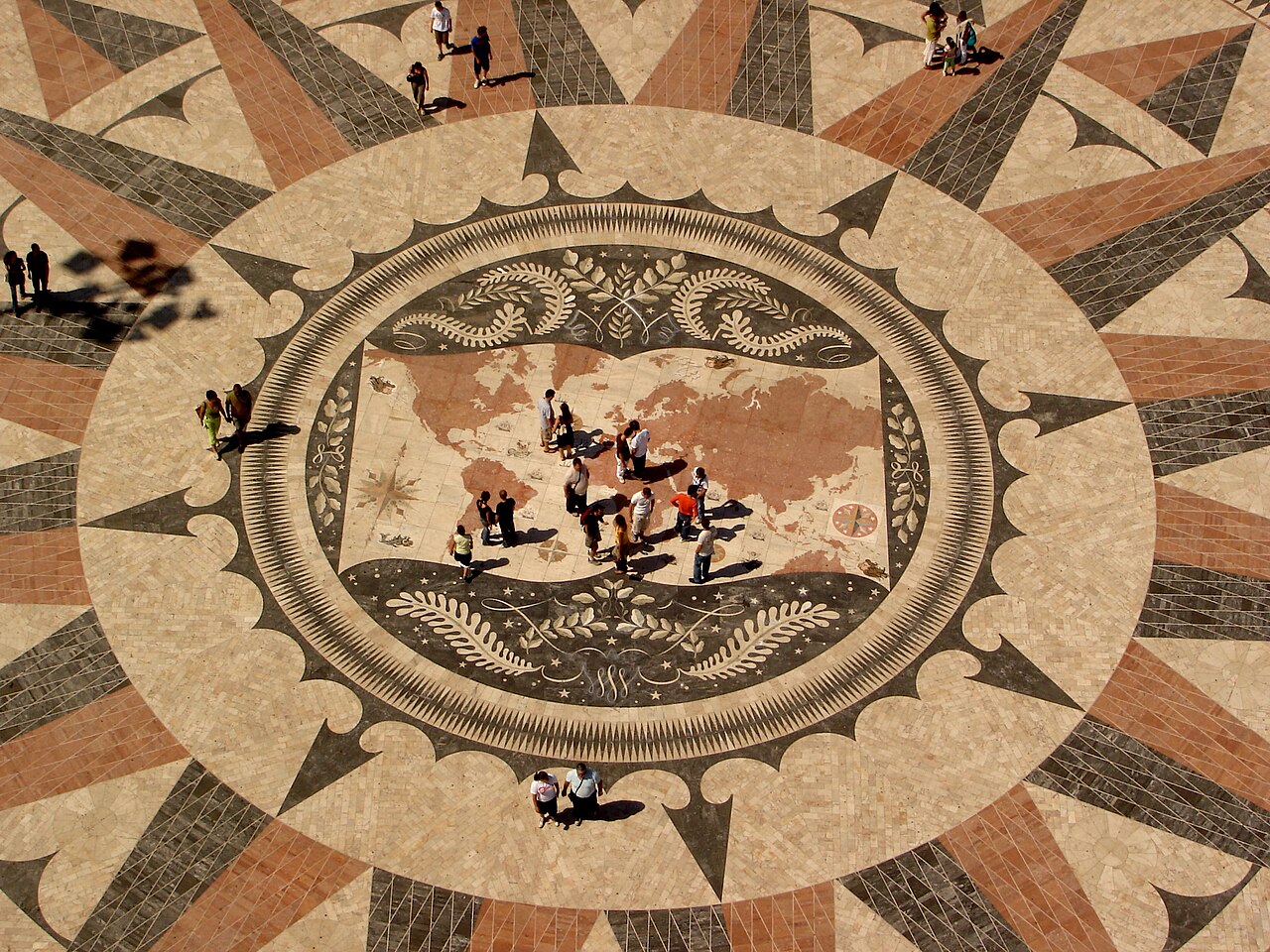
Just in front of the monument lies one of Belém's easiest-to-miss treasures: a vast compass rose, some fifty metres across, with a stone map of the world laid into the pavement. It was a gift from South Africa in 1960, the same year the monument was unveiled.
Trace the lines radiating across Africa, the Indian Ocean, Asia, and Brazil and remember what each one really represented — not a tidy arc on a map but months at sea, storms, illness, hunger, and shipwreck.
The mosaic is also a good reminder that the Age of Discovery wasn't only kings and famous captains. It depended on pilots, shipbuilders, translators, merchants, enslaved people, and countless local communities whose knowledge and lives were bound up in these routes.
Lace Carved in Stone: Jerónimos Monastery
If you see one building in Belém, make it the Jerónimos Monastery and the adjoining Church of Santa Maria de Belém. The façade is almost overwhelming — ropes, shells, leaves, columns, and saints flow across the stone like carved lace, the Manueline style at the very peak of its powers.
Construction began in the early 16th century under King Manuel I, funded in large part by the riches of the spice trade and closely tied to Vasco da Gama's voyage to India. Fittingly, the church now holds the tombs of both da Gama and Luís de Camões, the poet whose epic The Lusiads turned those voyages into national myth.
The monks who once lived here, of the Order of Saint Jerome, prayed for the king and for the sailors setting out from this river into dangerous waters. Recognised by UNESCO and endlessly photographed, the monastery is beautiful and complicated in equal measure — devotion, artistry, and imperial wealth all fused into one extraordinary building.
One Bite, Five Centuries
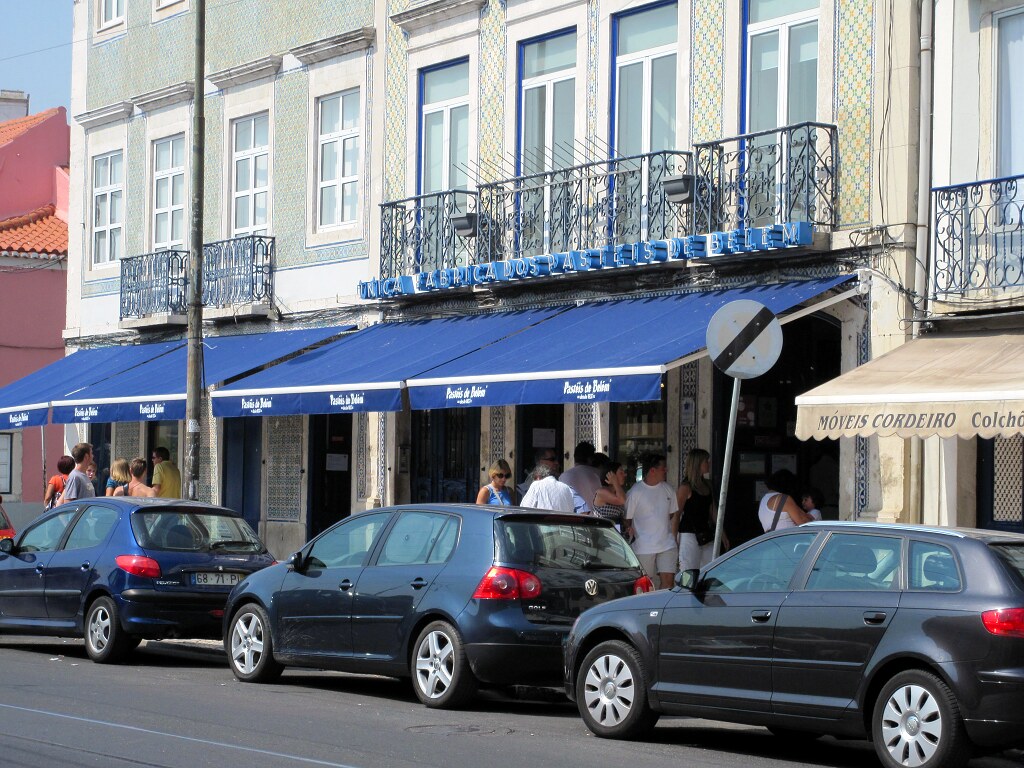
You'll smell it before you see it: warm cinnamon and caramelised custard drifting from behind a blue-and-white tiled façade. Pastéis de Belém has stood here since 1837, and this is the original — the birthplace of the pastel de nata, Portugal's beloved custard tart.
The story begins right next door at the monastery. After the liberal revolution of 1820 shuttered the religious orders, the monks needed income, and by 1834 they had sold their secret custard-tart recipe to a nearby sugar refinery. The pastries took the name of the parish — Belém — and never looked back.
That recipe is still a closely guarded secret, prepared by a handful of master bakers in a hidden room they call the oficina do segredo. Order one warm from the oven, dust it with cinnamon, listen for the crackle of the pastry, and you've tasted living history.
Where History Comes Home: MAAT and the River
The walk ends where Belém changes character entirely. Here the story is no longer only about caravels and monasteries but about energy, industry, and reinvention. The handsome old brick building is the Tejo Power Station, once one of Lisbon's main sources of electricity, its boilers and turbines now telling the story of the city's entry into the modern age.
Beside it sits MAAT — the Museum of Art, Architecture and Technology — its sleek, wave-like form hugging the riverbank like a contemporary echo of the water itself. Old industry and new art, side by side.
Look out across the Tagus and you'll catch the red span of the 25 de Abril Bridge reaching toward Almada, where the Cristo Rei statue watches over the far bank. In a single view you can see nearly every version of Lisbon at once: maritime, industrial, spiritual, political, and contemporary. That layering is the whole point of Belém — not a frozen museum, but a place where Portugal's histories keep overlapping.
Good to know
The full walk runs roughly 2.5 to 3 kilometres along mostly flat, pavement-friendly riverfront, and takes about two to three hours at a relaxed pace with photo stops. Wear comfortable shoes, bring water and sun protection (the riverside stretch has little shade), and expect queues at Belém Tower, Jerónimos Monastery, and especially Pastéis de Belém — arriving early helps. Belém is an easy tram (line 15) or train ride west from central Lisbon.
The full walk also passes Gago Coutinho & Sacadura Cabral, Praça do Império Gardens, Praça Afonso de Albuquerque.
The easiest way to tie all of this together — the monuments, the monastery, the tarts, and the modern riverfront — is the free self-guided audio tour 'Belém Walking: From the Edge of an Empire to the City of Today.' It walks you from Belém Tower to the MAAT at your own pace, with the stories, context, and honest history behind each stop, so you can simply look, listen, and enjoy. Pop in your headphones and let Belém unfold.
Take the free tour: Belém Walking →