Granada, Spain · 6 min read
Perched on a ridge above Granada, the Alhambra isn't a single monument but a whole city compressed onto one red hilltop — a fortress, a royal court, summer gardens, and the ruins of the town that made it all run. Most first-time visitors expect a palace. What they find is bigger and stranger: eight centuries of ambition, conquest, and reinvention layered into a single walled world.
It's also the kind of place that rewards knowing what you're looking at. A reflecting pool isn't just pretty here — it's a statement about a ruler's power to command water in a dry land. A plain suite of rooms once housed a homesick American writer whose book helped save the whole complex from ruin. And a watchtower marks the exact spot where one era of Europe ended and another began.
Here's a walk through the Alhambra's most compelling corners — and how a council chamber, a garden, and a tower all told the same story about who held power on this hill.
A Throne Beneath the Seven Heavens
The Hall of the Ambassadors, inside the Comares Tower, was built to overwhelm. It's the largest and grandest chamber in the Nasrid Palaces, and every surface was designed to remind visiting envoys exactly where they stood. The sultan received them here, framed by an architecture meant to dwarf.
The showpiece is overhead: a domed ceiling assembled from more than eight thousand pieces of cedarwood, its rising tiers of stars representing the seven heavens of Islamic cosmology, with the throne of God at the summit. The sultan sat directly beneath that divine order — a not-so-subtle argument about the source of his authority.
There's a heavier resonance too. Tradition holds that it was in this very room that the last Nasrid ruler agreed to surrender Granada, ending nearly eight centuries of Muslim rule in the Iberian Peninsula. The grandest room in the palace also witnessed its final chapter.
The Courtyard That Became the Alhambra's Face
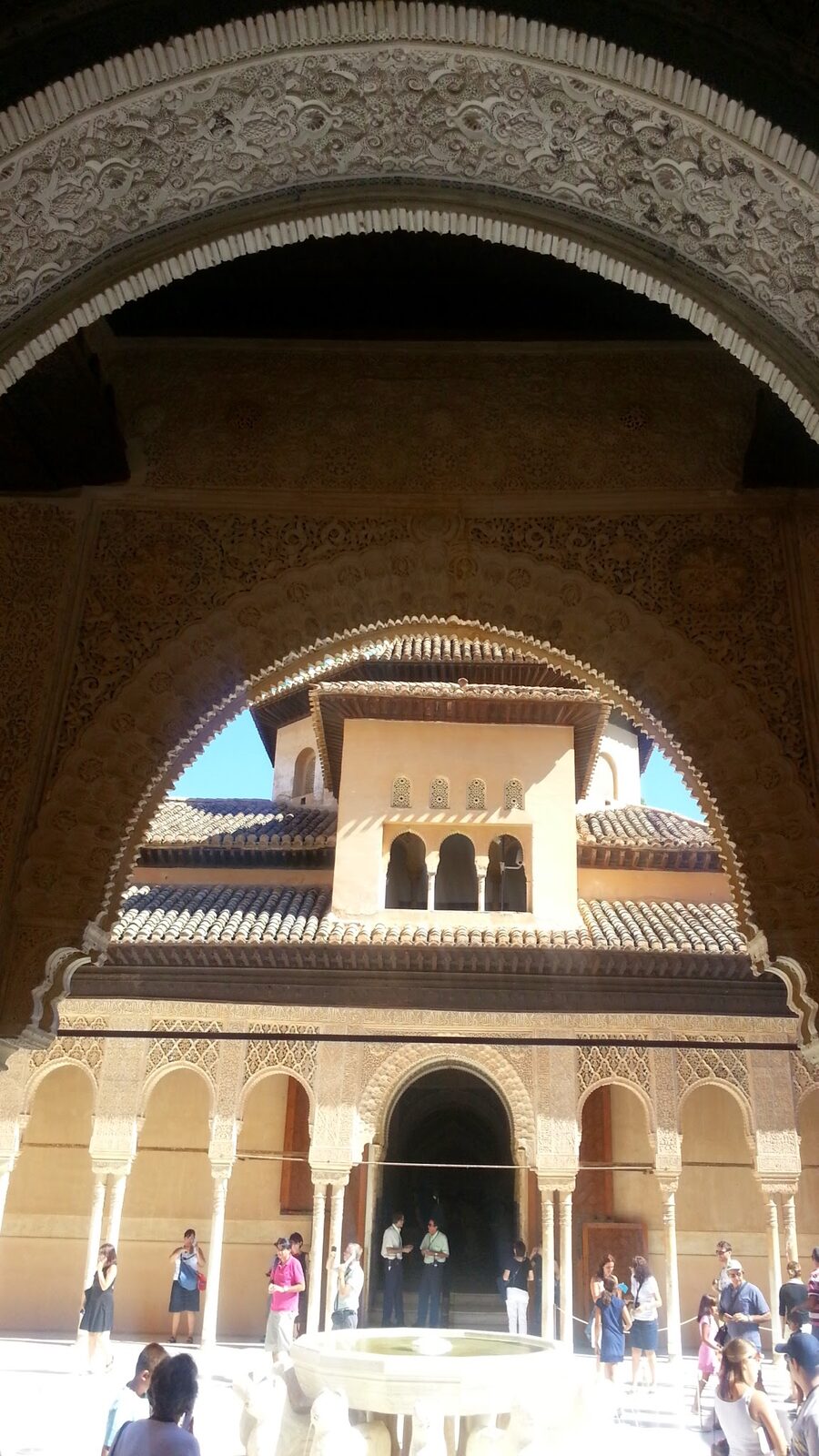
For many travelers, the Court of the Lions simply is the Alhambra. Built in the fourteenth century for Muhammad V, it's ringed by 124 slender marble columns, arranged so that no two views feel quite the same as you turn. This was the private heart of the palace, and it still feels intimate despite the crowds.
At its center, twelve stone lions carry a fountain on their backs, feeding four channels that once ran across the courtyard — the four rivers of paradise, dividing the garden into quarters. The fountain was also an ingenious hydraulic clock, its flow so finely balanced that scholars still puzzle over how it worked without overflowing.
It's a deliberate counterpoint to the still, mirror-flat pool of the nearby Court of the Myrtles. Where that water lies silent, here it moves and sings. Two courtyards, two moods, one recurring obsession: water as the language of power and paradise.
The Room With a Legend Carved Into Its Stains
Step off the Court of the Lions into the Hall of the Abencerrajes and look straight up. The ceiling is a masterwork of muqarnas — thousands of tiny plaster cells folding into an eight-pointed star, like a honeycomb or a frozen cascade. As the sun shifts, the whole vault seems to breathe with moving shadow.
But it's the story beneath the beauty that keeps visitors lingering. Legend says the noble Abencerraje family was lured here and slaughtered one by one — over an insult, or a forbidden love, depending on who's telling it. Guides have long pointed to rust-colored stains in the fountain basin as blood that never washed away.
Historians find little firm evidence for any massacre, and the stains are simply iron in the marble. Yet the tale has clung to this room for five centuries — and standing beneath that ceiling of stars, it's easy to understand why such a place seemed to demand a legend.
The Traveler Who Helped Save a Ruin
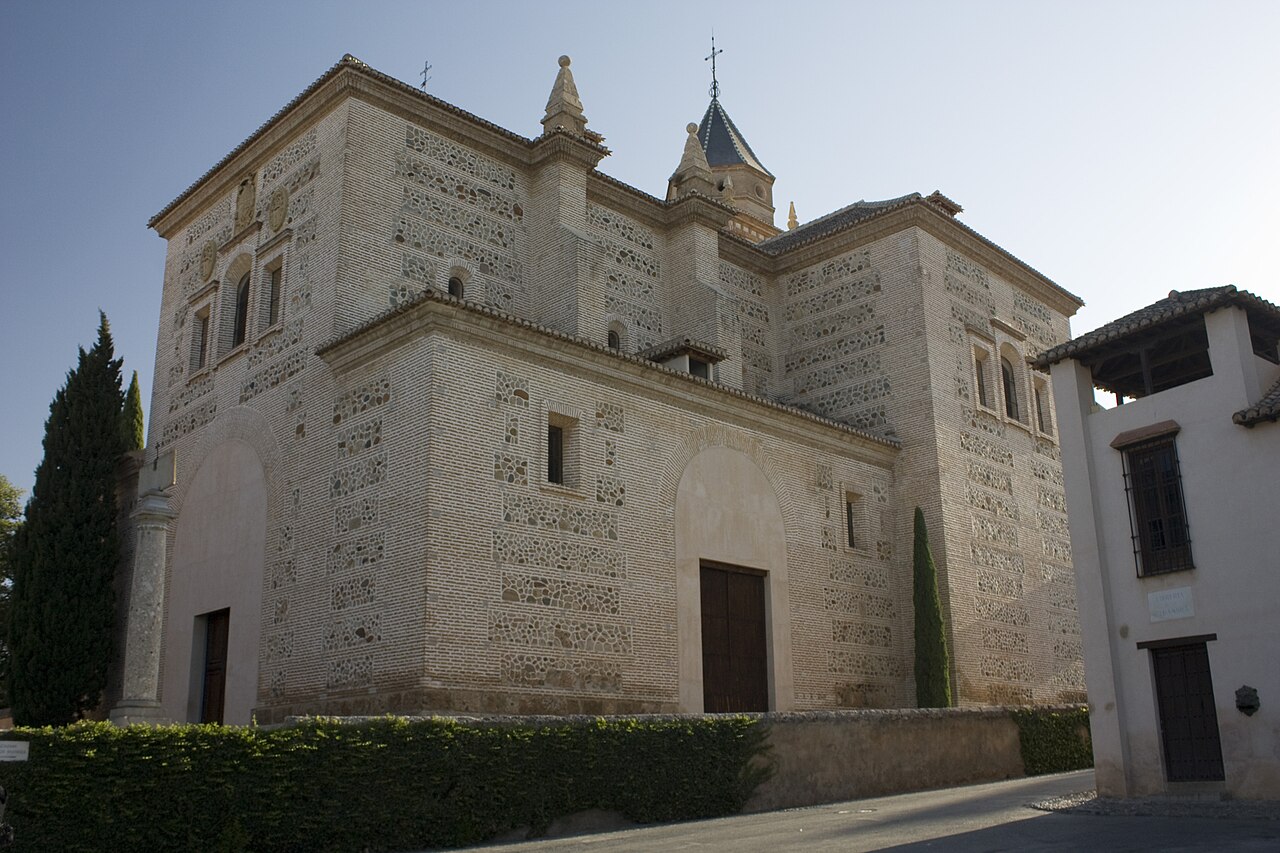
The Emperor's Rooms are plainer than the Nasrid halls, apartments added for Charles V after 1526 when the Holy Roman Emperor decided to make the Alhambra his own. That plainness tells its own quiet story of a new ruler settling into an inherited palace.
But these rooms carry a second, unlikelier fame. In 1829, a young American writer named Washington Irving talked his way into living inside the crumbling, half-forgotten complex. At the time the Alhambra was neglected — part barracks, part shelter for squatters, its courtyards choked with weeds.
Irving wandered the ruins by candlelight, collected the caretakers' legends, and wrote his 'Tales of the Alhambra.' The book enchanted readers across Europe and America, drew a wave of romantic attention to Granada, and helped rescue the place from oblivion. Some of the beauty visitors admire today survives thanks to a homesick traveler with a notebook.
The Tower Where One Era Ended
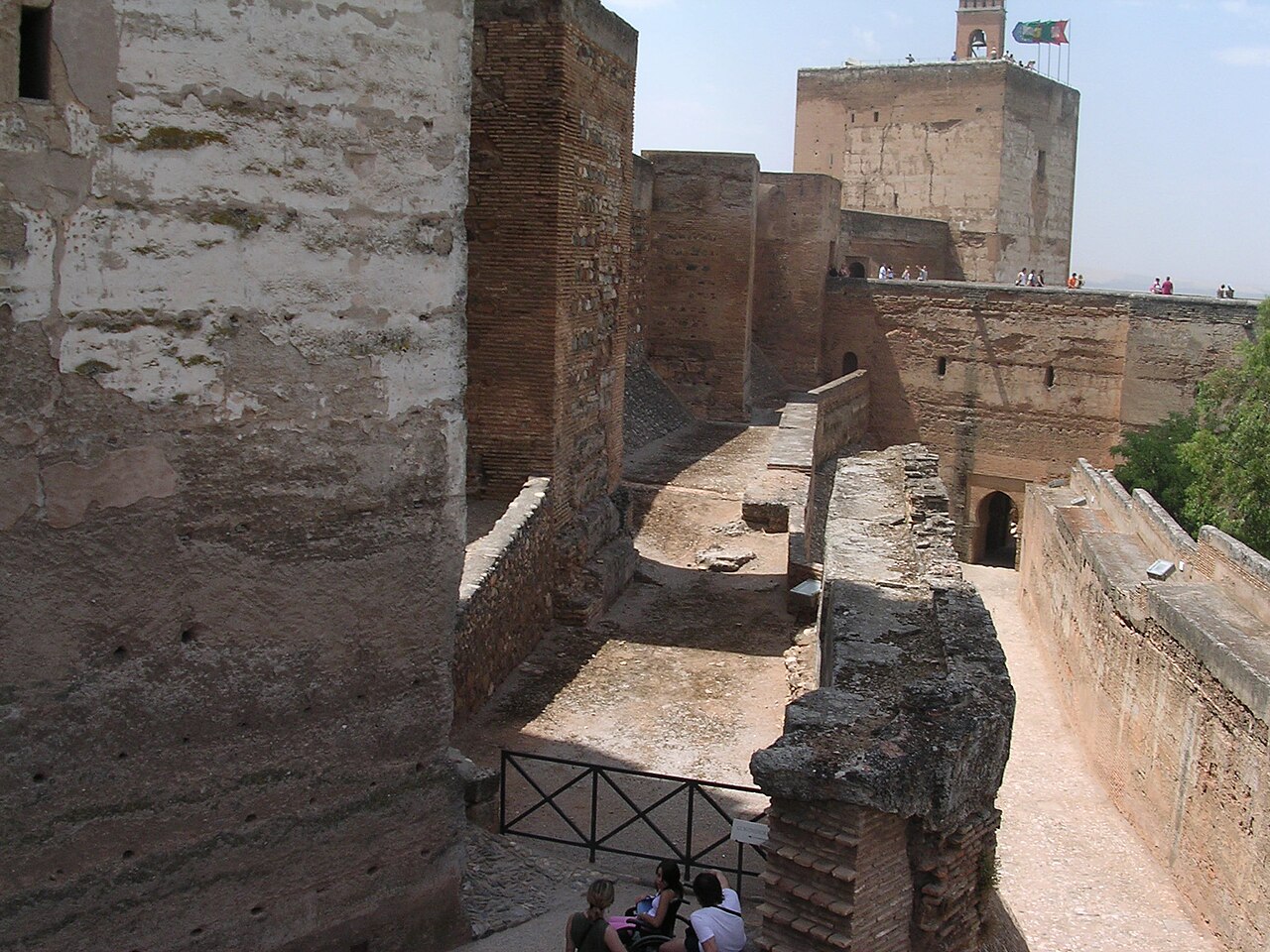
The Torre de la Vela is the tallest point of the Alcazaba, the fortress that is actually the oldest part of the entire complex. From its top, Nasrid watchmen once scanned the vega — the fertile plain below — for approaching armies, and a great bell marked the city's hours and summoned irrigators to the fields.
This is also the spot where history turned. On the second of January, 1492, the banner of Castile was raised on this tower, marking the fall of Granada and the end of the last Muslim state in western Europe after nearly eight hundred years.
The view is the reward for the climb: the white houses of the Albaicín tumbling down the opposite hillside, and beyond them the Sierra Nevada, often still capped with snow. From up here the logic of the whole site clicks into place — a council chamber, a mirror of water, and this watchtower were always three faces of a single ambition.
An Emperor's Answer, in Perfect Stone
Back among the palaces, the Palace of Charles V confronts visitors with something utterly different: a perfect circle set within a square, a round courtyard ringed by two tiers of columns and open to the sky. It's one of the finest pieces of Renaissance architecture in Spain.
And yet the contrast is the point. There's no flowing water here, no arabesque, no ceiling of stars — only massive stone, strict symmetry, and Roman-inspired grandeur. Charles built it in the 1530s deliberately beside the Nasrid palaces, a Christian emperor planting his own emphatic statement of power at their heart.
The irony is delicious: it was never finished in his lifetime, stood roofless for centuries, and today is admired standing shoulder to shoulder with the very palaces it was meant to outshine. Two ideas of power, two centuries apart, sharing one hilltop.
Good to know
Plan for a half-day at minimum — a thorough visit covering the Nasrid Palaces, Generalife, Alcazaba, and gardens runs roughly three to four hours on foot, with plenty of gentle climbing and uneven, historic ground. Wear comfortable shoes, bring water and sun protection (much of the Alcazaba and upper gardens is exposed), and book your Nasrid Palaces entry in advance, since timed slots sell out and are strictly enforced. Early morning or late afternoon offers the best light and the thinnest crowds.
The full walk also passes The Mexuar - Council Chamber, Court of the Myrtles, Hall of the Boat, Hall of the Two Sisters, Lindaraja Courtyard, Water Stairway, Patio de la Acequia, Upper Gardens, Generalife Palace, Plaza de Armas, Defensive Walls, Torre del Homenaje, Medina, Partal Gardens.
The Alhambra rewards context far more than it rewards a rushed loop, which is exactly why the free self-guided audio tour 'The Alhambra' is the ideal companion. It walks you from the Mexuar council chamber through the Court of the Lions, up the Generalife's water stairway, and out to the Torre de la Vela, tying the palaces, gardens, and fortress together into one story you can follow at your own pace. Download it before you go, slip in your earbuds at the gate, and let the hill unfold.
Take the free tour: The Alhambra →