Afula, Israel · 5 min read
Most travelers speed past Afula on their way through the Jezreel Valley, glimpsing a modern Israeli town and little more. But slow down, and this unassuming place reveals itself as one of the boldest experiments in early Zionist town-planning — a city drawn on paper before it existed, laid out over a mound that has been inhabited since the Bronze Age.
Here, a 1920s garden-city dream, a buried archaeological tel, and an Ottoman railway junction all occupy the same few downtown blocks. It's a town where each era quite literally built on top of the last. For anyone curious about how modern Israel took shape — and what lies underneath it — Afula's historic core rewards a walk.
This is a guide to what makes that walk worth your time, and how a small valley town earned the proud nickname 'Capital of the Valley.'
A Boulevard Planted With Intention
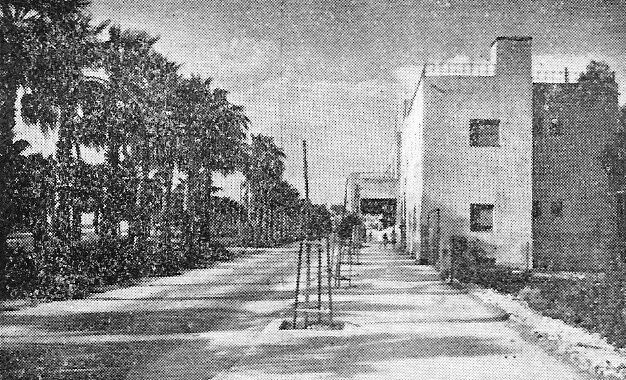
Afula's most photogenic street didn't happen by accident. When architect Richard Kauffmann sketched the town in the 1920s, he drew on the European 'garden city' ideal — a place of green boulevards, light and air rather than crowded lanes. The tall Washingtonia palms lining Arlozorov Boulevard were part of that vision from the start.
Named for Chaim Arlozorov, the young Labor Zionist leader assassinated in 1933, the avenue was designed as the town's social spine: somewhere to stroll in the evening cool and to feel part of something newly made. It remains the place where Afula's daily life gathers, even as four thousand years of history lie quietly beneath the pavement.
A City Drawn on Paper First
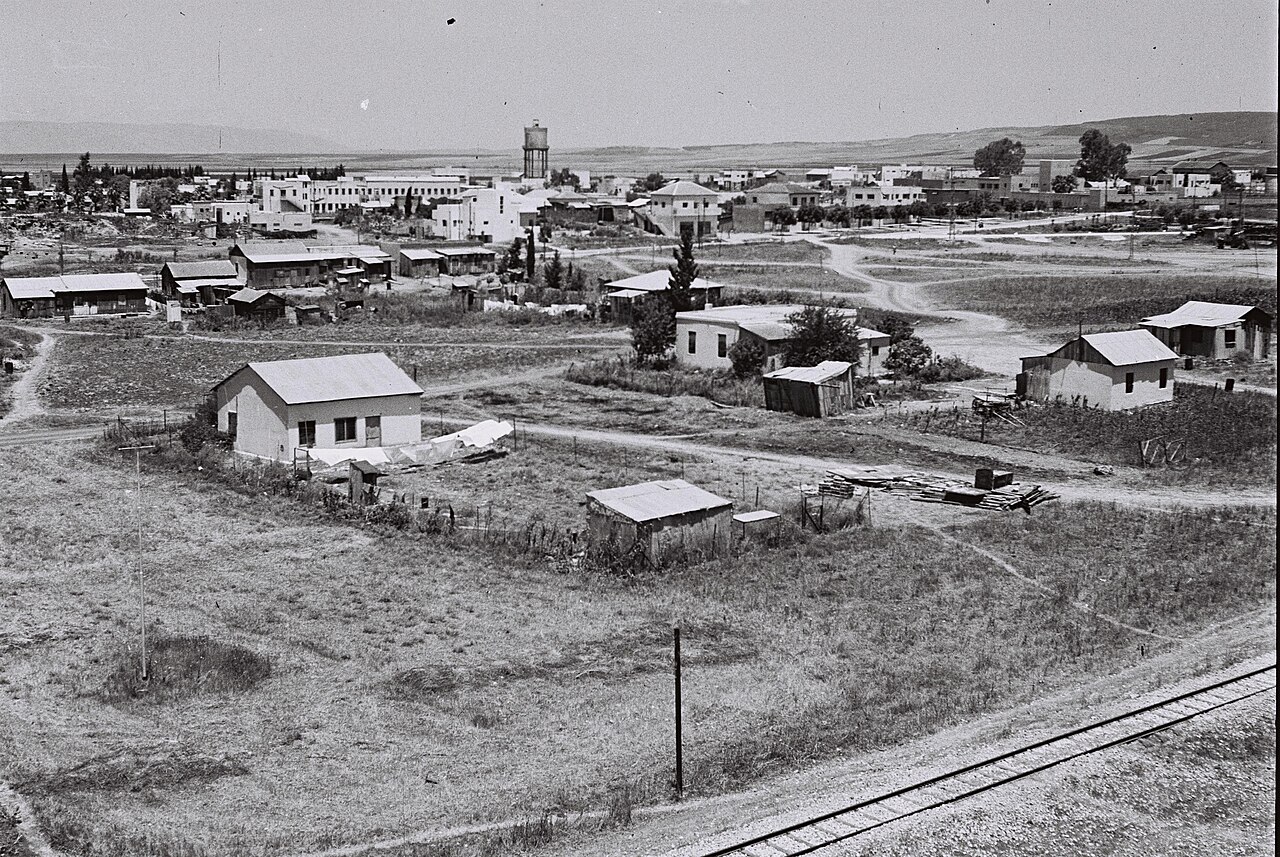
In 1925, Afula was among the very first purpose-built Zionist towns — not a village that slowly grew, but a settlement designed before it was inhabited. Kauffmann laid out radiating streets and a civic center, imagining a bustling 'city of the valley' rising from farmland purchased by the American Zion Commonwealth.
The reality proved humbler than the blueprint. Economic troubles slowed the dream, and the grand metropolis never quite filled in. Yet the bones of Kauffmann's vision endure in the geometry of the streets and in Independence Square itself. To stand here is to stand inside an idea — that a modern town could be planned rationally and generously, from nothing — and to sense how bold, and how fragile, that ambition really was.
The Building That Was an Entire Town
If the civic square was the plan, Feingold House was the reality. In Afula's founding years, this single structure did the work of half a city: commercial center, government offices, shops, and a cinema all under one roof. City hall, marketplace, and movie theater rolled into one.
Picture a farmer coming in from the valley — paying a municipal fee, buying supplies, then sitting in the dark to watch a flickering film. A town too small and too new for separate institutions simply gathered everything into one busy hive. As one of the few early buildings still standing, Feingold House is a rare survivor: a witness in stone to what Afula was before the valley's many newcomers reshaped it.
The Hill Made of Time
Set the modern town aside for a moment and look down, because the oldest chapter lies underfoot. Beneath downtown rises Tel Afula, a mound settled as far back as the Early Bronze Age — four thousand years ago. Persian, Roman and Byzantine peoples all left their mark, each generation building on the ruins of the last. That is what a 'tel' is: a hill made of time itself.
Some scholars have linked the site to biblical Ophrah, the town of Gideon, though that connection is debated rather than settled. The real poignancy is this: when Kauffmann's planners built their bright new town, most of the ancient tel vanished beneath streets and foundations. The deep past and the modern dream now share the very same ground.
A Fortress Built From Roman Coffins
Atop the tel once stood a square fortress commanding the Jezreel Valley. Whoever held this rise held a view of the valley's crossroads — the routes along which armies, caravans and trade all moved. Its ruins still speak of that strategic worth.
Who built it remains genuinely uncertain: some credit the twelfth-century Crusaders, others the Mamluks who followed. But one detail is unforgettable. Parts of these walls were raised from recycled Roman sarcophagi — ancient stone coffins repurposed as masonry. The burial boxes of one empire, cut and stacked to defend the strongholds of another. It is the whole story of this place in a single image: each age quarrying the one before, the valley's long memory built literally into its stones.
The Layer Still Being Written
Kauffmann's plan gave Afula its shape, but people gave it life. In the decades after Israel's founding, wave after wave of immigrants made this valley home: Jews from Iraq and Yemen, from Romania, later from Ethiopia and the former Soviet Union. Each community brought its languages, cooking, music, griefs and hopes.
A modest agricultural town slowly swelled into something larger, and Afula began to call itself the 'Capital of the Valley' — proud, self-made, standing at the heart of the Jezreel plain. Layer upon layer, just like the mound beneath it — only here the newest layer is still being written, by the families living around you right now.
Good to know
The walk covers Afula's compact historic core and takes roughly 1.5 to 2 hours at an unhurried pace, following a mostly flat route from Arlozorov Boulevard to the railway station, with an optional valley viewpoint finale. Wear comfortable shoes, bring water and sun protection — the valley gets hot — and note that a couple of pins (Feingold House, Tel Afula) are approximate, since much of the ancient mound now lies beneath the modern streets.
The full walk also passes Historic Jezreel Valley Railway Station.
If this layered history has caught your imagination, the best way to experience it is on foot with the free self-guided audio tour 'Afula: Four Thousand Years Beneath the Valley.' It walks you from the palm-lined boulevard to the buried tel and the historic railway at your own pace, narrating the stories behind each stop — the perfect companion for turning a quick valley stopover into a genuine discovery.
Take the free tour: Afula: Four Thousand Years Beneath the Valley →